
Choosing between Gongfu style and Western brewing often comes down to whether you're seeking a meditative ritual or a convenient daily caffeine fix. Gongfu Cha, the traditional Chinese "skillful" approach, focuses on multiple short infusions using a high leaf-to-water ratio to unlock evolving flavor layers, whereas the Western method prioritizes simplicity with a single long steep in a larger vessel. While Gongfu is ideal for savoring the complex transitions of high-quality oolongs and puerhs, Western brewing remains the global standard for those who want a reliable, fuss-free mug of tea. Ultimately, the best method depends on your specific tea leaves, your available time, and how deeply you want to explore the aromatic nuances of every sip.
| Feature | Gongfu Style (Traditional) | Western Brewing (Standard) |
|---|---|---|
| Leaf-to-Water Ratio | High (approx. 5-8g per 100ml) | Low (approx. 1-2g per 250ml) |
| Steep Duration | Short bursts (10-30 seconds) | Longer intervals (3-5 minutes) |
| Infusion Count | Multiple (5-15 steepings) | Limited (1-2 steepings) |
| Primary Vessel | Gaiwan or small Yixing clay pot | Large ceramic teapot or infuser mug |
| Flavor Profile | Concentrated, evolving, nuanced | Consistent, bold, standardized |
| Best Used For | Oolongs, Puerhs, and Tea Tasting | Black teas, Breakfast blends, Speed |
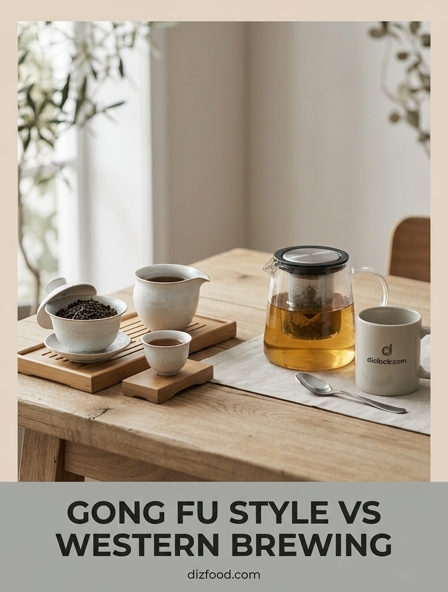
Understanding Gongfu Style vs Western Brewing Basics
Tea brewing in a modern kitchen typically follows one of two distinct philosophies: the Western style or the Gongfu style. Western brewing is the method most familiar to European and American households, characterized by a large volume of water and a small amount of tea leaves. It is designed for convenience and volume, allowing the drinker to prepare a full mug or pot that remains consistent from the first sip to the last. This approach treats tea as a singular beverage to be enjoyed alongside a meal or as a solitary comfort.
In contrast, Gongfu Cha, which translates to "making tea with skill" or "effort," originated in China and focuses on the concentrated extraction of flavor. This method uses a high ratio of tea leaves to a very small amount of water. Rather than one long immersion, the leaves are subjected to multiple short infusions, often lasting only seconds. This style emphasizes the evolution of the tea's profile over time. While Western brewing is linear, Gongfu brewing is cyclical and ceremonial, requiring more focus and active participation from the brewer. Understanding these basics is essential for any tea enthusiast looking to explore the full chemical and sensory potential of the Camellia sinensis plant.
- Western Goal: Consistency, volume, and simplicity.
- Gongfu Goal: Complexity, aromatic depth, and ritualistic focus.
- Primary Difference: The relationship between leaf density and contact time with water.
Key Differences in Tea Leaf to Water Ratios
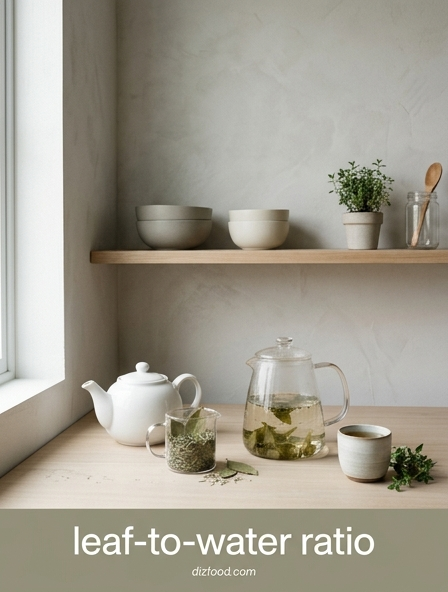
The most significant technical difference between these two styles lies in the leaf-to-water ratio. In Western brewing, the standard guideline is approximately 1 to 2 grams of tea per 100 milliliters of water. This creates a balanced, diluted infusion that extracts flavor slowly, making it forgiving if the timer runs slightly long. Because the leaves have plenty of space to expand in a large pot, the extraction is even but lacks the punch found in concentrated methods.
Gongfu brewing flips this ratio entirely, utilizing 5 to 8 grams of tea per 100 milliliters of water. This creates a highly concentrated environment where the water is saturated with tea compounds almost instantly. This density allows the brewer to capture the volatile aromatics and heavy oils that are often lost in the large-format Western style. The following table illustrates the typical ratios found in a standard kitchen setup:
| Brewing Style | Leaf Weight | Water Volume | Ratio Appearance |
|---|---|---|---|
| Western | 2-3g | 250ml (1 cup) | Sparse / Floating |
| Gongfu | 5-7g | 100ml (Gaiwan) | Dense / Packed |
| Grandpa Style | 3g | 300ml (Mug) | Bottom-heavy |
By increasing the leaf count, the Gongfu style ensures that even the shortest immersion yields a flavorful liquor. This high concentration is what necessitates the rapid-fire steeping times associated with traditional Chinese tea service.
Steeping Times for Traditional and Modern Methods
Timing is the variable that balances the leaf-to-water ratio. In Western brewing, the steeping time usually ranges from three to five minutes. This long duration is necessary because the low leaf concentration takes time to release enough solutes to flavor the large volume of water. If the leaves are removed too early, the tea is weak; if left too long, it becomes excessively bitter as tannins dominate the profile. This method is "low-frequency," meaning you brew once or twice before discarding the leaves.
Gongfu brewing utilizes "high-frequency" steeping. The first few infusions, often called "flash steeps," may last only 5 to 10 seconds. Because there is so much leaf material, the water absorbs flavor almost instantly. As the session progresses, the brewer gradually increases the time by 5 or 10 seconds for each subsequent round. This allows the tea to "unfold" across 10 or 15 individual infusions. This gradual extraction prevents the tea from becoming over-extracted in a single go, preserving the delicate top notes for the early rounds and leaving the deeper, more structural flavors for the later steeps. The precision required for these short intervals is why many Gongfu practitioners use a dedicated timer or count their breaths to maintain consistency.
Essential Equipment for Gaiwan and Teapot Brewing
The tools used in the kitchen for these two styles reflect their different goals. Western brewing typically requires a large porcelain or glass teapot equipped with a removable mesh infuser. Alternatively, many use a simple "tea ball" or a basket infuser that sits inside a standard mug. The focus is on heat retention and ease of cleaning, as the vessel is meant to hold a large volume of hot liquid for several minutes.
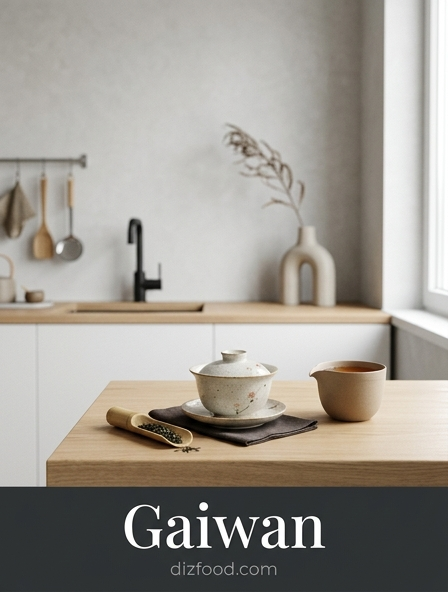
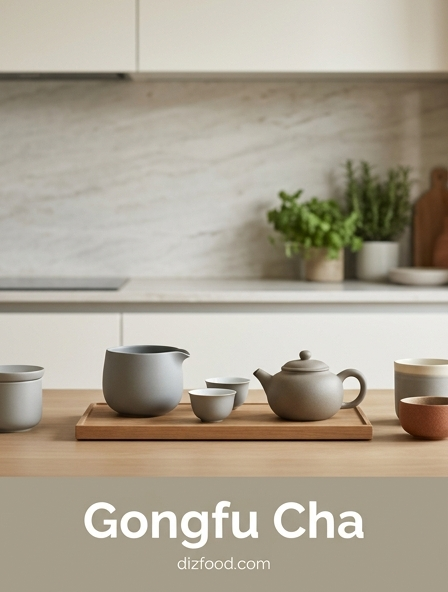
Gongfu brewing requires a more specialized set of tools designed for heat control and rapid pouring. The two primary vessels are the Gaiwan and the Yixing clay teapot. A Gaiwan is a lidded bowl without a handle, allowing for a quick, wide-rimmed pour that prevents the leaves from stewing in residual heat. Yixing pots are made from porous unglazed clay that "seasons" over time, absorbing tea oils and enhancing future brews. In addition to the brewing vessel, a Gongfu setup often includes the following:
- Gong Dao Bei (Justice Cup): A pitcher used to hold the tea after it is poured from the Gaiwan, ensuring every guest receives the same strength of liquor.
- Cha Hai (Tea Sea): Another term for the pitcher, emphasizing its role in blending the infusion.
- Tea Tray (Cha Pan): A slatted tray with a reservoir to catch the water discarded during the rinsing of leaves and warming of cups.
- Small Tasting Cups: Usually 15-30ml, designed to be finished in three sips to appreciate the aroma and temperature.
Flavor Complexity in Multiple vs Single Infusions
Flavor extraction is a chemical process that occurs in stages. When brewing Western style, all the tea's components-aromatics, sugars, caffeine, and tannins-are extracted simultaneously into one large vessel. The result is a profile that is "flat" or "stable." While delicious, it represents an average of everything the leaf has to offer. You get the full story of the tea in a single chapter, which is ideal for a quick breakfast or a work-day beverage where complexity might be distracting.
Gongfu brewing turns the experience into a narrative. Because the leaves are steeped multiple times, the different chemical compounds are released at different rates. The first two infusions might be incredibly floral and aromatic, as the volatile oils on the surface of the leaf are washed away. By the fourth or fifth infusion, the tea might become sweeter and more full-bodied as the internal sugars dissolve. The final infusions often reveal the "bones" of the tea, showing more mineral or woody notes. This "layering" of flavor is why enthusiasts prefer Gongfu for high-quality loose-leaf teas; it allows them to experience the dynamic range of the leaf. Each cup is a different version of the same tea, providing a sensory journey that a single large-format steep cannot replicate.
The Cultural Significance of Gongfu Tea Rituals
Beyond the chemistry of extraction, Gongfu Cha is deeply rooted in Chinese cultural history, particularly in the Fujian and Guangdong provinces. The term "Gongfu" implies a level of mastery achieved through practice, similar to its usage in martial arts. In a traditional kitchen or tea room setting, the act of brewing is a meditative practice. It encourages mindfulness, as the brewer must pay close attention to water temperature, the scent of the dry leaves, and the visual expansion of the tea inside the Gaiwan. It is a social ritual designed to slow time down, often serving as the centerpiece for long conversations among friends.
Western tea culture, while also rich, evolved toward efficiency and social utility. The British tea tradition, for instance, focuses on the "tea break" or "afternoon tea," where the beverage serves as a social lubricant or a caloric supplement. In this context, the teapot is a communal object that stays on the table while people eat sandwiches or scones. While the Gongfu style centers on the leaf itself as an object of study and appreciation, the Western style centers on the occasion. Both are valid cultural expressions, but the Gongfu ritual emphasizes a spiritual connection to the agriculture and the specific craftsmanship of the tea producer, treating the tea maker as a performer of sorts.
Practical Benefits of Western Style Tea Brewing
While Gongfu brewing offers depth, Western brewing excels in practicality and accessibility, making it the dominant method in busy kitchens worldwide. One of its primary benefits is the "set it and forget it" nature. Once the tea is in the pot and the water is poured, the brewer is free to prepare breakfast, check emails, or engage in other tasks for the three to five minutes required for steeping. It does not require the constant attention or physical presence that a 10-infusion Gongfu session demands.
Furthermore, Western brewing is significantly more efficient for serving large groups. Preparing tea for six people using a 100ml Gaiwan would require dozens of pours and a significant amount of time. A single 1.5-liter Western teapot can satisfy an entire table in one go. It is also the superior method for flavored teas, herbal infusions, and "CTC" (Crush, Tear, Curl) black teas commonly found in tea bags. These products are designed to release all their flavor immediately and do not have the structural integrity to withstand multiple infusions. For the average person looking for a reliable caffeine boost or a soothing evening cup with minimal cleanup, the Western style provides the best return on time and effort.
Comparing Caffeine and Tannin Levels in Each Style
The way caffeine and tannins are extracted differs significantly between these two methods, impacting both the buzz and the bitterness of the drink. Caffeine is highly water-soluble and tends to extract very quickly. In Western brewing, the long five-minute steep extracts a large percentage of the total caffeine available in the leaves all at once. This results in a sharp spike in caffeine intake. Tannins, which provide the astringency and bitterness in tea, also extract more heavily during long Western steeps, especially if the water is boiling hot.
In Gongfu brewing, the caffeine is released more gradually over several infusions. While the total caffeine consumed over a full session might be higher (due to the larger quantity of leaves used), the intake is spread out over an hour or more. This often results in a more sustained, "calm" energy rather than a jittery spike. Additionally, the short steeping times allow the brewer to "outrun" the tannins. Since tannins take longer to dissolve than aromatic oils and sugars, a 15-second Gongfu steep can produce a liquid that is incredibly sweet and fragrant without any of the harsh bitterness found in a long Western steep. This makes Gongfu particularly effective for sensitive teas like green tea or young sheng pu-erh, which can easily become unpalatable if over-steeped in a large pot.
Choosing the Best Method for Different Tea Varieties
Not all teas are created equal, and some are better suited to specific brewing styles. In a kitchen stocked with various tins, choosing the right method is key to getting the best value from your leaves. Generally, teas that are complex and minimally processed benefit most from the Gongfu style, while more robust or broken-leaf teas are better in a Western format. The following list categorizes common tea types by their ideal brewing method:
- Oolong Teas: These are the stars of Gongfu brewing. The tightly rolled leaves need multiple short infusions to unfurl and release layers of floral, creamy, or roasted notes.
- Pu-erh and Heicha: These fermented teas are incredibly dense. Gongfu brewing is essential here to navigate the deep earthy flavors and avoid a "muddy" or overly thick cup.
- English Breakfast / Black Tea: These are often broken leaves (BOP) or CTC. They have a high surface area and release flavor instantly, making them perfect for a single, long Western steep with milk.
- Herbal Infusions: Tisanes like chamomile or peppermint don't contain the same complex oils as tea leaves and don't "evolve." A 5-minute Western steep is the best way to extract their medicinal and flavor properties.
- White Teas: These can go either way. Silver Needle is beautiful in a Gaiwan, while Shou Mei (bolder leaves) can be quite pleasant when brewed Western style in a large glass pot.
Mastering the Transition from Western to Gongfu Brewing
Moving from the simplicity of Western brewing to the precision of Gongfu can be intimidating for a beginner, but it is a rewarding kitchen skill to master. The transition begins with acquiring a basic 100ml to 150ml Gaiwan and a small digital scale. Weighing the tea is the most important step; guessing 7 grams is much harder than guessing a single teaspoon for a Western pot. Once the equipment is ready, the focus shifts to water temperature and pouring speed.
- Start with Oolong: Rolled oolongs like Tie Guan Yin are forgiving and provide clear visual feedback as they unfurl, making them perfect for practice.
- The "Flash Steep": Practice pouring water in and immediately pouring it back out. This "zero-second" steep is often necessary for the first two rounds to avoid over-concentration.
- Scent the Lid: One of the joys of Gongfu is the aroma. After pouring, smell the underside of the Gaiwan lid. This is where the most concentrated aromatics condense.
- Control the Temperature: Use a variable temperature kettle. While Western black tea handles boiling water well, delicate Gongfu sessions often require 85°C to 95°C to avoid scorching the high volume of leaves.
- Don't Be Afraid of Waste: The "rinse" (discarding the first 5-second pour) is standard in Gongfu to wake up the leaves and wash away dust; don't feel obligated to drink the first infusion.
By focusing on these small adjustments, any tea drinker can transform their kitchen into a space for high-level tea exploration.

Comments