
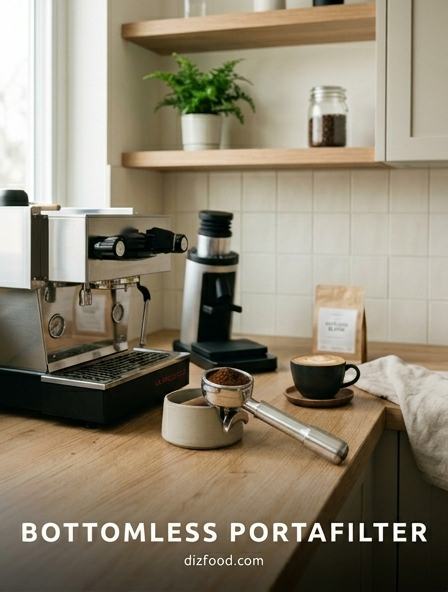
Thermal Stability and Heat Retention
The thermal stability of a spouted portafilter is primarily derived from its significant metal mass. Unlike bottomless versions, the additional material in the spouts acts as a heat sink that helps maintain a constant temperature throughout the extraction process. When preheated correctly, the chrome-plated brass or stainless steel components ensure that the espresso does not suffer from a sudden temperature drop as it exits the basket and travels toward the cup. This is critical because even a small fluctuation can negatively impact the flavor profile of a delicate roast.
The following table illustrates the typical thermal properties of common portafilter materials:
| Material | Heat Retention | Durability |
|---|---|---|
| Chrome-Plated Brass | High | High | Stainless Steel | Medium-High | Excellent |
| Aluminum | Low | Medium |
By retaining heat, the spouted portafilter ensures that the oils and sugars in the coffee are delivered at the optimal serving temperature. This consistency is vital for maintaining the intended body and crema of the espresso shot, making it a staple in professional environments.
Streamlining Workflow with Dual Spouts
In a busy kitchen or high-traffic cafe, streamlining the workflow is essential for operational efficiency. The dual spout design is specifically engineered to allow a barista to pull two single shots simultaneously into separate demitasse cups. This functionality effectively doubles the output of a single group head without requiring additional time or mechanical effort. By utilizing the internal splitter, a service can accommodate two separate orders at once, such as a pair of single espressos or components for two distinct milk-based drinks.
Benefits of the dual spout workflow include:
- Reduced wait times for customers during peak hours.
- Improved synchronization for multi-drink orders.
- Minimized wear on the espresso machine by reducing the number of cycles needed.
- Simplified volumetric calibration for split-shot recipes.
This design is particularly advantageous when precision and speed are required in tandem. The physical geometry of the spouts ensures that the liquid is divided evenly, provided the machine is level. This allows for a seamless transition from grinding to tamping and finally to the simultaneous extraction of two perfectly timed shots.
The Forgiving Nature of Spouted Designs
The spouted portafilter is often characterized by its forgiving nature, especially when compared to naked or bottomless alternatives. In the realm of espresso preparation, minor errors in puck preparation-such as slight unevenness in the tamp or small inconsistencies in the grind-can lead to "spritzing" or channeling. In a spouted design, the metal floor and the enclosed spouts contain these minor imperfections. Instead of coffee spraying onto the machine or the barista, the fluid is channeled into a single, cohesive stream.
This containment provides several practical advantages for both novices and professionals:
- It masks visual flaws that do not significantly impact the final taste.
- It prevents the psychological frustration of messy extractions during a busy shift.
- It allows for a more relaxed technique when absolute perfection in distribution is not achievable.
While a bottomless portafilter is an excellent diagnostic tool, the spouted version is a reliable workhorse. It ensures that even if a shot is not technically perfect, the physical delivery remains controlled and professional. This makes it an ideal choice for environments where consistency and presentation are prioritized over diagnostic visibility.
Maintaining a Cleaner Espresso Station
Cleanliness is a fundamental pillar of any professional kitchen, and the spouted portafilter plays a major role in maintaining a tidy espresso station. Because the extraction is fully enclosed within the metal housing, the risk of "espresso spray" caused by channeling is virtually eliminated. This containment ensures that coffee oils and liquids are directed precisely into the cup rather than onto the drip tray, the machine's backsplash, or the surrounding countertop.
A cleaner station leads to several long-term benefits:
- Reduced frequency of deep-cleaning sessions during a shift.
- Less waste of coffee and milk by keeping the prep area sanitary.
- Improved hygiene, as there is less stagnant coffee liquid sitting on machine surfaces.
- A more professional appearance for customers watching the beverage preparation.
By preventing the mess associated with high-pressure extractions, the spouted portafilter allows the barista to focus on drink assembly rather than constant cleanup. This is particularly important in small kitchen spaces where espresso equipment sits in close proximity to other food preparation areas, ensuring that coffee residue does not migrate to unrelated surfaces.
Consistency in High Volume Environments
In high-volume commercial environments, consistency is the key to customer satisfaction. The spouted portafilter is built to withstand the rigors of back-to-back service without losing its functional integrity. The structural design provides a standardized experience regardless of who is operating the machine. Because the spouts regulate the flow and temperature of the exit stream, the resulting espresso maintains a uniform texture and heat profile throughout a long shift.
Consider the following factors that contribute to this consistency:
| Feature | Impact on Volume |
|---|---|
| Massive Construction | Resists warping under constant heat. |
| Fixed Spout Geometry | Ensures predictable cup placement. |
| Standardized Handle | Allows for rapid, repetitive locking into the group head. |
When a kitchen must produce hundreds of drinks per day, the reliability of a spouted portafilter ensures that the first shot of the morning is identical to the last shot of the afternoon. This dependability reduces the need for constant recalibration and allows the staff to maintain a steady rhythm during the busiest periods of service.
Precision in Split Shot Service
Precision is paramount when a recipe calls for a specific volume of espresso to be divided between two different beverages. The spouted portafilter uses a specialized internal diverter that splits the flow of coffee into two equal streams. This is essential for baristas who need to serve a single shot to a customer while using the other half for a latte or cappuccino. Without this physical divider, achieving an equal distribution of crema and liquid volume would be nearly impossible by manual pouring alone.
The accuracy of a split shot is influenced by several mechanical factors:
- The levelness of the espresso machine on the counter.
- the symmetry of the internal spout casting.
- The uniformity of the tamping pressure across the coffee puck.
When these factors are aligned, the spouted portafilter provides a balanced extraction that preserves the complexity of the coffee in both cups. This precision allows for better inventory management and ensures that every customer receives the exact dosage intended by the house recipe, maintaining the integrity of the beverage program.
Protecting the Extraction from External Air
The short journey from the bottom of the filter basket to the cup is a critical phase where the espresso is vulnerable to external factors. A spouted portafilter acts as a protective shield, minimizing the exposure of the coffee stream to the surrounding air. This protection is vital for two main reasons: temperature preservation and the prevention of premature crema oxidation. By keeping the espresso enclosed within the preheated metal environment, the liquid loses less heat to the atmosphere, resulting in a hotter drink for the consumer.
Furthermore, the reduction in air exposure helps maintain the structural integrity of the crema. Crema is a delicate emulsion of CO2 bubbles and coffee oils that can begin to dissipate if subjected to rapid cooling or excessive air turbulence. The smooth, guided path provided by the spouts ensures that the espresso lands in the cup with its rich, golden-brown layer intact. This architectural feature is especially beneficial in drafty kitchens or environments with high-powered air conditioning, where the ambient temperature could otherwise negatively impact the quality of an exposed extraction.
Durability and Long Term Reliability
The spouted portafilter is often considered the most durable tool in a barista's arsenal. Constructed from heavy-duty materials, these handles are designed to be knocked against "knock boxes" thousands of times without sustaining structural damage. The absence of exposed filter mesh at the bottom-unlike bottomless designs-protects the basket and the portafilter body from accidental drops or collisions. This ruggedness makes them the preferred choice for commercial kitchens where equipment is frequently handled with speed and force.
Long-term reliability is further enhanced by the simplicity of the design. There are no moving parts to fail, and the materials used are typically resistant to the acidic nature of coffee and the harsh chemicals used in cleaning. A well-maintained spouted portafilter can easily last the entire lifespan of the espresso machine itself. For kitchen managers, this translates to lower replacement costs and fewer equipment-related disruptions. Investing in high-quality spouted handles ensures that the espresso service remains operational day after day, providing a solid return on investment through sheer longevity and mechanical resilience.
Optimizing Workflow for Home Baristas
For the home barista, the spouted portafilter offers a blend of professional quality and domestic convenience. While enthusiasts often use bottomless filters for learning, the spouted version is the superior choice for daily use where time and cleanliness are prioritized. It allows the user to prepare a morning coffee without the risk of splashing espresso on their clothes or kitchen walls. Additionally, for those who enjoy entertaining, the ability to pull two shots at once makes serving guests a much faster and more impressive process.
Home optimization is characterized by:
- Ease of use for family members who may not have professional training.
- Compatibility with various cup heights, as spouts can often reach lower into taller mugs.
- Simplified cleaning, as the portafilter can be rinsed quickly between uses.
- Stable resting on the counter during tamping thanks to the spout's tripod-like effect.
By choosing a spouted design, the home user brings a piece of traditional Italian cafe culture into their kitchen. It provides a consistent, mess-free experience that turns the morning routine into a reliable ritual, ensuring that the focus remains on the enjoyment of the coffee rather than the technicalities of the extraction.
Why Traditional Spouts Minimize Channeling Risks
While a portafilter itself cannot stop channeling from occurring within the coffee puck, the traditional spouted design significantly minimizes the risks and consequences associated with it. Physics plays a role here; as the pressurized water finds the path of least resistance through the coffee, the resulting high-velocity streams are forced to hit the bottom of the portafilter bowl. This surface acts as a baffle, slowing the liquid down and consolidating disparate streams into a single, controlled flow before they exit through the spouts.
This redirection of energy serves several purposes:
- It homogenizes the espresso, mixing the over-extracted and under-extracted portions of the puck.
- It prevents high-pressure "jets" from exiting the basket and creating a mess.
- It creates a more uniform crema by forcing the liquid to move through a narrow exit point.
In essence, the spouted portafilter acts as a mechanical stabilizer. It takes the chaotic output of a pressurized extraction and tames it into a smooth, predictable pour. This structural advantage is why spouted designs remain the industry standard for traditional espresso preparation, providing a safety net that ensures a presentable beverage even when the grind or tamp is slightly less than perfect.



Comments