
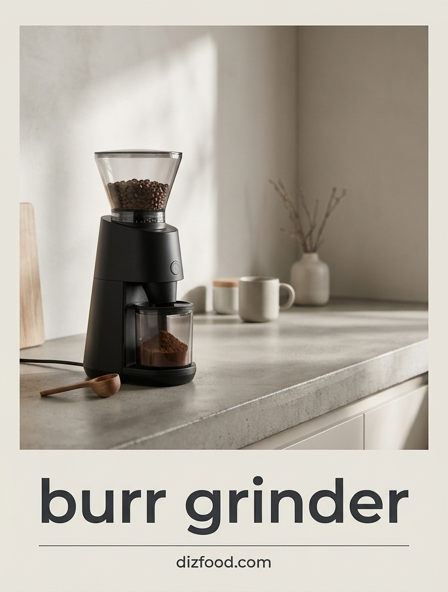
The Science of Particle Size Uniformity
The primary advantage of a burr grinder lies in its ability to achieve exceptional particle size uniformity. Unlike blade grinders that randomly shatter coffee beans into a mixture of dust and boulders, burr grinders utilize two oscillating abrasive surfaces to crush the beans. This mechanical process ensures that each coffee particle is roughly the same size, which is a critical requirement for controlled chemical extraction. When water interacts with coffee grounds, it extracts flavors at a rate determined by the surface area of the particles.
Uniformity allows for a predictable and even extraction process. If the particles are uneven, the smaller fragments, or "fines," will over-extract and produce bitterness, while the larger "boulders" will under-extract and result in a sour, weak flavor. By maintaining a tight distribution of particle sizes, burr grinders provide the structural foundation for a balanced cup. This scientific precision is what separates professional-grade brewing from amateur results, ensuring that every grain of coffee contributes equally to the final flavor profile without the interference of outliers.
Heat Friction and Flavor Preservation
Heat is the enemy of fresh coffee during the grinding process. High-speed motors and friction between grinding surfaces can generate significant thermal energy, which prematurely "cooks" the coffee oils and dissipates volatile aromatic compounds before the brewing even begins. Burr grinders, particularly those designed with high-quality stainless steel or ceramic burrs, are engineered to minimize this heat transfer. By utilizing gear reduction or high-torque, low-RPM motors, these machines process beans efficiently without a drastic rise in temperature.
Preserving these delicate oils is essential because they contain the lipids and aromatic esters responsible for the coffee's unique origin character. If the beans are scorched during the grind, the resulting cup often tastes flat, smoky, or unpleasantly metallic. Quality burr grinders focus on sharp cutting edges and efficient throughput to move the grounds quickly through the chamber, ensuring that the beans remain at a stable temperature. This preservation of the bean's integrity allows the true essence of the roast to be transferred directly into the water, maintaining the complex chemical structure that defines premium coffee.
Precision Control for Diverse Brewing Methods
Different coffee brewing methods require specific grind sizes to account for varying contact times and pressure levels. A burr grinder provides the precision necessary to navigate these requirements, offering a spectrum of settings that can be micro-adjusted. From the powdery consistency needed for Turkish coffee to the coarse, sea-salt texture required for a French press, the ability to lock in a specific distance between the burrs is indispensable for any serious kitchen setup.
| Brew Method | Grind Texture | Extraction Time |
|---|---|---|
| Espresso | Fine / Powder | 25-30 Seconds |
| Pour Over | Medium-Fine | 3-4 Minutes |
| French Press | Coarse | 4-5 Minutes |
| Cold Brew | Extra Coarse | 12-24 Hours |
This granularity of control allows the user to compensate for environmental factors like humidity or the age of the beans. By adjusting the burr gap by mere microns, a barista can "dial in" a recipe to perfection, ensuring that the resistance provided by the coffee bed perfectly matches the brewing equipment's pressure or flow rate requirements.
Eliminating Bitter Over Extraction
Bitterness in coffee is frequently the result of over-extraction, a phenomenon where water pulls too many organic compounds and tannins from the coffee grounds. This is a common issue with inconsistent grinds where microscopic particles, known as fines, are present in excess. These fines have an incredibly high surface-area-to-volume ratio, causing them to release their soluble solids almost instantly. By the time the larger grounds have reached their ideal extraction point, the fines have already moved past sweetness into astringency and harshness.
The precision of a burr grinder eliminates this disparity by narrowing the particle size distribution. Because the beans are crushed between two surfaces rather than sliced by a spinning blade, the production of dust is significantly reduced. This results in a "cleaner" cup of coffee with a more defined flavor profile. Without the muddying effect of over-extracted fines, the natural sweetness and acidity of the coffee can shine through, providing a smooth finish that lacks the dry, puckering sensation associated with poorly ground beans.
The Role of Burr Geometry in Aroma
The geometry of the burrs-whether they are conical or flat-plays a significant role in the sensory experience of the coffee, particularly its aroma and mouthfeel. Flat burrs consist of two parallel rings with teeth that force the beans through a narrow gap, generally producing a very unimodal (uniform) grind. This often leads to high clarity and intense aromatic peaks, making them a favorite for those who enjoy modern, light-roast espressos. Conical burrs, on the other hand, use a cone-shaped inner burr and a ring-shaped outer burr, typically producing a bimodal distribution.
This bimodal distribution includes a specific amount of smaller particles that contribute to a heavier body and a more traditional flavor profile. The way these burrs cut the bean affects how the cell walls are broken down, which in turn influences the release of aromatic gases. When a bean is ground efficiently with proper geometry, the "bloom" during brewing is more vigorous, releasing a bouquet of scents that are often lost with inferior grinding methods. Choosing a burr type allows the enthusiast to prioritize either the bright, floral aromas of a flat burr or the rich, textured aroma of a conical set.
Maximizing Soluble Solid Extraction
To achieve a perfect cup of coffee, one must extract the ideal percentage of soluble solids-typically between 18% and 22% of the coffee's weight. A burr grinder is the most effective tool for reaching this "sweet spot" consistently. Because the grind is uniform, the water can flow through the coffee bed with even resistance, preventing "channeling" where water finds a path of least resistance and leaves some coffee dry while over-washing other areas. Maximizing extraction involves managing the following factors:
- Surface Area: Increased uniformity ensures all particles contribute equally to the TDS (Total Dissolved Solids).
- Flow Rate: Consistent particle size allows for a predictable flow, essential for pour-over and espresso.
- Turbulence: Even grounds react predictably to the agitation of pouring water, preventing localized over-extraction.
When the extraction is maximized and balanced, the coffee displays its full potential of sugars and acids. A burr grinder ensures that the water interacts with the maximum possible amount of available surface area without the risk of extracting the woody, bitter cellulose that resides deep within the bean structure.
Why Blade Grinders Damage Beans
Blade grinders are essentially high-speed blenders that use impact force to pulverize coffee beans. This method is fundamentally flawed for coffee preparation because it offers zero control over the final product. The blade strikes the beans at random, creating a chaotic mixture of large chunks and microscopic powder. This lack of precision makes it impossible to repeat a recipe with any degree of accuracy. Furthermore, the high-velocity impact generates significant static and heat, which can strip the beans of their delicate top notes before they even reach the brewer.
Beyond the lack of uniformity, blade grinders often cause "fines" to clog the filters of various brewing devices, leading to a muddy, sediment-filled cup. The uneven sizes mean that during the brewing cycle, some coffee is being extracted for too long while others are barely being touched by the water. This results in a hollow, one-dimensional flavor that masks the premium qualities of specialty beans. Transitioning to a burr grinder is widely considered the single most important upgrade any coffee drinker can make to improve their daily experience.
Adjustable Settings for Dialing In Flavor
The process of "dialing in" refers to the small adjustments made to a grinder to find the perfect extraction for a specific bean and roast. Because coffee is an agricultural product, its density and moisture content change over time. A burr grinder's adjustable settings allow the user to react to these changes with precision. To dial in a flavor profile, one generally follows a systematic approach:
- Select a starting grind size based on the brew method.
- Evaluate the taste for sourness (under-extraction) or bitterness (over-extraction).
- Shift the burr adjustment finer to increase extraction or coarser to decrease it.
- Repeat the process until the desired balance of acidity and sweetness is achieved.
Without the stepped or stepless adjustment rings found on burr grinders, this level of refinement is impossible. These settings empower the user to manipulate the variables of time and surface area, turning a generic cup of coffee into a curated gastronomic experience. This flexibility is what allows a single grinder to be used for multiple styles of coffee throughout the day.
Consistency for Daily Recipe Success
In the kitchen, consistency is the hallmark of quality. A burr grinder provides the repeatability required to ensure that the cup of coffee you enjoyed yesterday can be recreated exactly today. This is achieved through the mechanical calibration of the burrs, which stay at a fixed distance until manually moved. Unlike manual "pulsing" with a blade grinder-which relies on guesswork and timing-a burr grinder delivers a specific output every time it is activated.
This consistency extends to the workflow as well. Many modern burr grinders include timed dosing or weight-based grinding features, allowing for a "set it and forget it" mentality that is perfect for busy mornings. When the grind size is a constant variable, the brewer can focus on other elements of the craft, such as water temperature or pour technique. By removing the unpredictability of the grind, the burr grinder acts as the anchor of the coffee-making process, providing a reliable foundation upon which complex and delicious recipes can be built day after day.
Unlocking Complex Tasting Notes
Specialty coffee is prized for its diverse range of tasting notes, from blueberry and jasmine to chocolate and tobacco. These nuances are highly sensitive to the extraction process. A burr grinder acts as the key to unlocking these complex flavors by providing the clarity necessary for the palate to distinguish between them. When coffee is ground inconsistently, the resulting flavors are often "muddled," where the individual characteristics of the bean are lost in a generic coffee taste.
By producing a clean and uniform grind, a burr grinder allows for a transparent extraction. This transparency means that the acidity is bright rather than sour, and the sweetness is distinct rather than hidden. For those who invest in high-quality, single-origin beans, using a burr grinder is the only way to ensure that the investment pays off in the cup. It allows for the full expression of the terroir-the unique environmental factors of the region where the coffee was grown. Ultimately, the burr grinder transforms coffee from a simple caffeine delivery system into a complex beverage capable of surprising and delighting the senses.





Comments