
Ever wondered how water can bubble and boil without being scorching hot? It all comes down to the fascinating relationship between pressure and heat. By reducing the atmospheric pressure within a sealed environment, you effectively lower the boiling point of liquids, allowing them to transform into vapor at surprisingly low temperatures. This "cool boil" is a game-changer for preserving delicate flavors and vital nutrients that typically degrade under intense heat. Understanding this scientific shift helps explain why controlled environments are so vital for modern culinary and industrial precision. To see how these techniques compare, explore the distinct advantages of Vacuum Boiling vs Open Air Boiling.
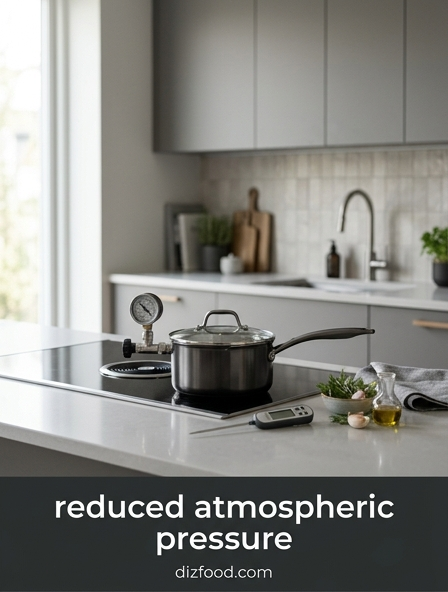
The Science of Reduced Boiling Points
The fundamental principle of low-pressure cooking lies in the relationship between ambient atmospheric pressure and the temperature at which a liquid transitions into vapor. In a standard kitchen environment at sea level, water boils at 100°C because the vapor pressure of the liquid must equal the downward force of 14.7 psi exerted by the atmosphere. When this external pressure is reduced through mechanical vacuum systems or high-altitude environments, the threshold for molecular escape is lowered significantly. This allows water to reach a vigorous boil at temperatures as low as 40°C or 50°C.
- Reduced external resistance on the liquid surface.
- Decreased energy requirement for phase transition.
- Lower thermal threshold for steam generation.
- Precise control over evaporation rates in delicate reductions.
By manipulating these variables, chefs can manipulate the physical state of ingredients without subjecting them to the destructive force of high heat. This phenomenon is governed by the Clausius-Clapeyron relation, which mathematically defines how the boiling point of a substance shifts in response to changes in surrounding pressure. Utilizing this science transforms the kitchen into a laboratory where the volatility of water is harnessed for superior culinary results.
Atmospheric Pressure and Molecular Excitation
At the molecular level, boiling is a state of high kinetic energy where molecules overcome intermolecular attractions to become gaseous. Under standard atmospheric conditions, molecules require substantial thermal excitation to break free from the liquid phase. However, when a vacuum pump evacuates the air from a cooking vessel, the number of atmospheric collisions hitting the liquid surface drops. This lack of resistance means that even at room temperature, molecules can achieve the necessary velocity to form vapor bubbles within the liquid mass.
- Evacuation of air reduces the physical barrier of gas molecules.
- Liquid molecules require less kinetic energy to overcome surface tension.
- Internal vapor pressure reaches equilibrium with the environment at lower temperatures.
- Bubble formation occurs uniformly throughout the medium.
This excitation process is the cornerstone of "cool boiling." While the water appears to be boiling violently, the actual temperature remains low enough to touch. This creates a unique environment where mechanical agitation occurs through bubble dynamics without the risk of thermal scorching or the degradation of volatile aromatic compounds that usually flee at higher temperatures.
Why Cool Boiling Preserves Essential Nutrients
Traditional boiling is often detrimental to the nutritional profile of food, as many vitamins and antioxidants are thermolabile, meaning they break down when exposed to high heat. Vitamin C, B-complex vitamins, and various phytonutrients are particularly sensitive to temperatures exceeding 60°C. By utilizing reduced atmospheric pressure, chefs can cook plant tissues and proteins at temperatures that remain below the threshold of nutrient denaturation.
| Nutrient Type | Sensitivity | Low Pressure Benefit |
|---|---|---|
| Vitamin C | Highly Heat Sensitive | Retained at 45°C boiling |
| Beta-Carotene | Oxidation Risk | Protected in oxygen-free vacuum |
| Enzymes | Denatures >55°C | Active during low-temp infusion |
Beyond vitamin preservation, the absence of oxygen in a vacuum environment prevents oxidative browning and the loss of chlorophyll. This ensures that vegetables retain their vibrant natural colors and biological value. The mechanical action of the cool boil also assists in softening fibers without the aggressive structural collapse associated with prolonged exposure to 100°C water, resulting in a more bioavailable and healthful meal.
The Relationship Between Altitude and Vapor Pressure
Nature provides a natural experiment in reduced pressure through high-altitude environments. As elevation increases, the density of the atmosphere decreases, leading to a corresponding drop in boiling points. For every 300 meters of elevation, the boiling point of water drops by approximately one degree Celsius. While this can be a frustration for mountain climbers trying to cook pasta, it serves as the conceptual foundation for vacuum-assisted kitchen technology.
- Sea Level (0m): Boiling point 100°C.
- Denver, CO (1,600m): Boiling point ~95°C.
- Mount Everest (8,848m): Boiling point ~71°C.
- Vacuum Chamber (Simulated): Boiling point 20°C - 50°C.
In a controlled kitchen setting, we use vacuum chambers to simulate "altitudes" far beyond any terrestrial peak. By dropping the internal pressure of a pot to a near-vacuum, we can achieve vapor pressure equilibrium at ambient temperatures. This allows for the extraction of intense flavors from herbs and fruits that would otherwise be destroyed by the heat required to boil water at sea level. Understanding this relationship allows for the precise replication of atmospheric conditions to achieve specific culinary outcomes.
Maintaining Food Texture With Low Temperature Boiling
Texture is often the first casualty of high-heat cooking. When vegetables are boiled at 100°C, the pectin that holds cell walls together dissolves rapidly, leading to a mushy consistency. Similarly, proteins in meats and seafood can become tightly coiled and rubbery when exposed to traditional boiling temperatures. Low-temperature boiling under reduced pressure offers a solution by allowing for the mechanical benefits of boiling-such as hydration and circulation-without the structural damage.
- Pectin chains remain stable below 60°C, preserving "crunch."
- Protein fibers undergo gentle transformation rather than rapid contraction.
- Cellular water is retained, preventing the "dried out" effect of overcooking.
- Gentle agitation prevents the physical bruising of delicate ingredients.
This method is particularly effective for delicate seafood like scallops or squid, which transition from raw to overcooked in a matter of degrees. By boiling at 45°C in a vacuum, the chef can achieve a perfectly tender texture while ensuring the item is cooked through. The result is a mouthfeel that is impossible to achieve with standard thermal techniques, characterized by succulence and structural integrity.
Vacuum Cooking Technology in Modern Kitchens
The integration of vacuum technology into the culinary world has moved beyond industrial food processing into high-end gastronomy and even home kitchens. Specialized equipment such as rotary evaporators, vacuum sealers, and chamber vacuums allow chefs to manipulate atmospheric pressure with digital precision. These tools are used not just for preservation, but as active cooking vessels that redefine the possibilities of flavor extraction and texture modification.
- Rotary Evaporators: Distill flavors at room temperature.
- Vacuum Gastrovacs: Cook food in a vacuum-sealed, temperature-controlled pot.
- Chamber Vacuum Sealers: Use pressure shifts to infuse liquids into porous foods.
- Vacuum-Assisted Distillers: Capture volatile aromatics from fresh herbs.
The Gastrovac, in particular, is a standout tool. It functions by creating a vacuum inside a heated pot, lowering the boiling point of the cooking liquid. When the vacuum is released at the end of the cycle, the food acts like a sponge, pulling the flavorful cooking liquid into its de-pressurized pores. This "impregnation" technique creates flavor profiles that are deep, consistent, and achieved at temperatures that keep the ingredients tasting fresh and vibrant.
Vaporization Dynamics at Sub Atmospheric Levels
When pressure is removed from a system, the dynamics of vaporization undergo a significant shift. In a standard pot, bubbles form primarily at the bottom where heat is applied, rising through the liquid as they overcome the weight of the water and the air above. In a sub-atmospheric environment, bubble nucleation occurs more spontaneously and at lower energy thresholds. This creates a different type of turbulence within the liquid, which can be utilized for gentle mixing and aeration.
| Feature | Atmospheric Boiling | Sub-Atmospheric Boiling |
|---|---|---|
| Bubble Size | Large, high buoyancy | Smaller, more frequent |
| Agitation | Violent and thermal | Gentle and mechanical |
| Evaporation Rate | Dependent on high heat | High even at low heat |
This altered vaporization is critical for reducing sauces. Traditionally, reduction requires high heat to drive off water, which often darkens the sauce and alters the flavor through caramelization or Maillard reactions. Under reduced pressure, water vaporizes rapidly at 40°C, allowing a chef to concentrate a fresh fruit juice into a thick syrup without ever changing its raw, bright flavor profile. The vaporization is efficient but thermally forgiving.
Enhancing Flavor Profiles Without High Heat
High heat is the enemy of many delicate flavor compounds. Esters, terpenes, and aldehydes-the molecules responsible for the floral, fruity, and herbal notes in food-are often highly volatile. In a traditional boil, these aromatics are the first to be carried away by steam, leaving the kitchen smelling wonderful but the food tasting flat. Reduced pressure boiling allows these compounds to remain within the liquid or be captured through closed-circuit distillation.
- Low temperatures prevent the thermal degradation of aromatic oils.
- Vacuum environments minimize oxygen, preventing flavor "flattening."
- Concentration occurs through water removal, not heat-driven chemical change.
- Closed systems capture "lost" vapors for use as essences.
By boiling a broth at 50°C under vacuum, the chef preserves the "top notes" of the ingredients. For instance, a vacuum-reduced strawberry coulis tastes like an intensified fresh strawberry rather than a cooked jam. This technique allows for a purity of flavor that respects the raw ingredient while achieving the density and viscosity required for modern plating and sauce work.
Thermodynamics of the Perfect Cool Boil
The thermodynamics of cool boiling involve a delicate balance between latent heat of vaporization and external energy input. Even though the temperature is low, the process of turning liquid into gas still requires energy. In a vacuum, this energy is often pulled from the liquid itself, which can cause the temperature of the remaining liquid to drop-a process known as evaporative cooling. To maintain a "cool boil," a constant, low-level heat source must be applied to offset this energy loss.
- Latent heat must be managed to prevent the liquid from freezing.
- Precise thermal sensors are required to maintain the target range.
- Energy efficiency is higher as less heat is lost to the environment.
- Uniform heat distribution prevents localized "hot spots" in the vacuum.
This thermodynamic control allows for ultra-precise cooking. Because the boiling point is "fixed" by the pressure setting, the temperature cannot rise above that point as long as the liquid is boiling. This creates a self-regulating thermal environment. Chefs use this to ensure that a delicate custard or emulsion never exceeds a specific degree, eliminating the risk of curdling while benefiting from the agitation of the boil.
Comparing Traditional Boiling vs Low Pressure Methods
The choice between traditional boiling and low-pressure methods depends on the desired outcome. Traditional boiling is superior for developing deep, roasted flavors through the Maillard reaction and for softening tough collagen in braised meats. Low-pressure boiling, conversely, is the tool of choice for freshness, color retention, and nutrient density. Understanding the comparative strengths of each allows a chef to choose the right atmospheric tool for the task at hand.
| Metric | Traditional (100°C) | Low Pressure (40-60°C) |
|---|---|---|
| Color | Dull, oxidized | Vibrant, fresh |
| Flavor | Developed, cooked | Bright, concentrated |
| Vitamin Retention | Low to Moderate | Very High |
| Cooking Speed | Fast for tough fibers | Superior for reductions |
Ultimately, low-pressure boiling represents a shift in culinary philosophy: moving away from the brute force of fire toward the elegant manipulation of physics. While traditional methods remain a staple for comfort and depth, vacuum-assisted boiling provides the precision required for the next generation of healthy, flavor-forward cuisine. By mastering the atmosphere, the kitchen expands its boundaries of taste and texture.

Comments