
Have you ever noticed how long it takes for a pot of water to reach a rolling boil? The secret to speed isn't just turning up the burner; it is actually about managing energy loss. Reducing evaporation is the primary key to boiling water more efficiently because it prevents latent heat from escaping into the air. When steam is allowed to drift away, your stove has to work much harder to maintain rising temperatures. By trapping that moisture, you keep the thermal energy contained within the vessel, significantly shortening the wait for your morning tea or pasta. It is a simple thermodynamic hack that saves both time and household energy. To see exactly how much energy you can save, check out our guide on Covered Pot Boiling vs Uncovered Pot Boiling.
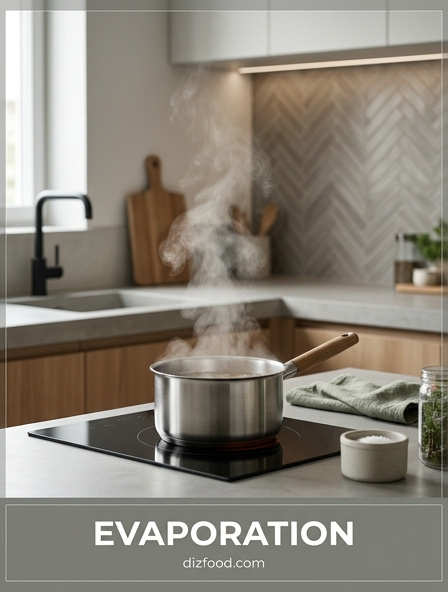
The Science of Latent Heat and Evaporation
In the culinary environment, understanding the science of latent heat is essential for mastering temperature control. When water is heated on a stovetop, the energy provided by the burner increases the kinetic energy of the water molecules. However, once the water reaches its boiling point, the temperature remains constant at 100 degrees Celsius despite the continuous application of heat. This phenomenon occurs because the energy, known as the latent heat of vaporization, is being consumed to break the intermolecular bonds holding the liquid together, allowing molecules to transition into a gaseous state.
Evaporation is not merely a byproduct of cooking; it is a powerful energy-consuming process. Each gram of water that escapes as steam carries away a significant amount of thermal energy. In a kitchen setting, this means that an uncovered pot is constantly losing the very energy intended to cook the food. If the rate of evaporation is high, the stove must work significantly harder to maintain the liquid at a simmer or boil, as the "hottest" molecules are the ones most likely to escape into the air, effectively cooling the remaining liquid through the process of evaporative cooling.
Why Using a Lid Saves Energy
Utilizing a lid while heating liquids is one of the most fundamental yet effective methods of energy conservation in the kitchen. A lid creates a physical barrier that traps the water vapor escaping from the surface of the liquid. When this steam is contained, it creates a localized environment of high humidity and pressure directly above the water. This saturated atmosphere significantly reduces the rate of further evaporation, ensuring that the latent heat remains within the vessel rather than dissipating into the kitchen air.
- Heat Reflection: The underside of a lid reflects radiant heat back into the liquid.
- Condensation Cycle: Steam hits the cooler lid, condenses back into liquid, and releases its latent heat back into the pot.
- Pressure Increase: A slight increase in internal pressure can marginally accelerate the heating process.
- Thermal Insulation: The trapped layer of air acts as an additional insulating barrier against the cooler room temperature.
By preventing the escape of steam, a lid allows the liquid to reach its boiling point up to 25% faster. This reduction in time translates directly to lower utility consumption, whether using gas, electric, or induction heating elements.
Reducing Surface Area to Prevent Vapor Loss
The geometry of cookware plays a pivotal role in how quickly evaporation occurs. The rate of evaporation is directly proportional to the surface area of the liquid exposed to the atmosphere. In a wide, shallow pan, such as a skillet or a wide sauté pan, a large number of molecules are positioned at the interface between the liquid and the air. This configuration facilitates a rapid transition from liquid to gas, which is ideal for reducing sauces but highly inefficient for boiling water for pasta or grains.
To maximize efficiency, a tall, narrow pot is preferred. By reducing the diameter of the water's surface, you limit the "escape route" for energetic molecules. This structural choice ensures that more heat stays concentrated within the volume of the water. When the surface area is minimized, the total mass of water lost to steam over a specific duration is significantly lower, allowing the stove's energy to be focused on raising the internal temperature rather than fueling a phase change at the surface.
The Relationship Between Steam and Boiling Speed
Steam is the visible manifestation of energy leaving a system. In the context of a kitchen, the volume of steam produced is often mistaken for the intensity of the cook, but it is actually an indicator of energy loss. When a pot produces a vigorous cloud of steam, it signals that the energy from the burner is being used to convert liquid into gas rather than increasing the temperature of the food. The relationship between steam production and boiling speed is inverse; the more steam that escapes, the slower the temperature rises toward the boiling point.
Efficient boiling requires managing the transition point where bubbles first begin to form. As bubbles of vapor rise through the water and break the surface, they release the heat they carried from the bottom of the pot. If this steam is not managed, the total time required to reach a rolling boil increases. Controlling the environment above the water-typically by keeping it enclosed-ensures that the steam aids in heating the upper layers of the liquid, creating a more uniform temperature gradient and accelerating the overall process.
How Evaporation Slows Down the Heating Process
Evaporation is fundamentally a cooling process, a concept that is counterintuitive when standing over a hot stove. As the most energetic molecules escape from the surface of a liquid, the average kinetic energy of the molecules left behind decreases. This results in a drop in the liquid's temperature, or at the very least, a slowing of the rate at which the temperature increases. In the kitchen, this means that for every calorie of heat added by the stovetop, a portion is immediately countered by the cooling effect of evaporation.
This "tug-of-war" between the heating element and evaporative cooling determines the efficiency of the cooking process. If a pot is left uncovered in a drafty kitchen, the cooling effect is magnified as dry air moves over the surface, stripping away moisture and heat more rapidly. To combat this, cooks must recognize that high heat settings do not always equate to faster cooking if the evaporation rate is allowed to go unchecked. Minimizing this cooling effect is the key to thermodynamic efficiency in any boiling or simmering task.
Choosing the Right Pot for Efficiency
Selecting the appropriate vessel for boiling water involves more than just matching the size to the volume of food. The material and shape of the pot determine how heat is distributed and how much is lost to the environment. Effective cookware should have high thermal conductivity at the base to absorb heat from the source, but the sides and top must be designed to contain that energy. The following table compares common kitchen vessels and their efficiency regarding heat retention and evaporation control.
| Vessel Type | Surface Area | Heat Retention | Efficiency Rating |
|---|---|---|---|
| Stock Pot | Low | High | Excellent |
| Saucepan | Medium | Medium | Good |
| Skillet / Frying Pan | High | Low | Poor |
| Dutch Oven | Medium | Very High | Excellent |
By choosing a pot like a Dutch oven or a tall stock pot, the chef minimizes the surface-to-volume ratio. This physical configuration inherently resists the cooling effects of evaporation, ensuring that the energy input from the stove is utilized with maximal effectiveness to reach and maintain the desired temperature.
Energy Conservation in the Modern Kitchen
In the modern kitchen, energy conservation is both an environmental necessity and a matter of household economy. Boiling water is one of the most frequent tasks performed, yet it is often the most wasteful. Small adjustments in technique can lead to substantial cumulative savings. For instance, using only the amount of water necessary for the task reduces the mass that needs to be heated, while keeping the lid on prevents the loss of latent heat. These practices reduce the carbon footprint of a household and lower monthly utility bills.
Furthermore, the choice of stovetop technology influences how evaporation is managed. Induction cooktops, which heat the vessel directly through electromagnetism, are highly efficient but still suffer from energy loss if the pot is uncovered. Implementing a "lid-on" policy during the initial heating phase of any liquid-based meal is the simplest way to optimize a kitchen's energy profile. Conserving heat during the boiling process ensures that the kitchen remains cooler, reducing the load on ventilation and air conditioning systems, further contributing to overall domestic energy efficiency.
Minimizing Heat Dissipation During Boiling
Heat dissipation occurs through three primary mechanisms: conduction, convection, and radiation. In a kitchen pot, heat is lost through the sides of the vessel via radiation and convection, but the most significant losses often occur at the liquid-air interface through evaporation. To minimize this dissipation, the chef must create a "closed system." This is achieved by ensuring the pot is correctly sized for the burner; a burner that is wider than the pot wastes heat by warming the air around the vessel rather than the liquid inside.
- Match Burner Size: Ensure the flame or heating element does not exceed the pot's base.
- Use Tight Lids: Prevent steam from escaping through gaps.
- Insulate the Vessel: Use heavy-walled pots like cast iron to retain heat.
- Limit Agitation: Avoid unnecessary stirring, which increases surface exposure and cooling.
By addressing these factors, the rate of heat loss to the room is significantly curtailed. Minimizing dissipation ensures that the thermal energy remains concentrated where it is needed, leading to faster cooking times and more consistent results in various culinary applications.
Practical Benefits of Faster Water Boiling
The practical benefits of reaching a boil quickly extend beyond simple time-saving. In professional and home kitchens alike, efficiency dictates the flow of meal preparation. When water boils faster, the "window of preparation" is tightened, allowing for better synchronization between different components of a dish. For example, when cooking pasta, a rapid return to a boil after the pasta is added is crucial for maintaining the desired al dente texture. If the water takes too long to recover its temperature, the pasta may become mushy as it sits in lukewarm water.
Additionally, faster boiling reduces the amount of humidity released into the kitchen. Excess steam can lead to condensation on cabinetry and walls, which over time may cause damage or promote mold growth. By containing steam through efficient boiling techniques, the kitchen environment remains more comfortable and drier. This control over the stovetop environment also allows for more precise timing, ensuring that vegetables are blanched quickly to retain their vibrant color and nutritional value, rather than being subjected to prolonged heat.
Optimizing Thermodynamic Efficiency on the Stovetop
Optimizing thermodynamic efficiency on the stovetop requires a holistic approach to heat management. Every action, from the initial selection of the pot to the final adjustment of the flame, impacts the transfer and retention of energy. The goal is to maximize the temperature gradient between the heat source and the liquid while minimizing the gradient between the liquid and the surrounding air. By using lids, choosing narrow vessels, and matching the heat source to the pot size, a cook creates a highly efficient system that treats heat as a valuable resource.
The ultimate objective is to reduce the "lost work" associated with evaporation. In thermodynamics, any energy that leaves the system without contributing to the desired outcome-in this case, cooking the food-is considered an inefficiency. By understanding that evaporation is the primary vehicle for this loss, anyone in the kitchen can take simple, science-based steps to improve their cooking process. This leads to a more controlled, faster, and environmentally friendly culinary practice that respects the physical laws governing heat and matter.

Comments