
Imagine a kitchen where your cooktop stays cool to the touch while water reaches a rolling boil in record time. This incredible shift in performance is powered by electromagnetic energy, which bypasses the heating element entirely to vibrate molecules directly within your cookware. By creating a concentrated magnetic field, induction technology ensures nearly zero heat loss, providing professional-grade precision and lightning-fast speed that traditional stovetops simply can't match. This transformation not only saves you valuable time but also enhances safety and energy efficiency during every meal prep. To see how these methods truly stack up, explore the detailed differences between Induction Boiling vs Gas Boiling.
The Physics of Induction Heating
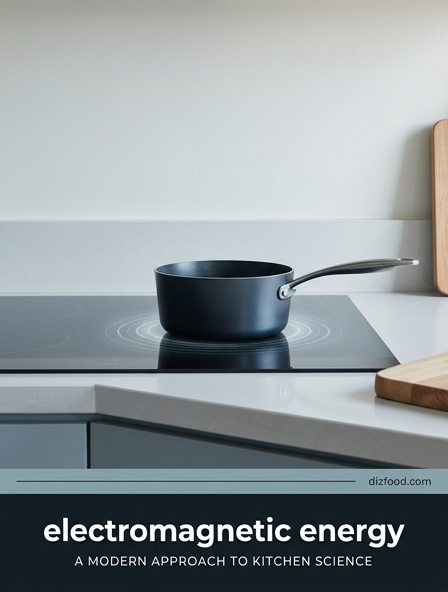
Underneath the glass-ceramic surface of an induction cooktop lies a sophisticated coil of copper wire. When an alternating electric current flows through this coil, it generates a high-frequency oscillating magnetic field. This field penetrates the base of a ferromagnetic vessel, inducing a flow of electric current-specifically eddy currents-within the metal itself. Because the cookware possesses internal resistance, this electrical flow is converted directly into thermal energy through Joule heating. Unlike traditional methods, no heat is generated on the cooktop surface itself; instead, the pot becomes the heat source. This process relies on the magnetic permeability of the material, requiring iron or specific stainless steel alloys to function effectively. The interaction between the magnetic flux and the molecular structure of the cookware ensures a rapid rise in temperature. This localized heating mechanism minimizes energy dissipation into the surrounding atmosphere, establishing a closed-loop system where energy is utilized with extreme precision. The fundamental laws of electromagnetism thus replace the combustion of gas or the resistive glow of traditional electric elements.
Rapid Boiling Through Magnetic Fields
The speed at which induction systems reach boiling point is primarily due to the instantaneous nature of magnetic field propagation. When the cooktop is activated, the magnetic field travels at the speed of light, immediately exciting the electrons within the pan's base. This creates a surge of thermal energy that transfers to the water molecules through conduction within the vessel. Because the heating happens at the molecular level within the pot, there is no "ramp-up" period required to heat a burner or a heavy grate.
- Magnetic field strength: Dictates the density of the induced current.
- Coil density: Ensures uniform field distribution across the vessel.
- Vessel base thickness: Influences the depth of the skin effect.
- Water volume: Determines the total thermal load.
The efficiency of this transfer allows a liter of water to reach 100°C significantly faster than traditional radiant or gas hobs. The concentration of energy within the footprint of the pan ensures that the liquid absorbs the maximum possible caloric intake per second, reducing the total duration of the cooking process.
Energy Transfer Efficiency in Modern Kitchens
Energy efficiency in the kitchen is measured by how much input energy actually reaches the food. Induction cooktops represent the pinnacle of this metric, achieving approximately 85% to 90% efficiency. In contrast, gas burners often lose over 60% of their heat to the air surrounding the pot. This disparity exists because induction eliminates the middleman. By generating heat directly in the cookware, the system avoids the thermal lag and convection losses associated with open flames.
| Method | Efficiency Rating | Primary Heat Loss Source |
|---|---|---|
| Induction | 90% | Minimal (Radiation) |
| Electric Coil | 70% | Air gap / Surface |
| Gas Flame | 40% | Ambient air / Exhaust |
Modern kitchens utilizing electromagnetic energy significantly reduce their carbon footprint and electricity consumption. The lack of wasted energy also means the kitchen environment remains cooler, reducing the demand on ventilation and air conditioning systems.
Thermal Performance of Electromagnetic Cooktops
The thermal performance of electromagnetic cooktops is characterized by uniform heat distribution across the base of the cookware. Because the eddy currents are generated throughout the entire surface area of the ferromagnetic material, hotspots are virtually eliminated. This creates a stable thermal profile that is essential for delicate tasks like melting chocolate or simmering thick sauces. Traditional gas flames often create a ring of intense heat with a cooler center, whereas induction provides a consistent thermal floor. Furthermore, the glass-ceramic surface remains relatively cool, which prevents spilled food from burning and simplifies maintenance. The performance is also highly scalable; the system can switch from a gentle simmer to a high-power sear in seconds. This responsiveness is a direct result of the low thermal mass of the heating system itself. Without a glowing element to cool down, the thermal inertia is dictated solely by the cookware. This allows for a level of culinary precision that was previously only available in laboratory settings, ensuring professional-grade results in domestic environments.
Direct Vessel Heating vs Heat Conduction
To understand the advantage of induction, one must distinguish between direct vessel heating and traditional heat conduction. In a standard electric or gas setup, heat is generated by an external source and then conducted through an air gap or a ceramic plate into the pan. This indirect method is inherently inefficient due to the second law of thermodynamics, where heat naturally dissipates into the cooler surroundings.
- Source: Induction uses the pan; Gas uses an external flame.
- Medium: Induction uses magnetic flux; Gas uses air convection.
- Surface: Induction stays cool; Radiant stays hot.
- Losses: Induction minimizes ambient scatter; Conduction allows significant drift.
In direct vessel heating, the pan serves as the primary element. This means the temperature gradient is highest exactly where it is needed-at the interface of the pan and the food. Conduction-based systems must reach temperatures significantly higher than the target cooking temperature to overcome the resistance of the intervening materials. By removing these layers, induction provides a more direct energy path.
Speed Benchmarks for Induction Boiling
Speed benchmarks provide a clear quantitative advantage for induction technology. In standardized testing, induction cooktops consistently outperform gas and radiant electric models when tasked with boiling specific volumes of water. For instance, boiling six liters of water on a high-output induction zone typically takes less than ten minutes, whereas a high-BTU gas burner may require nearly twenty minutes to achieve the same result. These benchmarks are a product of the high wattage density achievable through electromagnetic energy. Most modern induction hobs feature a "boost" mode that redirects maximum electrical current to a single zone, temporarily exceeding the rated capacity of the circuit to provide rapid thermal onset.
- Induction (2L): Approximately 4.5 minutes.
- Radiant Electric (2L): Approximately 9 minutes.
- Gas (2L): Approximately 11 minutes.
These metrics demonstrate that induction is not just marginally faster, but often twice as quick as traditional methods. This time-saving factor is a significant driver in the adoption of electromagnetic cooking technology in both residential and commercial kitchens.
Precision Control and Thermal Response
One of the most significant advantages of electromagnetic energy in the kitchen is the level of precision control it offers. Unlike gas, which requires visual adjustment of a flame, or electric coils that retain heat for several minutes, induction responds instantly to adjustments in the control interface. When the power level is reduced, the magnetic field strength drops immediately, and the generation of eddy currents ceases. This results in an instantaneous drop in temperature within the cookware. This responsiveness is crucial for techniques that require exact temperature maintenance. Modern induction units often feature digital sensors that monitor the temperature of the vessel base, allowing for automated cycles that maintain a perfect simmer or prevent oil from reaching its smoke point. This feedback loop creates a highly stable cooking environment where fluctuations are minimized. The ability to pulse the magnetic field at high frequencies allows for granular power levels, from 50 watts for gentle warming to 3700 watts for rapid searing, providing a dynamic range that far exceeds traditional thermal systems.
Reducing Ambient Heat Loss During Boiling
Traditional boiling methods are notorious for increasing the ambient temperature of the kitchen. Because gas flames and radiant elements heat the air as much as the pot, a significant portion of the energy is wasted as fugitive heat. This not only makes the cooking environment uncomfortable but also increases the workload on HVAC systems. Induction technology addresses this issue by ensuring that the electromagnetic energy is confined almost entirely to the footprint of the cooking vessel.
- Lower ambient temperature: Enhances chef comfort and safety.
- Increased safety: The cooktop surface remains cool to the touch.
- Reduced energy bills: Less waste leads to lower utility costs.
- Improved ventilation efficiency: Fewer thermal plumes to manage.
By focusing energy directly into the metal of the pot, the surrounding glass-ceramic surface remains cool, except for the heat conducted back from the pot itself. This lack of peripheral heat loss means that more of the paid-for energy is used for cooking, and the kitchen stays significantly cooler.
Advanced Eddy Current Technology
The effectiveness of modern induction is driven by advancements in eddy current technology. Engineers have refined the design of the induction coils and the frequency of the alternating current to maximize the skin effect in ferromagnetic cookware. Most induction hobs operate at frequencies between 20 kHz and 50 kHz, which is high enough to induce significant currents without causing audible noise. Advanced power electronics, such as Insulated Gate Bipolar Transistors (IGBTs), allow for the efficient switching of these high-frequency currents. Furthermore, modern systems often feature multi-coil arrays that can detect the size and shape of the pan, activating only the specific coils covered by the vessel. This "flex-zone" technology ensures that the magnetic flux is perfectly matched to the cookware, further enhancing efficiency. Future developments are looking into even higher frequencies and improved magnetic shielding to further localize the energy. These technical refinements continue to push the boundaries of how quickly and efficiently thermal energy can be generated within a kitchen environment, making the technology increasingly accessible and powerful.
Future Kitchen Speed Performance Standards
As the world moves toward electrification, the standards for kitchen speed and performance are being redefined by electromagnetic energy. Future benchmarks will likely prioritize watt-second efficiency and carbon-neutral operation. Smart kitchen integration is already allowing induction cooktops to communicate with wireless probes and smart cookware, ensuring that water reaches a boil and then automatically stabilizes at the perfect poaching or simmering temperature. This level of automation reduces the margin for error and improves consistency.
- Efficiency ratings: Moving toward a mandatory 92% minimum.
- Detection sensitivity: Enhanced recognition of non-standard vessel shapes.
- AI Integration: Thermal curve optimization based on food density.
- Standardized metrics: Universal "Quick-Boil" certifications for consumers.
These standards will push manufacturers to innovate further in coil density and power management. The integration of solid-state cooking technology and advanced magnetic materials will likely lead to even thinner cooktop profiles and faster response times, ultimately transforming the domestic cooking experience into a high-performance scientific process.






Comments