
Understanding the Bacterial Danger Zone
The concept of the "Danger Zone" is fundamental to food safety, referring to the specific temperature range where bacteria multiply most rapidly. This critical window exists between 40°F and 140°F. Within this range, a single bacterium can divide and double every twenty minutes, potentially reaching dangerous levels in just a few hours. Common pathogens such as Salmonella, Escherichia coli, and Listeria monocytogenes thrive in these ambient conditions, making it essential for home cooks and professionals alike to monitor how long food remains at these temperatures.
- Cold storage must be maintained below 40°F to inhibit growth.
- Hot holding must remain above 140°F to ensure safety.
- Perishable items should never be left out for more than two hours.
- Bacteria growth slows significantly below 40°F but does not always stop.
- Freezing at 0°F stops growth but does not necessarily kill existing bacteria.
Understanding this zone allows individuals to manage food handling effectively. By minimizing the time food spends between these two thermal markers, the risk of foodborne illness is drastically reduced. Awareness of the environment, including room temperature and humidity, further helps in assessing how quickly food might enter this hazardous state.
Critical Boiling Temperatures for Safety
Boiling is one of the most reliable methods for ensuring that food and liquids are safe for consumption. At sea level, water boils at 212°F (100°C), a temperature far exceeding the upper limit of the danger zone. This intense heat is sufficient to denature the proteins in most harmful microorganisms, effectively neutralizing them. However, the effectiveness of boiling depends on both the temperature reached and the duration of the heat application to ensure the core of the food is treated.
| Liquid Type | Boiling Point | Safety Purpose |
|---|---|---|
| Pure Water | 212°F | Pathogen elimination |
| Soups/Sauces | 212°F+ | Safe reheating |
| Milk | 212°F | Scalding/Pasteurization |
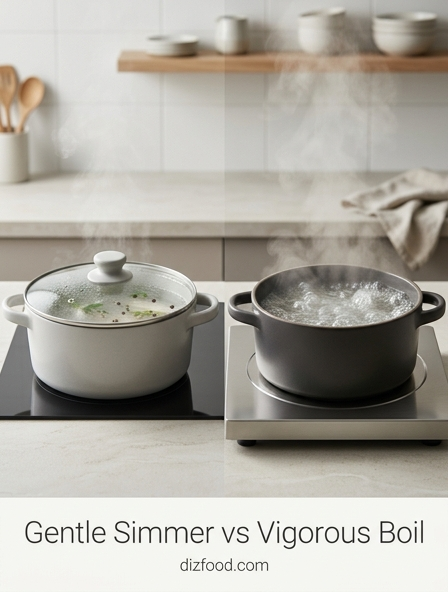
It is important to note that atmospheric pressure affects the boiling point; at higher altitudes, water boils at a lower temperature. Consequently, food may need to be boiled for a longer duration to achieve the same level of microbial reduction. For maximum safety, a rolling boil-where bubbles continue to break the surface even when stirred-should be maintained for at least one full minute before removing the heat source.
Proper Food Heating Guidelines
Heating food properly is the primary defense against biological hazards in the kitchen. Simply making food "hot to the touch" is insufficient; the internal temperature must reach specific thresholds to ensure that any present pathogens are destroyed. Different types of proteins and ingredients require different final temperatures due to their varying density and the specific types of bacteria they are likely to harbor. Following standardized heating charts is the only way to guarantee the safety of a meal.
- Poultry and ground poultry must reach a minimum of 165°F.
- Ground meats like beef or pork require an internal temperature of 160°F.
- Whole cuts of beef, pork, and lamb should be heated to 145°F with a rest time.
- Seafood and fish are generally safe once they reach 145°F.
- Leftovers and casseroles must be reheated to a minimum of 165°F.
To achieve these temperatures evenly, it is often necessary to stir liquid-based dishes or rotate items in a microwave. Using a lid can also help trap steam, which increases the efficiency of the heat transfer. Always allow for a "rest period" after heating, as the temperature can continue to rise slightly, ensuring a more thorough kill rate for bacteria.
Essential Kitchen Sanitation Practices
Sanitation is a proactive approach to preventing the spread of bacteria before it ever reaches the food. A clean kitchen environment minimizes the "bioburden," or the amount of bacteria present on surfaces that could potentially contaminate ingredients. This involves a two-step process: cleaning, which removes visible dirt and grease, and sanitizing, which uses chemical agents or high heat to reduce the number of microorganisms to safe levels. Consistency is key to maintaining a healthy cooking space.
- Wash hands with warm soap and water for at least 20 seconds.
- Sanitize countertops using a dilute bleach solution or commercial spray.
- Change dishcloths and sponges daily to prevent bacterial buildup.
- Clean the handles of appliances and faucets frequently.
- Ensure all utensils are washed in water at least 140°F.
Beyond surfaces, the disposal of waste is critical. Trash bins should be covered and emptied regularly to avoid attracting pests that carry pathogens. Additionally, keeping the sink area dry when not in use prevents the growth of mold and moisture-loving bacteria. A rigorous sanitation routine creates a sterile barrier that protects both the cook and the consumer from invisible kitchen dangers.
Safe Cooling and Reheating Methods
Improper cooling is a leading cause of foodborne illness, as large batches of food can remain in the danger zone for hours if not handled correctly. The goal is to move food through the 140°F to 40°F range as quickly as possible. This is often achieved using a "two-stage" cooling method: cooling from 140°F to 70°F within two hours, and then down to 40°F within the next four hours. Reheating requires the opposite approach, bringing the food rapidly back to a safe internal temperature.
- Divide large portions into shallow containers for faster cooling.
- Use an ice-water bath to quickly drop the temperature of soups.
- Avoid placing steaming hot food directly into a weak refrigerator.
- Reheat all leftovers to an internal temperature of 165°F.
- Only reheat food once; repeated cycles increase the risk of contamination.
When reheating, ensure that the heat is applied evenly. Using a microwave can create "cold spots" where bacteria might survive, so it is vital to stir and rotate the food. For liquids like gravies or sauces, bringing them to a full rolling boil is the safest practice. Proper management of these thermal transitions ensures that leftovers remain a safe and convenient option.
Eliminating Pathogens Through Boiling
Boiling serves as a definitive "kill step" in the culinary process. While many bacteria can survive moderate heat, few can withstand the sustained temperature of boiling water. This process is particularly vital when dealing with water of uncertain quality or when preparing items that have been handled extensively. The kinetic energy of boiling water facilitates rapid heat transfer, ensuring that every part of the submerged item reaches a lethal temperature for pathogens like Giardia, Cryptosporidium, and various viruses.
- A rolling boil is necessary to ensure uniform temperature.
- Boil for one minute at low altitudes and three minutes above 6,500 feet.
- Keep the pot covered to maintain heat and prevent evaporation.
- Ensure the volume of water is sufficient to fully submerge the food.
- Cool boiled liquids rapidly if they are meant for later consumption.
It is worth noting that while boiling kills active bacteria and viruses, it does not always destroy bacterial spores or certain toxins produced by bacteria like Staphylococcus aureus. Therefore, boiling should be used as a tool for safety, but it cannot "fix" food that has already spoiled or been left in the danger zone for an excessive amount of time.
Monitoring Internal Food Temperatures
Visual cues, such as the color of meat or the clarity of juices, are notoriously unreliable indicators of food safety. The only scientific method to ensure food has left the danger zone is the use of a calibrated food thermometer. Monitoring the internal temperature allows the cook to be precise, ensuring the food is neither undercooked and dangerous nor overcooked and unpalatable. Different styles of thermometers, such as digital instant-read or dial-type, offer varying levels of speed and accuracy.
| Food Item | Target Internal Temp | Placement Site |
|---|---|---|
| Whole Turkey | 165°F | Thickest part of thigh |
| Beef Roast | 145°F | Center of the meat | 145°F | Center, avoiding bone |
| Egg Dishes | 160°F | Core of the dish |
To get an accurate reading, the thermometer probe must be inserted into the thickest part of the food, away from fat, bone, or gristle. It is also essential to calibrate thermometers regularly using the ice-point or boiling-point method. Proper maintenance and frequent use of these tools transform food safety from a matter of guesswork into a measurable and repeatable science.
Preventing Cross Contamination Risks
Cross-contamination occurs when harmful bacteria are transferred from one surface or food item to another. This is most common when raw meats, which naturally harbor pathogens, come into contact with "ready-to-eat" foods like salads or bread. Preventing this requires a systematic approach to movement and storage within the kitchen. By maintaining strict separation, you ensure that the cooking process for one item does not inadvertently compromise the safety of another ingredient that won't be cooked.
- Use separate cutting boards for raw meat and fresh produce.
- Store raw proteins on the bottom shelf of the refrigerator.
- Wash all utensils thoroughly after they touch raw ingredients.
- Never place cooked meat back on the plate that held it when raw.
- Clean the prep area completely before switching to a new task.
Color-coded equipment is a helpful strategy often used in professional kitchens to manage these risks. For example, red boards are for raw meat, while green boards are reserved for vegetables. Beyond physical barriers, hand hygiene remains the most effective way to stop the chain of contamination. Being mindful of your workflow-from the grocery bag to the dinner plate-is the best defense against cross-contamination.
Time Limits for Perishable Foods
Time is the silent partner of temperature in the development of foodborne illness. Even if food is kept slightly above the danger zone, the cumulative time spent in suboptimal conditions can lead to spoilage. The general rule of thumb is the "Two-Hour Rule." This dictates that perishable foods should not be left at room temperature for more than two hours. If the ambient temperature is above 90°F, such as during a summer picnic, this safety window shrinks to just one hour.
- Track the time food sits on the counter during preparation.
- Refrigerate groceries immediately after returning from the store.
- Discard any perishables that have exceeded the two-hour limit.
- Label leftovers with the date they were cooked and stored.
- Limit the time food is kept in "warm" settings on slow cookers.
Strict adherence to these time limits is crucial because some bacteria produce heat-stable toxins that cannot be destroyed by subsequent cooking. It is always safer to discard food that has been sitting out too long than to risk illness. Managing the clock is just as important as managing the thermometer when it comes to maintaining a safe and healthy kitchen environment.
Maintaining a Bacteria Free Kitchen
A truly safe kitchen is the result of continuous maintenance and vigilance. While it is impossible to create a completely sterile environment, you can minimize the risk factors that allow bacteria to colonize. This involves not only cleaning the obvious areas like countertops but also attending to hidden zones like refrigerator seals, drains, and the undersides of cabinets. A holistic approach to kitchen hygiene ensures that the danger zone is managed and the potential for outbreaks is minimized through consistent, daily habits.
- Inspect and clean the refrigerator coils to maintain proper cooling.
- Deep clean the dishwasher to prevent mold and bacteria buildup.
- Sanitize reusable grocery bags after every few uses.
- Keep dry goods in airtight containers to prevent pest infestation.
- Flush drains with hot water and vinegar to remove organic film.
Education is the final component of a bacteria-free kitchen. Ensuring that everyone in the household understands the basics of the danger zone, proper internal temperatures, and the importance of handwashing creates a culture of safety. When these practices become second nature, the kitchen remains a place of nourishment rather than a source of hazard. Consistency, cleanliness, and control are the pillars of long-term food safety.

Comments