
When it comes to mastering a busy kitchen, a robust countertop blender is more than just a luxury-it is a functional powerhouse designed for long-term durability. These heavy-duty machines are engineered with high-torque motors and professional-grade blades capable of pulverizing fibrous greens, crushing ice, and creating silky nut butters with ease. Unlike lighter alternatives, their stable construction and advanced cooling systems prevent overheating during intense blending cycles, ensuring consistent textures for demanding recipes. Investing in superior power allows you to transition effortlessly from basic prep work to complex culinary creations. To find the perfect fit for your lifestyle, it is helpful to understand the distinctions between personal versus countertop blenders to ensure you have the strength required for your specific needs.
High Torque Motor Power
The heart of any high-performance countertop model lies in its motor. High torque motors are specifically engineered to provide massive rotational force, ensuring that the appliance can maintain its speed even when faced with significant resistance. Unlike standard household motors, these units utilize advanced copper windings and heavy-duty magnets to deliver consistent energy to the blade assembly. This power is essential for processing viscous mixtures such as thick nut butters or heavy bread doughs without the risk of stalling.
- Peak horsepower ratings typically ranging from 2.0 to 3.5.
- Direct-drive mechanisms that minimize energy loss during transfer.
- Electronic speed governors to maintain RPM under heavy loads.
- Enhanced cooling fans to support extended high-power cycles.
By prioritizing torque over simple wattage, these machines ensure that the initial "bite" into solid ingredients is clean and effective. This prevents the motor from straining during the most difficult part of the blending or grinding process. Consequently, users benefit from a more responsive tool that handles professional-grade tasks with ease and precision.
Durable Construction Materials
A countertop model is only as reliable as the materials used in its assembly. Premium manufacturers select industrial-grade components to ensure the machine can withstand the vibrations and thermal stresses of daily operation. The interface between the motor and the container is a critical point, often utilizing metal-on-metal couplings rather than plastic to prevent stripping and wear over time.
| Component | Material Type | Advantage |
|---|---|---|
| Drive Socket | Hardened Stainless Steel | Superior wear resistance |
| Container | BPA-Free Copolyester | High impact and heat resistance |
| Blade System | Laser-Cut Aircraft Grade | Maintains sharpness and integrity |
| Base Housing | Die-Cast Metal or Polymer | Vibration dampening and weight |
The use of these high-quality materials ensures that the device remains a staple in the kitchen for many years. Stainless steel blades are particularly important, as they must resist corrosion from acidic ingredients while maintaining the structural integrity required to pulverize hard solids without fracturing or dulling prematurely.
Crushing Tough Ingredients
Modern countertop models excel at pulverizing the most challenging ingredients that would defeat lesser appliances. Whether it is ice cubes, frozen fruits, or fibrous vegetables like kale and ginger, the combination of blade geometry and motor power ensures a complete breakdown of cellular structures. This capability is vital for creating smooth textures from raw, whole-food ingredients that are traditionally difficult to process.
- Ice Crushing: Transforming cubes into snow for frozen beverages.
- Dry Milling: Grinding whole grains into fine, usable flours.
- Nut Processing: Turning almonds or peanuts into creamy butters.
- Fibrous Pulverization: Breaking down stalks and seeds for nutrient extraction.
The mechanical design often incorporates a specialized blade pitch that creates a powerful vortex. This vortex pulls the tough ingredients down toward the blades repeatedly, ensuring no chunks remain at the top of the container. This efficiency means shorter processing times and less heat friction, which helps preserve the nutritional profile and flavor of the raw ingredients being used.
Consistent Texture Results
Consistency is the hallmark of a professional-grade countertop appliance. Achieving a perfectly smooth puree or a uniformly diced salsa requires precise control over the blade speed and the movement of the food within the container. High-end models are designed to eliminate "dead zones" where food might get stuck, ensuring that every particle interacts with the cutting edges at a similar frequency.
- Variable speed dials for incremental control over texture.
- Pulse features for precise chopping without over-processing.
- Specially contoured containers that guide ingredients back to the blades.
- Timed programs that deliver identical results every time.
This level of uniformity is essential for culinary applications where mouthfeel is as important as flavor. For instance, in a velouté soup or a fine emulsion like hollandaise, even a small inconsistency can detract from the final dish. By providing repeatable results, these machines allow chefs and home cooks to produce restaurant-quality textures with every single use, regardless of the volume of ingredients processed.
Long Term Reliability
Investing in a high-quality kitchen appliance is a commitment to long-term reliability. These machines are built to endure thousands of cycles, often backed by extensive warranties that reflect the manufacturer's confidence in their engineering. Reliability is achieved through rigorous testing, where units are run for hundreds of hours under maximum load to identify and eliminate potential failure points.
Internal components such as thermal sensors play a major role in this longevity. If the motor begins to reach an unsafe temperature, the system will automatically shut down to prevent permanent damage to the windings. This protective circuitry, combined with ball-bearing motor designs and sealed switches, ensures that the appliance can survive the humid and high-traffic environment of a busy kitchen. Unlike entry-level models that may burn out after a few months of heavy use, these robust machines are designed to be heirloom products that perform as well in year ten as they did on day one.
Commercial Grade Performance
Commercial-grade performance refers to the ability of an appliance to operate under continuous demand without loss of efficiency. In a professional setting, a countertop model might be used dozens of times an hour, requiring a level of durability and speed that far exceeds standard household expectations. This performance tier is characterized by rapid processing times and the ability to handle large batches of dense material.
| Feature | Standard Model | Commercial Grade |
|---|---|---|
| Duty Cycle | Intermittent | Continuous |
| Cooling | Passive | Active Fan-Cooled |
| Blade Speed | 15,000 RPM | 22,000+ RPM |
| Interface | Light Plastic | Heavy-Duty Toggle/Dial |
Bringing this level of power into a residential kitchen allows for a much broader range of culinary techniques. It enables the user to achieve the same fine silken textures found in high-end restaurants, making it possible to create sophisticated emulsions and ultra-smooth sauces that cheaper models simply cannot replicate.
Heat Management Systems
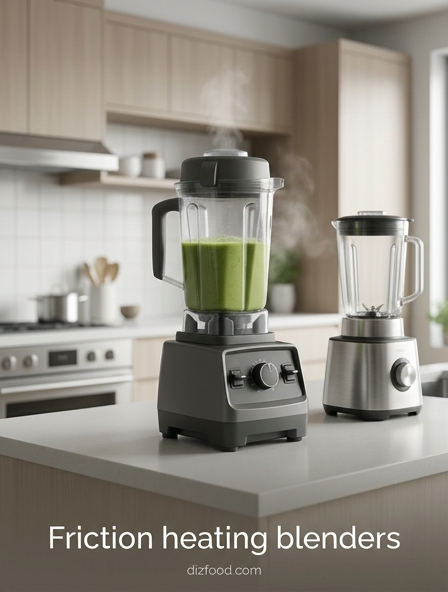
Effective heat management is crucial for both the protection of the motor and the quality of the food. When blades spin at high velocities, friction naturally generates heat. Advanced countertop models incorporate sophisticated airflow designs to dissipate this thermal energy away from the motor and the container. This prevents the motor from overheating during long blends, such as when making hot soups directly in the pitcher.
- Radial cooling fans that pull air through the base housing.
- Thermal overload protection with automatic reset functionality.
- Specially designed vents that direct hot air away from the user.
- Insulated motor housings that dampen sound while managing heat.
By controlling the internal temperature, the appliance maintains its efficiency and prevents the "burnt" smell often associated with struggling motors. Furthermore, precise heat management allows the user to control whether they want to keep a raw smoothie cold or use the friction heat to steam a sauce. This versatility is a direct result of superior thermal engineering within the base unit.
Stability During Operation
Stability is a vital safety and performance feature for any high-torque countertop model. When a motor reaches high speeds, the centrifugal force can cause an unstable machine to "walk" across the counter or vibrate excessively. To counteract this, premium models are designed with a low center of gravity and significant base weight, often utilizing heavy-duty materials to keep the unit firmly planted.
Designers employ several techniques to ensure the machine remains stationary during even the most violent ice-crushing cycles. These include:
- Non-slip suction feet that grip the countertop surface.
- Weighted bases containing metal plates or heavy-duty motors.
- Vibration-dampening pads between the motor and the housing.
- A secure locking mechanism for the container to prevent shifting.
A stable machine not only operates more quietly but also reduces the stress on the internal components. It provides the user with confidence, knowing they do not need to physically hold the machine down while it processes tough ingredients. This hands-free operation is a hallmark of well-engineered kitchen equipment.
Versatile Culinary Applications
A high-performance countertop model is far more than a simple blender; it is a versatile culinary workstation. The range of applications spans from morning beverages to complex dinner preparations. Because these machines can handle both wet and dry ingredients, they replace several other kitchen tools, such as coffee grinders, food processors, and even stovetop soup makers.
- Hot Soups: Friction heat can bring cold ingredients to a boil.
- Frozen Desserts: Creating instant sorbet and ice cream from frozen fruit.
- Flour Milling: Processing whole grains into gluten-free flours.
- Nut Milks: Emulsifying soaked nuts and water for dairy alternatives.
This versatility encourages culinary experimentation. A user can move from making a chunky salsa with the pulse function to creating a perfectly smooth cashew cream in a matter of seconds. The ability to control the exact texture and temperature of the output makes these models indispensable for those who prefer to cook from scratch using whole, unprocessed ingredients.
Efficient Workflow Benefits
Efficiency in the kitchen is about more than just speed; it is about how easily a tool integrates into the cooking process. High-performance models streamline workflow by reducing prep time and simplifying cleanup. Because these machines are powerful enough to handle whole fruits and vegetables, the need for pre-chopping is significantly reduced, allowing the user to move from raw ingredients to finished product faster.
Cleanup is another area where these models excel. Most are designed with a self-cleaning feature where a drop of soap and warm water, run on high speed for 30 seconds, effectively cleans the blades and the container. This eliminates the need to disassemble sharp blade assemblies, which can be dangerous and time-consuming. Additionally, the intuitive controls and pre-programmed settings allow for multitasking. A cook can start a soup program and walk away to perform other tasks, knowing the machine will stop automatically when the cycle is complete. This efficiency makes the cooking process more enjoyable and less cluttered.


Comments