
Engineering Silence into High Performance Blending
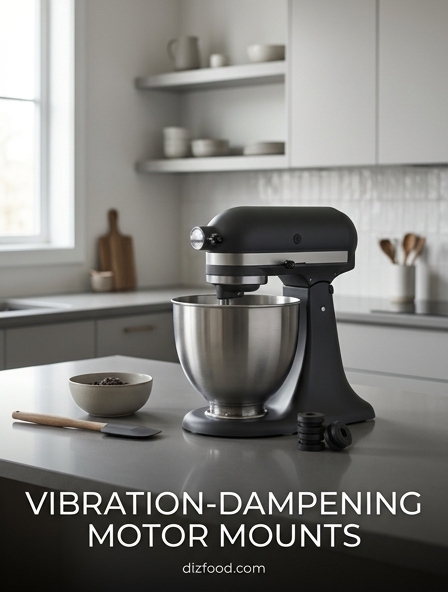
High-performance blending requires a delicate balance between raw power and sonic management. In modern kitchen engineering, achieving silence is not about muffling the sound but managing the source of kinetic energy. When a motor spins at high RPMs, it generates significant mechanical resonance that travels through the base. Engineers utilize vibration-dampening motor mounts to interrupt this transmission. These mounts act as a mechanical buffer, absorbing the high-frequency oscillations before they reach the external housing.
This structural approach ensures that the blender remains stable on the countertop even during heavy-duty tasks like crushing ice or milling grains. By focusing on the internal architecture rather than just external enclosures, manufacturers can create a more refined culinary experience. The result is a device that delivers commercial-grade results without the industrial-grade noise pollution typically associated with traditional high-speed blending units. This integration of acoustic science and mechanical engineering represents the pinnacle of modern small appliance design, allowing for open-plan kitchen usage without disrupting conversation or ambient comfort.
Mechanics of Vibration Dampening Motor Mounts
The mechanics of vibration-dampening motor mounts rely on the principles of energy dissipation and mechanical decoupling. These components are strategically placed between the motor assembly and the appliance chassis to serve as a kinetic shock absorber. When the motor engages, the mounts compress and shear, converting mechanical vibrations into low-grade thermal energy. This process prevents the tuning fork effect, where the entire blender base acts as an amplifier for motor noise.
- Elastomeric isolators that provide multi-axis dampening.
- Integrated compression limiters to prevent excessive motor tilt.
- Suspension bushings that decouple the driveshaft from the external shell.
- Damping rings that specifically target high-frequency harmonic distortions.
These mounts must be precisely calibrated; if they are too soft, the motor may shift under load, potentially misaligning the drive socket. Conversely, if the mounts are too rigid, they fail to absorb the necessary vibrations, leading to increased decibel levels and structural fatigue. By fine-tuning the durometer of the materials used, engineers achieve an optimal balance that secures the motor while isolating its turbulent energy from the surrounding environment.
Maintaining Torque During Noise Reduction Processes
A significant challenge in kitchen appliance engineering is maintaining high torque while implementing noise reduction strategies. Traditional soundproofing often involves heavy insulation or loose motor mounting, which can lead to energy loss or mechanical inefficiency. To combat this, modern vibration-dampening systems are designed to offer stiff resistance to rotational torque while remaining soft to high-frequency vibrations. This dual-purpose functionality ensures that the power generated by the motor is efficiently transferred to the blades rather than being dissipated into the frame of the machine.
When a blender encounters a dense load, the motor experiences a counter-rotational force. If the mounts are not engineered for torque stability, the motor could twist out of alignment, causing wear on the drive gear. Specialized dampening mounts utilize a geometric design that locks the motor in place against rotational forces while allowing for micro-vibrational absorption. This ensures that the blender maintains its peak performance levels, providing the necessary torque to pulverize tough ingredients without the accompanying roar of an unrestrained motor. The synergy between stability and dampening is what defines a truly high-performance quiet blender.
Structural Isolation in Modern Kitchen Appliances
Structural isolation is the practice of separating the internal vibrating components from the external tactile surfaces of a kitchen appliance. In a modern high-speed blender, this involves more than just the motor mounts; it requires a holistic approach to the entire chassis design. Engineers use a floating internal frame that holds the motor, which is then connected to the outer shell through a series of specialized isolation points. This multi-stage isolation process ensures that the user feels minimal vibration through the control panel or the pitcher handle.
- Primary Isolation: Motor is seated on rubberized dampening mounts.
- Secondary Isolation: The internal motor housing is decoupled from the base plate.
- Tertiary Isolation: Non-slip, vibration-absorbing feet prevent the base from rattling.
This layered defense against mechanical noise creates a deadened acoustic profile. By isolating the energy at several stages, the appliance prevents resonant frequencies from building up within the hollow cavities of the base. This structural refinement not only makes the appliance quieter but also gives it a more premium, solid feel during operation, distinguishing high-end engineering from standard consumer models.
The Evolution of Quiet Blender Technology
The evolution of quiet blender technology marks a transition from raw utility to sophisticated user-centric design. In the early days of electric blenders, motors were bolted directly to metal or plastic frames, resulting in deafening noise levels that could exceed 100 decibels. As blenders moved into professional juice bars and open-concept home kitchens, the demand for quieter operation surged. This led to the development of early hush covers-bulky plastic shields that physically blocked sound. While effective, these were cumbersome and did not address the root cause of the noise: mechanical vibration.
The current generation of quiet technology focuses on internal mitigation. This includes the move toward high-torque brushless DC motors, which are inherently quieter, and the perfection of vibration-dampening motor mounts. These modern mounts utilize advanced synthetic polymers that maintain their integrity over thousands of cycles. Today's quiet blenders integrate these internal dampening systems with optimized airflow paths that cool the motor without creating whistling or roaring sounds. The evolution represents a shift from blocking noise to preventing noise, resulting in sleeker, more efficient, and significantly quieter appliances that fit seamlessly into the modern lifestyle.
Reducing Decibels Without Compromising Motor Power
Reducing decibels in a kitchen appliance is often a trade-off with cooling and power. High-wattage motors generate significant heat, requiring high-velocity airflow which naturally creates noise. To reduce decibels without compromising motor power, engineers must optimize the internal geometry of the blender base. Vibration-dampening motor mounts play a critical role here by allowing the motor to run at full capacity without transferring its kinetic energy into the air-moving components.
When the motor is isolated via dampening mounts, the cooling fans can be engineered with precision-angled blades that move more air with less turbulence. Since the motor itself is not vibrating the fan housing, the whine associated with high-speed rotation is significantly dampened. Furthermore, by utilizing mounts that absorb specific harmonic frequencies, designers can target the most irritating high-pitched sounds, effectively lowering the perceived volume even if the raw power output remains unchanged. This allows a 1500-watt motor to perform with the same intensity as a commercial unit while maintaining a sound profile that is comfortable for residential environments. The result is a machine that is both powerful and acoustically polite.
Impact of Vibration Control on Blender Durability
The implementation of vibration control is a primary factor in extending the operational lifespan of kitchen appliances. Constant high-frequency vibration is the enemy of mechanical longevity; it causes screws to loosen, electrical connections to fray, and bearings to wear prematurely. By utilizing vibration-dampening motor mounts, manufacturers significantly reduce the stress placed on these critical components. The mounts act as a buffer, preventing the violent micro-movements that lead to material fatigue.
| Component | Effect of Dampening | Longevity Benefit |
|---|---|---|
| Motor Bearings | Reduced lateral shock | Prevents premature seizing |
| Drive Socket | Stable alignment | Reduces gear stripping |
| Electronic PCB | Lowered kinetic stress | Prevents solder joint failure |
| Chassis Screws | Minimized oscillation | Maintains structural integrity |
This table illustrates how vibration control serves as a form of preventative maintenance. When a motor is properly isolated, the energy is directed where it belongs-into the blender's blades-rather than into the structural frame. This reduction in parasitic vibration means that the appliance can withstand years of daily use without a degradation in performance or an increase in operating noise, ultimately providing better value and reliability to the consumer.
Material Selection for Effective Motor Dampening
Material selection is the most critical variable in the design of effective motor dampening systems. Engineers must choose materials that can withstand high temperatures, resist kitchen oils and moisture, and maintain specific elastic properties under load. The most common materials include high-grade silicone, EPDM (ethylene propylene diene monomer), and specialized thermoplastic elastomers (TPE). Each material offers a different damping coefficient, which determines how much energy it can absorb at specific motor speeds.
Silicone is often preferred for its thermal stability, as it remains flexible even when the motor generates significant heat during long blending cycles. EPDM is valued for its durability and resistance to environmental degradation. In high-performance mounts, engineers may use dual-durometer designs, combining a soft inner core for maximum vibration absorption with a harder outer shell for structural support. This sophisticated material layering ensures that the dampening mounts do not bottom out under the weight and force of the motor. By matching the material's molecular structure to the motor's vibration frequency, designers can effectively cancel out the most intrusive noises, creating a smoother and quieter operation.
Achieving Maximum Stability in High Speed Motors
Achieving maximum stability in high-speed motors is essential for both safety and performance. At speeds exceeding 20,000 RPM, even a slight imbalance in the motor or the blender blades can create violent oscillations. Vibration-dampening motor mounts are tasked with centering the motor during these high-velocity events. To achieve this, engineers utilize a dynamic balancing approach, where the mounts are positioned to counteract the specific centrifugal forces generated by the rotating mass.
Stability is further enhanced through the use of captured mounting systems. These designs ensure that while the motor can move slightly to absorb vibration, it is physically constrained from shifting beyond a set threshold. This prevents the driveshaft from tilting, which is crucial for maintaining a perfect seal between the pitcher and the base. Without this stability, the blender would likely walk across the counter or suffer from excessive splashing within the container. By combining precision-engineered mounts with a low center of gravity, manufacturers ensure that the appliance remains rock-solid, providing a sense of confidence and power to the user during the most demanding blending tasks.
The User Benefits of Quiet Torque Engineering
The user benefits of quiet torque engineering extend far beyond mere decibel reduction. In a home environment, a quiet blender allows for a more social kitchen experience; users can prepare breakfast smoothies or evening soups without interrupting conversations or waking sleeping family members. This acoustic comfort transforms the appliance from a disruptive tool into a seamless part of the daily routine. For professional settings, such as cafes or open-kitchen restaurants, quiet engineering is essential for maintaining a pleasant atmosphere for customers.
Beyond the sound, the reduction in tactile vibration makes the appliance feel more premium and easier to control. A blender that does not shake or rattle feels safer and more substantial. The torque engineering aspect ensures that this quiet operation does not come at the cost of performance, meaning users still get the perfectly smooth textures they expect from high-end machines. Ultimately, these engineering advancements prioritize the human element of cooking, reducing the stress and sensory overload often associated with powerful kitchen machinery. By investing in vibration-dampening technology, manufacturers deliver a superior product that respects the user's environment and enhances the overall culinary process.




Comments