
When you harness the power of high-speed blending, the friction generated by rapidly spinning blades creates a significant thermal impact that can fundamentally change your ingredients. While this speed is essential for achieving a silky-smooth texture, the resulting heat often risks degrading heat-sensitive nutrients and altering the vibrant flavors of raw produce. Understanding how to manage this temperature rise is key to maintaining both the nutritional value and the culinary quality of your recipes. To gain better control over the heat generated during your processing, it is important to understand the technical differences between pulse versus continuous blending.
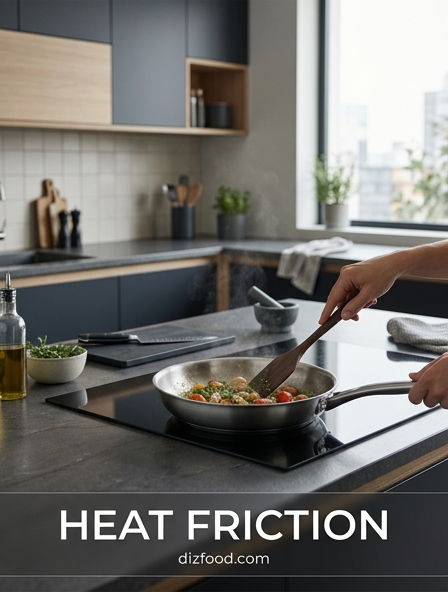
Blade Friction and Kinetic Energy Heat
When high-speed blenders operate, the rapid rotation of stainless steel blades converts mechanical energy into kinetic energy. This energy is transferred to the food particles through intense friction. As the blades strike the ingredients thousands of times per minute, the molecular movement increases, leading to a measurable rise in temperature. This phenomenon is particularly evident in high-performance machines where blade tips can reach speeds exceeding 200 miles per hour. The friction occurs not only between the blade and the food but also between the food particles themselves as they are forced into a high-velocity vortex.
- Frictional Heat: The direct result of blade surfaces rubbing against solid and liquid matter.
- Viscous Dissipation: Heat generated within the fluid itself due to internal friction between layers of liquid.
- Vortex Dynamics: The circular movement that pulls ingredients toward the heat-generating center.
While this heat is beneficial for making "friction-cooked" soups, it can be detrimental to delicate raw preparations. Understanding the relationship between RPM (revolutions per minute) and thermal transfer is essential for maintaining control over the final temperature of the blended mixture.
Nutrient Retention in High Speed Blending
High-speed blending is often praised for its ability to break down cell walls, making nutrients more bioavailable. However, the heat generated by friction can lead to the degradation of specific phytonutrients and antioxidants. The primary challenge lies in balancing the mechanical breakdown of fiber with the preservation of heat-sensitive compounds. High temperatures can accelerate the oxidation process, where oxygen is whipped into the mixture, reacting with the nutrients to reduce their potency.
| Nutrient Category | Sensitivity Level | Impact of Heat Friction |
|---|---|---|
| Antioxidants | High | Can be neutralized by rapid oxidation and thermal rise. |
| Dietary Fiber | Low | Remains stable; mechanical shearing improves surface area. |
| Minerals | Low | Generally heat-stable and unaffected by blending friction. |
To maximize nutrient density, users must limit the duration of the blend cycle. Reducing the time the ingredients spend in the high-friction environment ensures that the temperature remains below thresholds that trigger significant nutrient loss.
Impact of Heat on Enzyme Activity
Enzymes are specialized proteins that act as catalysts for various biological reactions, and they are notoriously sensitive to thermal changes. In the kitchen, particularly during raw food preparation, maintaining enzyme integrity is a priority. When a blender generates heat through friction, it risks reaching the "denaturation point" of these enzymes. Once an enzyme is denatured by heat, its three-dimensional structure unfolds, rendering it biologically inactive.
- Activation Stage: Low-level heat can initially increase enzyme activity rates.
- Optimal Range: Most enzymes function best between 70°F and 105°F.
- Denaturation Point: Temperatures exceeding 118°F typically begin to deactivate critical food enzymes.
Because high-speed blenders can raise the temperature of a liquid by several degrees every ten seconds, the window for preserving enzymes is narrow. Monitoring the vessel's temperature is crucial for those preparing living foods or fermented ingredients where enzymatic activity is the primary goal of the recipe.
Maintaining Flavor Profiles During Blending
The flavor of fresh produce is often dictated by volatile organic compounds (VOCs). These compounds are responsible for the aroma and nuanced taste of herbs, fruits, and vegetables. Frictional heat acts as a catalyst for the evaporation of these volatile oils. When a blender runs for an extended period, the rising temperature "cooks" the raw flavor, often resulting in a duller, more homogenized taste profile. This is especially noticeable with delicate herbs like basil or cilantro, which can turn bitter or lose their brightness when overheated.
- Aroma Loss: Heat pushes fragrant compounds out of the liquid and into the air.
- Oxidation Off-Flavors: Rapid air incorporation combined with heat can create "cardboard" notes.
- Bitterness: Mechanical shearing of seeds combined with heat releases bitter tannins.
To preserve the intended flavor profile, it is vital to keep the blending cycle as short as possible. Using chilled ingredients can provide a thermal buffer, ensuring that the friction-induced heat does not reach the threshold where flavor degradation begins.
Thermal Effects on Texture and Emulsions
The texture of a blended sauce or smoothie is heavily influenced by the temperature of the ingredients during the emulsification process. Friction-induced heat can either assist or hinder the creation of a stable emulsion. For instance, when making a hot hollandaise, controlled heat is necessary; however, when creating a cold vinaigrette or mayonnaise, excess heat from the blender blades can cause the fat molecules to separate from the water-based components, leading to a broken sauce.
| Texture Type | Heat Impact | Result |
|---|---|---|
| Starch-Based | Thickening | Friction can gelatinize starches, creating a creamy texture. |
| Fat-Based | Separation | Excessive heat thins the fat, causing the emulsion to collapse. |
| Fibrous | Softening | Heat helps soften tough fibers for a smoother mouthfeel. |
Achieving a silky-smooth texture without sacrificing stability requires precise timing. For cold emulsions, the goal is to achieve the desired particle size reduction before the friction heat raises the temperature enough to compromise the molecular bonds of the fats.
Minimizing Heat with Pulse Techniques
One of the most effective ways to manage friction-induced heat is through the strategic use of the pulse function. Rather than allowing the motor to run continuously, which creates a steady climb in temperature, pulsing involves short bursts of power. This method allows the kinetic energy to dissipate slightly between intervals, preventing the cumulative heat buildup that occurs during a long, uninterrupted blend cycle. Pulsing is particularly useful when the goal is to chop ingredients rather than liquefy them.
- Initial Breakdown: Use 1-second pulses to catch and break down large chunks.
- Interval Cooling: Allow a 2-second pause between pulses to mitigate blade heat.
- Final Consistency: Finish with a short continuous run only if a finer texture is required.
By using these intermittent bursts, the user maintains greater control over the mechanical shearing process. This technique is essential for making salsas, pestos, or frozen desserts where maintaining a specific, cool temperature is necessary for the structural integrity and freshness of the dish.
Vitamins Sensitive to Blending Temperatures
Thermal sensitivity varies significantly across different vitamin groups. Water-soluble vitamins are the most vulnerable to the heat generated during high-speed blending. Vitamin C (ascorbic acid) and the B-complex vitamins, such as folate and thiamin, are particularly prone to degradation when exposed to heat and oxygen. As the blender blades create friction, they also whisk air into the mixture, creating a double-threat environment that can significantly reduce the nutritional value of a smoothie in just a few minutes.
- Vitamin C: Highly susceptible to both heat and oxidation; levels drop as temperature rises.
- Vitamin B1 (Thiamin): Heat-labile and can be destroyed by prolonged blending.
- Vitamin B9 (Folate): Sensitive to light and heat, requiring careful temperature management.
Fat-soluble vitamins like A, D, E, and K are generally more stable, but they can still be affected if the blender reaches near-boiling temperatures. To ensure maximum vitamin retention, the blending process should be executed with cold liquids and completed in under sixty seconds.
Managing Temperature in Long Duration Blends
Long duration blends are typically used for two purposes: creating a completely liquefied texture or "cooking" a soup via friction. When the goal is the latter, the blender is intentionally run for 5 to 7 minutes to allow the blade friction to bring the liquid to a steam. However, when a long blend is required for texture (such as making nut butter) but heat is unwanted, management strategies must be employed. The friction in dense mixtures like nut butters is much higher than in liquids.
| Blend Duration | Temperature Change | Common Application |
|---|---|---|
| 30-60 Seconds | Minimal (+2-5°F) | Smoothies, juices, dressings. |
| 2-3 Minutes | Moderate (+15-30°F) | Nut butters, thick purees. |
| 5+ Minutes | High (+100°F+) | Friction-cooked soups and sauces. |
To manage temperature during long cycles for nut butters, it is often necessary to stop the machine and allow the container to cool in the refrigerator, or to use a tamper efficiently to reduce the total time the motor must run.
The Role of Motor Power in Heat Generation
The wattage and horsepower of a blender motor directly correlate to its ability to generate heat. High-horsepower motors can maintain high RPMs even when processing thick, viscous ingredients. While this power allows for superior textural results, it also increases the rate of friction. A more powerful motor exerts more torque, which can lead to higher radiant heat from the motor base transferring into the blending container. This "base-to-jar" heat transfer can exacerbate the friction heat generated by the blades themselves.
- High Wattage: Faster blade speeds lead to more frequent impacts and higher friction.
- Torque: Allows the blades to push through resistance, generating heat in dense mixtures.
- Cooling Fans: Essential for preventing the motor's radiant heat from affecting the food.
Interestingly, a powerful motor used for a short duration often generates less total heat than a weak motor struggling to process the same ingredients over a longer period. Efficiency in shearing reduces the time needed, thereby limiting the total thermal exposure.
Strategies for Cold Ingredient Preservation
Preserving the "cold chain" during the blending process is vital for the quality of smoothies, gazpacho, and frozen treats. Since friction heat is an inevitability of the physics involved, the user must start at a lower thermal baseline. Using frozen fruits instead of fresh ones, or substituting a portion of the liquid with ice, acts as a heat sink. The energy generated by the blades is consumed by the phase change of the ice melting, rather than raising the temperature of the entire mixture.
- Pre-chilled Containers: Store the blender jar in the freezer before use.
- Frozen Ingredients: Use frozen berries or bananas to absorb frictional energy.
- Chilled Liquids: Ensure water, milk, or juice is at 34-38°F before starting.
- Sequential Loading: Add frozen items last so they remain cold during the initial breakdown.
These strategies ensure that even after a 60-second high-speed cycle, the final product remains refreshing and nutrient-dense. By proactively managing the thermal load, you counteract the natural physics of kinetic-to-thermal energy conversion.




Comments