
Choosing between a portable and a desktop blender often comes down to your personal lifestyle and culinary ambitions. If you're a fitness enthusiast who needs a quick post-workout shake on the move, a compact, battery-operated model offers unmatched convenience and a minimal footprint for cramped countertops. However, for those who regularly crush ice, blend fibrous greens into silky textures, or prep large family batches, a high-performance desktop unit provides the raw motor wattage and durable blades necessary for heavy-duty kitchen tasks. Finding the right balance means weighing the freedom of cordless, grab-and-go blending against the sheer pulverizing power of a traditional plugin appliance to ensure your kitchen setup perfectly matches your daily routine.
| Feature | Portable Blender | Desktop Blender |
|---|---|---|
| Motor Power | 50W - 150W (Low torque) | 500W - 1500W+ (High torque) |
| Capacity | 10oz - 18oz (Single serve) | 48oz - 72oz (Family size) |
| Power Source | USB Rechargeable Battery | Standard AC Wall Outlet |
| Best Use Case | Protein shakes, soft fruits, travel | Ice, frozen fruit, nut butters, soups |
| Portability | High; fits in gym bags/cup holders | Low; stationary countertop unit |
| Average Price | $20 - $50 | $80 - $500+ |
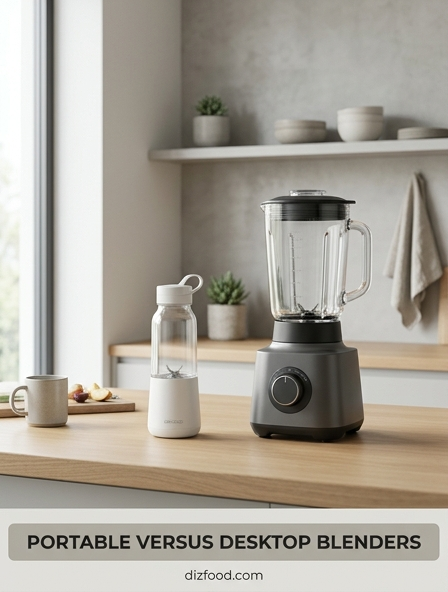
Portable Versus Desktop Blenders: Which Is Right for You?
The modern kitchen is increasingly defined by the balance between high-performance culinary tools and the growing demand for mobility. When it comes to blending technology, the market is primarily divided into two camps: the robust desktop blender and the agile portable blender. Selecting the right one requires a deep understanding of your personal habits, dietary needs, and the physical constraints of your workspace. Desktop blenders have long been the gold standard for home cooks who prioritize power and volume, offering the ability to pulverize tough ingredients and serve entire families in a single cycle. However, the rise of fitness-oriented lifestyles has paved the way for portable alternatives that prioritize convenience over raw strength.
To determine which category fits your lifestyle, you must evaluate how often you blend and what specific textures you aim to achieve. A portable blender is often an extension of a water bottle, designed for those who need a fresh smoothie after a gym session or at their office desk. Conversely, a desktop model is a permanent fixture on the countertop, acting as a multifunctional appliance capable of replacing food processors and mixers. While both devices serve the same fundamental purpose-liquefying solids-their internal engineering and user interfaces are tailored to vastly different environments. Understanding these nuances is the first step in making an informed purchase that will actually get used rather than gathering dust in a cabinet.
Comparing Motor Power and Crushing Capabilities
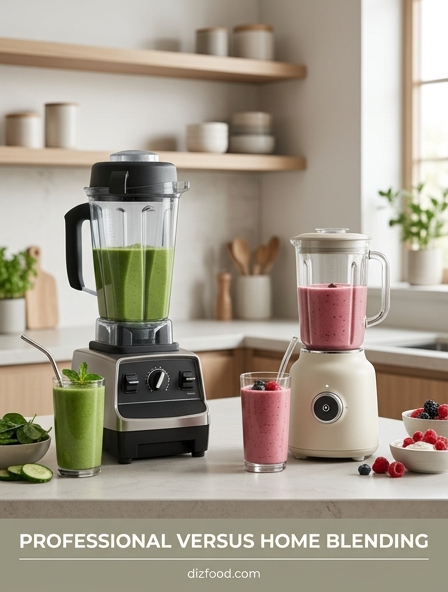
The most significant technical divergence between portable and desktop blenders lies in the motor's wattage and torque. Desktop blenders are high-voltage machines, typically ranging from 600 to over 1,500 watts. This immense power allows them to maintain high blade speeds even when facing significant resistance from frozen fruit, ice, or fibrous greens like kale. The result is a silky-smooth consistency that portable units often struggle to replicate. Portable blenders usually operate on much smaller motors, often between 50 and 150 watts, which are optimized for mixing powders, soft fruits, and liquids.
| Feature | Portable Blender | Desktop Blender |
|---|---|---|
| Average Wattage | 50W - 150W | 600W - 1800W |
| Ice Crushing | Limited/Small Cubes | High Performance |
| Frozen Fruit | Requires Thawing | Effortless Processing |
| Blade Material | Thin Stainless Steel | Thick Aircraft-Grade Steel |
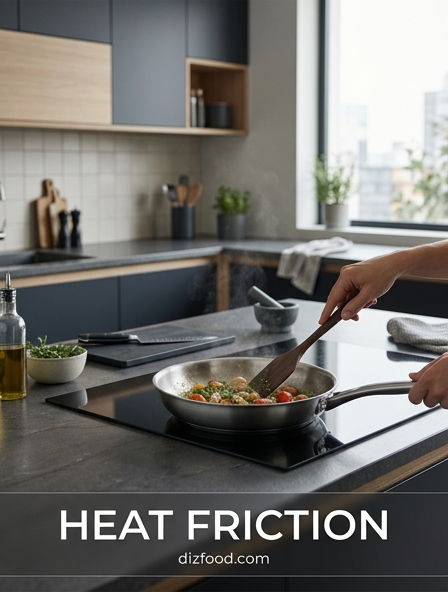
When using a desktop model, the heavy-duty motor can run for several minutes without overheating, which is necessary for creating heat through friction for soups or for processing thick nut butters. Portable blenders, however, use smaller, battery-optimized motors that can stall if the contents are too dense. If your primary goal is to crush large quantities of ice into snow or to create perfectly aerated sauces, the raw power of a corded desktop unit is indispensable. A portable unit is best viewed as a "mixer" for light ingredients rather than a "crusher" for heavy-duty kitchen tasks.
Portability and Convenience for On-the-Go Lifestyles
For many users, the greatest barrier to a healthy diet is the time and effort required to prepare meals at home. Portable blenders address this friction by being lightweight, compact, and often designed with a "blend-and-drink" philosophy. These units typically feature a blending jar that doubles as a travel mug, complete with a leak-proof lid and a carrying strap. This eliminates the need for transferring liquids from a pitcher to a bottle, which reduces cleanup time and makes it possible to enjoy a fresh drink anywhere from a car to a hiking trail.
The convenience factor extends beyond just physical size. Consider these common scenarios where a portable blender excels:
- Preparing a protein shake immediately after a workout to maximize nutrient absorption.
- Mixing a fresh green juice at an office desk to avoid the high cost of store-bought alternatives.
- Traveling in a camper or hotel room where traditional kitchen appliances are unavailable.
- Feeding infants fresh purees while visiting family or dining out.
While desktop blenders offer superior results, they are tethered to a wall outlet and occupy a significant amount of "real estate" in a kitchen. For those living in studio apartments or those who spend more time commuting than they do in their kitchens, the ability to pack a blender into a backpack is a transformative feature. The convenience of a portable unit lies in its ability to fit into the gaps of a busy schedule, ensuring that nutrition is never sacrificed for time.
Capacity Differences: Single-Serve vs Family-Sized Jars
Volume is a critical consideration when choosing between these two appliance types. Desktop blenders are designed for high-capacity tasks, with pitchers typically holding between 48 and 72 ounces. This makes them ideal for meal prepping for the week, hosting dinner parties, or making a round of frozen margaritas for guests. The large diameter of these jars also facilitates better vortex formation, which ensures that all ingredients are pulled down into the blades for an even blend.
Portable blenders, on the other hand, are strictly personal devices. Their capacity usually ranges from 10 to 18 ounces. While this is sufficient for a single serving, it can be frustrating for those who want to blend in bulk. The smaller jar size also limits the physical size of the ingredients you can add; for instance, you may need to chop an apple into several small pieces to fit it into a portable jar, whereas a high-powered desktop blender might take half an apple at once.
If you are the only person in your household who consumes blended drinks, a single-serve portable unit might be more efficient as it prevents food waste. However, if you have a family or enjoy preparing large batches of soup or sauce to freeze for later, the small capacity of a portable blender will quickly become a bottleneck. The choice between them often comes down to whether you view blending as an individual ritual or a communal kitchen activity.
Battery-Powered Freedom vs Reliable Corded Performance
The power source of a blender dictates not only where you can use it but also how consistently it performs. Desktop blenders rely on a standard 120V or 240V wall outlet, providing a continuous and stable flow of electricity. This allows the motor to maintain peak RPMs throughout the entire blending cycle, regardless of how long it lasts. You never have to worry about the machine dying mid-blend or losing power as the "battery" drains, which is essential for achieving the professional-grade textures found in high-end culinary applications.
Portable blenders are almost exclusively powered by internal lithium-ion batteries, typically rechargeable via a USB-C or micro-USB cable. This provides unparalleled freedom, allowing you to blend in the middle of a park or during a power outage. However, this freedom comes with compromises:
- Battery Life: Most units offer between 10 and 20 blends per charge, requiring frequent recharging.
- Power Sag: As the battery level drops, the motor often loses torque, leading to chunkier results.
- Charging Time: It can take several hours to fully charge a portable blender, which can be inconvenient if you forget to plug it in overnight.
- Battery Degradation: Like a smartphone, the internal battery will eventually lose its capacity to hold a charge over several years.
If you value the reliability of an appliance that is always ready to go at full strength, the corded desktop model is the superior choice. If the ability to blend without being tethered to a wall is your primary concern, the trade-off in consistent power is often worth the flexibility offered by battery-operated technology.
Versatility in the Kitchen: Smoothies to Nut Butters
Versatility defines the desktop blender's dominance in the kitchen. Because of their high-torque motors and various speed settings, desktop models can perform a wide array of tasks beyond making smoothies. For instance, high-end desktop blenders can grind dry grains into flour, emulsify oil and eggs into mayonnaise, and even create smooth nut butters from raw almonds-a task that would likely burn out the motor of a portable unit. Many desktop models also feature a "pulse" function and variable speed dials, giving the user precise control over the texture of salsas or chunky vegetable soups.
Portable blenders are specialized tools rather than general-purpose appliances. They are excellent for liquid-based recipes but struggle with dry or viscous mixtures. To understand the range of each, consider the following task comparison:
- Smoothies: Both excel, though desktop units produce smoother textures with leafy greens.
- Soups: Desktop only; many can heat the liquid through friction.
- Nut Butters: Desktop only; requires high power and a tamper to move ingredients.
- Crushing Ice: Desktop is highly effective; portable is limited to small, soft ice.
- Protein Shakes: Portable is often more convenient for simple powder mixing.
If your culinary ambitions include making your own flours, dips, and hot purees, a desktop blender is a necessary investment. If your needs are strictly limited to fruit smoothies and supplemental shakes, the added versatility of a desktop model may be unnecessary and overly complex for your daily routine.
Ease of Cleaning and Maintenance Requirements
Maintenance is often the deciding factor in how often an appliance is used. Desktop blenders, while powerful, can be intimidating to clean due to their size and the sharpness of their fixed blades. Many modern desktop pitchers are dishwasher safe, but their bulk can take up half of a standard dishwasher rack. To combat this, many users employ the "self-cleaning" method: filling the pitcher halfway with warm water and a drop of dish soap, then running it on high for 30 seconds. However, deep cleaning the base and the gasket seals can still be a chore.
Portable blenders are designed for rapid cleanup. Since the jar is usually the same vessel you drink from, there is one less item to wash. Most portable models feature a detachable blade base that can be easily rinsed under a tap. Because the blades are smaller and the jars are narrower, they are generally less dangerous to handle during manual cleaning. However, one must be careful not to submerge the motorized base of a portable blender in water, as the USB charging port is often a point of vulnerability for water damage.
Maintenance for desktop units involves checking for wear on the drive socket and ensuring the motor does not overheat. For portable units, maintenance is mostly centered on battery health and ensuring the seals remain tight to prevent leaks onto the electronics. If you despise cleaning large dishes and want a "rinse and go" experience, the portable blender is the clear winner in the maintenance category.
Durability and Build Quality Considerations
The build quality of a blender directly impacts its lifespan and the safety of the food it processes. Desktop blenders are built to withstand the intense vibrations and heat generated by high-wattage motors. They often feature heavy bases made of die-cast metal or high-impact plastic, and the pitchers are typically made from BPA-free Tritan plastic or thick tempered glass. The drive systems-the connection between the motor and the blades-are frequently made of metal-to-metal components in premium desktop models, ensuring they won't strip over time.
Portable blenders are built with lightweight materials to enhance their mobility. This often means thinner plastics and more internal plastic components. While high-quality portable brands use durable materials, many budget options feel "toy-like" and may crack if dropped. Furthermore, the blades in portable units are often thinner and may dull faster when used with frozen ingredients. Because they are battery-powered, the lifespan of the entire device is often tied to the lifespan of the lithium-ion battery, which can be as little as two to three years of regular use.
When investing in a desktop blender from a reputable brand, it is common to see warranties ranging from 5 to 10 years, reflecting a "buy it for life" mentality. Portable blenders usually come with much shorter warranties, often 6 months to a year. If you want a kitchen workhorse that will last a decade, the desktop model is the superior choice. If you view the blender as a semi-disposable accessory for a specific phase of your fitness journey, the build quality of a portable unit may be sufficient.
Price Points and Long-Term Value Assessment
The cost of these appliances varies wildly based on performance and brand prestige. Desktop blenders have the widest price range. You can find basic models for $40, while professional-grade machines from brands like Vitamix or Blendtec can exceed $600. The higher price point for desktop models is generally justified by the motor's longevity, the quality of the blend, and the manufacturer's warranty. Over a ten-year period, a $500 blender that never breaks often provides better value than five $100 blenders that fail under pressure.
Portable blenders are significantly more affordable, typically priced between $20 and $100. This low barrier to entry makes them an attractive impulse buy or a great gift for students and commuters. However, the "long-term value" of a portable blender is lower due to its limited functionality and the eventual failure of the internal battery. Because they cannot perform the tasks of a food processor or a heavy-duty mixer, they don't offer the same "all-in-one" value that a powerful desktop unit provides.
To assess value, consider your "cost per use." If you blend a smoothie every morning and use the machine for nothing else, a $30 portable blender that lasts two years costs about 4 cents per use. If you use a high-end desktop blender daily for smoothies, weekly for meal prep, and monthly for entertaining over ten years, the cost per use is similarly negligible, but the quality of the output is vastly superior. Your budget should align with how central the blender will be to your culinary life.
Choosing the Best Blender for Your Unique Needs
Finalizing your decision requires a honest assessment of your daily habits. If your kitchen is the heart of your home and you enjoy experimenting with complex recipes, the desktop blender is the only choice that will satisfy your needs. Its ability to handle everything from ice to hot soup makes it a versatile pillar of culinary preparation. The higher price and larger footprint are small trade-offs for the reliability and professional results it delivers. For families and serious home cooks, the desktop model is an investment in health and creativity.
On the other hand, the portable blender is the ultimate tool for the modern, fast-paced individual. If your kitchen is merely a pit stop between work, the gym, and social obligations, the simplicity of a portable unit is unmatched. It removes the hurdles of cleanup and location, allowing you to maintain your nutritional goals regardless of your environment. It may not make nut butter or crush large ice cubes, but it will make sure you get your protein shake after a grueling workout.
In many cases, the ideal solution is actually a combination of both. Many health-conscious individuals keep a high-powered desktop blender at home for morning meals and weekend prep, while keeping a portable blender in their gym bag or office drawer for supplemental nutrition throughout the day. By understanding the strengths and limitations of each format, you can ensure that your kitchen-and your lifestyle-is equipped with the right tool for the job.

Comments