
Choosing between gel and liquid food coloring is a game-changer for anyone looking to master the art of vibrant baking. While liquid coloring is a budget-friendly, water-based option perfect for achieving soft, pastel hues in light batters or DIY projects, it can easily dilute your recipes if you're chasing high-intensity shades. In contrast, gel food coloring is a highly concentrated, glycerin-based powerhouse that delivers bold, saturated results with just a tiny drop. Because it contains far less water, gel is the superior choice for professional-grade vibrancy in frostings, fondants, and macarons, ensuring your colors pop without compromising the structural integrity of your sweets.
| Feature | Liquid Food Coloring | Gel Food Coloring |
|---|---|---|
| Composition | Water-based; highly diluted | Glycerin or corn syrup-based; concentrated |
| Color Intensity | Subtle; best for pastels | High; bold, vivid results |
| Texture Impact | Can thin out batters/frosting | Maintains original recipe consistency |
| Best Applications | Icing, dough, simple DIY projects | Fondant, macarons, deep-color cakes |
| Usage Amount | Requires many drops for depth | A "toothpick tip" amount is often enough |
| Price Point | Inexpensive; widely available | Mid-range; sold in specialty shops |
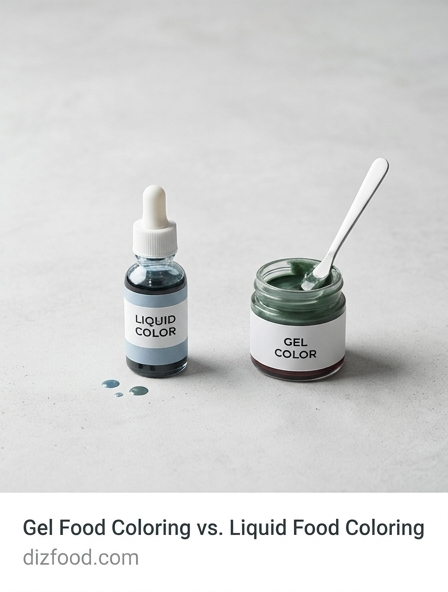
Gel vs Liquid Food Coloring Key Differences
The primary distinction between gel and liquid food coloring lies in their chemical composition and the carrier agents used to hold the pigment. Liquid food coloring is a water-based dye, typically sold in small plastic squeeze bottles with dropper tops. It is highly diluted, which makes it easy to dispense in individual drops but also means it has a very low pigment concentration. Because it is mostly water, it flows freely and integrates quickly into high-moisture mixtures like batters and beverages.
In contrast, gel food coloring-often referred to as gel paste or soft gel paste-uses a base of glycerin and/or corn syrup. This creates a much thicker, more viscous consistency that does not flow like water. Gel colors are significantly more concentrated than their liquid counterparts, requiring only a tiny amount to achieve a similar or much more intense level of color. While liquid dyes are readily available in grocery stores and are very inexpensive, gel dyes are often considered professional-grade tools found in specialty baking shops.
- Liquid Dye: Inexpensive, water-based, low intensity, best for pastels.
- Gel Dye: Concentrated, glycerin-based, high intensity, maintains recipe structure.
- Visual Impact: Liquid results in muted tones; gel results in vibrant, saturated hues.
Understanding these fundamental differences is the first step in mastering cake decoration and confectionery. Choosing the wrong type can lead to unintended chemical reactions in sensitive recipes, such as royal icing or macarons, where the introduction of excess water can be catastrophic to the final texture.
Understanding Pigment Concentration and Texture
The texture and pigment concentration of food coloring directly dictate how it behaves when introduced to different mediums. Liquid food coloring is essentially a dyed water solution. Because the pigment is so spread out within the water molecules, you must use a substantial volume of the product to achieve anything beyond a pale or pastel shade. This high volume of liquid can become problematic in recipes that rely on precise hydration levels. If you attempt to make a deep red cake using liquid dye, you might find yourself adding several tablespoons of liquid, which can thin out your batter and ruin the rise.
Gel food coloring, however, is designed for potency. The pigments are suspended in a thick, jelly-like base that prevents the color from diluting until it is mechanically mixed into a substance. Because of this high concentration, bakers often use a toothpick or a small skewer to add "smears" of color rather than pouring it. This allows for extreme precision; even a microscopic amount of gel can tint an entire bowl of frosting. The texture is tacky and dense, which prevents it from splashing or creating the watery messes often associated with liquid droppers. This density is why professional decorators prefer gel for intricate work where color bleeding must be avoided at all costs.
| Feature | Liquid Coloring | Gel Coloring |
|---|---|---|
| Base Agent | Water | Glycerin/Corn Syrup |
| Viscosity | Low (Runny) | High (Thick) |
| Pigment Load | 10% - 20% | 60% - 80% |
When to Use Liquid Food Dye
Despite the popularity of gel colors among professionals, liquid food dye remains a staple in home kitchens for several reasons. It is the ideal choice for projects where a soft, pastel aesthetic is desired. Since the color is pre-diluted, it is much easier to achieve a consistent light pink or mint green without accidentally over-saturating the mixture. Liquid dyes are also the preferred medium for coloring Easter eggs or creating "watercolor" effects on dried fondant, as the water base allows the dye to soak into porous surfaces evenly.
Furthermore, liquid food coloring is highly effective in recipes that already contain a high volume of liquid or where the addition of water won't affect the chemistry. For instance, tinting pancake batter, simple syrups, or beverages like lemonade is best done with liquid dye because it disperses almost instantly without the need for vigorous stirring. It is also the most budget-friendly option for large-scale "messy" projects, such as coloring playdough for children or tinting large batches of vanilla cake mix for a school bake sale. If your recipe is robust and not sensitive to moisture-like a standard muffin or a box-mix cake-liquid dye provides an easy and accessible way to add a splash of color without the need for specialized equipment or high costs.
The Benefits of Concentrated Gel Coloring
The primary benefit of gel food coloring is its incredible efficiency. Because it is so concentrated, a single small jar can last a home baker several years, even with frequent use. This concentration is not just about shelf life; it is about the integrity of the food. When you use gel, you are adding very little "extra" material to your recipe. This is vital for items like French macarons, where even a half-teaspoon of extra water can cause the delicate almond flour and egg white structure to collapse or become hollow.
Another significant advantage is the lack of flavor interference. Many liquid food dyes have a slightly bitter aftertaste when used in large quantities because of the chemical preservatives and the sheer volume of dye needed to get a dark color. Since gel requires such a small amount to achieve the same result, the flavor of your frosting or cake remains untainted. Furthermore, gel colors offer a wider variety of specialized shades. While liquid dyes usually come in basic primary colors, gel lines often include specific tones like "Moss Green," "Electric Purple," or "Burgundy," allowing for sophisticated color palettes that would be difficult to mix manually using standard liquid drops. The precision offered by the thick texture also allows for better control during the mixing process, ensuring you don't over-mix and deflate your aerated batters.
Impact on Baking and Frosting Consistency
Baking is a science of ratios, and the type of coloring you choose can significantly alter those ratios. In the world of frosting, consistency is everything. When making a stiff royal icing for piping intricate flower petals, the introduction of liquid food coloring can "thin out" the icing, causing it to lose its shape or run down the side of the cookie. Gel food coloring preserves the viscosity of the icing, ensuring that those sharp peaks and clean lines remain intact after piping. The glycerin base of the gel acts as a stabilizer rather than a thinning agent, which is essential for decorative work.
The impact is equally noticeable in buttercream. High-fat frostings like Swiss Meringue or American Buttercream do not always play well with water-based liquids. If you add too much liquid dye, the frosting can "break" or curdle, as the water and fat struggle to emulsify. Gel coloring integrates more smoothly into fats because glycerin is more compatible with oils than water is. In baked goods, using liquid dye can sometimes affect the crumb of the cake. Excessive water can lead to a denser, gummier texture or can even react with leavening agents like baking soda, potentially altering the rise. By using gel, you ensure that the only thing you are changing about your recipe is its visual appearance, leaving the structural chemistry untouched.
Color Vibrancy and Achieving Deep Hues
Achieving deep, dark colors like navy blue, forest green, or true black is one of the greatest challenges in confectionery. Liquid food coloring is almost entirely incapable of producing these shades. If you try to make black frosting with liquid dye, you will likely end up with a slate gray mess that is far too runny to use. This is because the saturation point of water-based dyes is relatively low. To get a dark color, you would have to add so much liquid that the food would become inedible in both texture and taste.
Gel food coloring is specifically engineered for high-vibrancy tasks. Because the pigment is dense, it can transform white buttercream into a vivid, glowing red with just a few drops. This is particularly important for themed cakes where color accuracy is paramount. Additionally, gel colors have a "development" period. Often, a color will deepen and become more vibrant as it sits in the frosting over a few hours. This allows bakers to use even less product than they initially think they need. If you are aiming for "neon" or "electric" colors, gel is the only realistic option. The lack of dilution ensures that the light reflects off the pigment molecules more intensely, providing a brilliance that liquid dyes cannot match. For any project where the "wow factor" depends on the intensity of the hue, gel is the undisputed winner.
How Moisture Content Affects Your Recipes
Moisture control is the silent partner of successful baking, and food coloring is a hidden source of hydration. In recipes like chocolate tempering, moisture is the enemy. Adding even a single drop of water-based liquid food coloring to melted chocolate will cause it to "seize," turning it into a clumped, gritty mass that cannot be saved. While traditional gel coloring is better, even it contains some moisture; for chocolate, professionals usually turn to oil-based candy colors. However, for most other kitchen tasks, the low moisture content of gel is its best feature.
Consider the meringue. A meringue relies on a stable network of protein bubbles. Water weakens these bonds. Using liquid dye in a pavlova or a macaron shell introduces unnecessary water that can lead to "weeping" or a loss of volume. Gel coloring allows you to achieve the desired aesthetic without introducing the moisture that would compromise the structural integrity of the egg whites. Even in bread doughs, such as a rainbow bagel or colored brioche, the moisture in liquid dye can slightly alter the gluten development. By opting for gel, you maintain the precise hydration percentage calculated in your recipe, ensuring the final bake has the exact mouthfeel and density you intended when you first measured your flour and water.
Mixing and Blending for Custom Shades
Creating custom colors is an essential skill for any creative cook. Liquid food coloring is limited by its standard four-pack (Red, Yellow, Blue, Green). While you can mix these to create secondary colors, the resulting shades often look muddy or muted because of the inherent dilution. Furthermore, because you are dealing with drops of water, it is difficult to replicate a specific custom shade exactly the next time you bake. If you need a specific "dusty rose" or "teal," liquid dyes will require a lot of trial and error and a lot of wasted product.
Gel coloring makes the mixing process more like working with an artist's oil paints. Because the colors are so saturated, you can blend them on a palette or directly in the frosting to see the change happen in real-time. A tiny "dot" of black gel can turn a bright blue into a sophisticated navy without changing the texture of the medium. Professional gel sets often come in dozens of shades, but even with a basic set, you can achieve a wider spectrum. Because the application is usually done with a toothpick or by weight, it is much easier to record a "formula" for a specific shade (e.g., three smears of Sky Blue and one smear of Leaf Green) to ensure consistency across multiple batches of cookies or different tiers of a wedding cake.
- Start Small: You can always add more color, but you cannot take it out.
- Use White: Start with a white base to see the truest version of the color.
- Wait: Let the color rest for 30 minutes to see the final developed shade.
Storage Life and Ease of Use
The storage requirements and longevity of these two products vary significantly. Liquid food coloring has an almost indefinite shelf life because it is mostly water and preservatives; it rarely dries out or changes consistency over time. The bottles are easy to store in a kitchen drawer and the screw-top lids prevent leaking. However, they can be messy to use; a dropped bottle can splash red dye across a countertop, and the "drop" method can sometimes lead to staining around the rim of the bottle which then transfers to your fingers.
Gel food coloring requires a bit more care. Because of the glycerin and sugar-based carriers, gel can eventually dry out or become excessively sticky if the lids are not sealed tightly. If air gets into the jar, the gel can harden into a crust. Some modern gel colors now come in "soft gel" squeeze bottles, which solve this problem by keeping the product airtight while allowing for drop-by-drop dispensing. Despite the slight risk of drying, gel is often cleaner to use for precision work. Since you are typically using a tool like a toothpick to extract the color, there is less risk of accidental spills. If you choose the jars, you must be careful never to "double-dip" a used toothpick back into the jar, as this can introduce bacteria or food particles that will cause the gel to spoil or grow mold over time.
Choosing the Right Coloring for Your Project
The decision between gel and liquid coloring ultimately depends on the specific requirements of your culinary project. There is no "universal" right answer, but there is usually a "best" choice for the specific medium you are working with. If you are a casual baker making treats for a child's birthday or simply want to color some sugar for cookies, liquid food coloring is a cost-effective and perfectly functional choice. It is accessible and simple to use for anyone who isn't worried about the subtle science of crumb structure or high-intensity aesthetics.
However, if you are venturing into the world of professional-looking cakes, delicate pastries, or vibrant confections, gel food coloring is a mandatory investment. Its ability to provide deep, saturated color without compromising the thickness of your frosting or the rise of your cake makes it superior for decorative arts. When deciding, ask yourself two questions: How dark do I want the color, and how sensitive is my recipe to extra water? If you want a deep color or are working with a moisture-sensitive recipe like macarons, reach for the gel. If you want a light tint and are making something sturdy like bread or pancakes, the liquid dye in your pantry will work just fine. By matching the tool to the task, you ensure both the beauty and the quality of your kitchen creations.
- Use Liquid for: Hard candy, beverages, simple cake batters, and light pastels.
- Use Gel for: Buttercream, royal icing, macarons, fondant, and vivid colors.
- Avoid Liquid for: Chocolate, meringues, and heavy decorating work.

Comments