
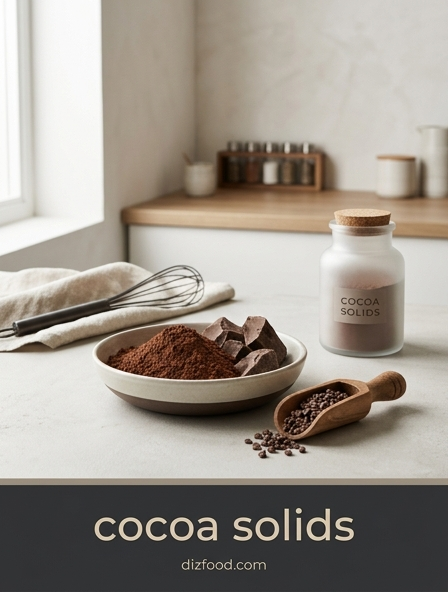
Defining Cocoa Solids in Chocolate Composition
Cocoa solids represent the non-fat component of the cacao bean after the cocoa butter has been extracted. In the culinary world, these solids are the primary source of color, aroma, and the characteristic chocolate flavor found in various confections. When a chocolate bar is labeled with a percentage, such as 70%, it refers to the combined mass of cocoa solids and cocoa butter. The remaining percentage typically consists of sugar, emulsifiers, and flavorings like vanilla.
Understanding the distinction between the dry matter and the fat is crucial for professional chefs. While cocoa butter provides the melt-in-the-mouth quality, the solids provide the structural backbone and nutritional profile, including antioxidants and minerals. In the kitchen, these solids are encountered in several forms:
- Natural cocoa powder: Untreated, acidic dry solids.
- Dutch-processed cocoa: Alkalized solids with a neutralized pH.
- Cocoa mass (liquor): Pure ground beans containing both fat and solids.
- Reduced-fat cocoa: Solids with nearly all lipids removed via hydraulic pressing.
Impact of High Cocoa Content on Flavor Depth
The intensity of a chocolate-based dessert is directly proportional to the volume of cocoa solids used in the formulation. High-solids chocolate, often classified as dark or extra-bitter, contains a higher concentration of polyphenols and alkaloids. These compounds contribute to a complex flavor profile that can range from fruity and floral to earthy and nutty, depending on the terroir of the cacao beans. As the percentage of solids increases, the sweetness decreases, allowing the inherent character of the bean to dominate the palate.
In high-end pastry work, selecting a chocolate with specific solid ratios is essential for achieving flavor depth. For instance, a 85% solid chocolate will provide an intense, lingering aftertaste that can stand up to heavy cream and bold spices. Conversely, a lower solid percentage in milk chocolate provides a more mellow, caramelized experience where the dairy notes are more prominent. Chefs must consider the roast profile of the solids, as over-roasted solids can introduce a burnt, acrid quality that masks the more delicate top notes of the chocolate.
How Solids Influence Baking Structure and Crumb
Cocoa solids function similarly to flour in a baking environment because they contain starch and protein. When incorporated into cake batters or cookie doughs, these dry particles absorb moisture and provide structural integrity. However, because cocoa solids are more absorbent than wheat flour, they can easily lead to a dry or crumbly texture if the recipe is not properly balanced. The fine particle size of the solids helps create a dense, tight crumb that is highly sought after in brownies and flourless chocolate cakes.
To optimize the crumb when working with high-solids cocoa, bakers often utilize the following techniques:
- Blooming the solids in hot liquid to release volatile oils and soften the texture.
- Substituting a portion of the flour with cocoa solids by weight, rather than volume.
- Increasing the ratio of liquid fats, such as oil, to counteract the drying effect of the starch.
- Using brown sugar to introduce humectants that retain moisture against the solids' absorption.
The Relationship Between Solids and Cocoa Butter
The ratio between cocoa solids and cocoa butter determines the fluidity and "snap" of the chocolate. While solids provide flavor, cocoa butter acts as the carrier, ensuring the solids are evenly distributed and smoothly perceived on the tongue. In professional applications, this is often discussed in terms of "viscosity." Chocolate with a high solid-to-fat ratio is typically thicker when melted, making it ideal for molding but difficult for thin enrobing tasks.
| Chocolate Type | Approx. Solids % | Approx. Fat % | Common Use |
|---|---|---|---|
| Unsweetened | 45-50% | 50-55% | Baking base |
| Couverture | 30-40% | 31-38% | Enrobing |
| Cocoa Powder | 88-90% | 10-12% | Dusting/Cakes |
Balancing these two components is vital for achieving a stable emulsion in ganache and mousses, where the fat must encapsulate the dry particles to prevent graininess.
Balancing Moisture Absorption in Cocoa Rich Recipes
Because cocoa solids are highly hygroscopic, they compete with other ingredients for the available water in a recipe. If the moisture is insufficient, the starch in the cocoa solids will not gelatinize properly, resulting in a gritty mouthfeel and a lack of volume in leavened goods. Professional pastry chefs must adjust their hydration levels based on the specific type of cocoa solid used, as Dutch-processed cocoa absorbs moisture differently than natural cocoa due to the altered pH level.
- Assess the total dry weight of cocoa solids and flour in the recipe.
- Increase the liquid component (milk, water, or eggs) by approximately 15% when transitioning from milk chocolate to dark chocolate.
- Allow batters to rest for 20 minutes to ensure full hydration of the solids before baking.
- Monitor the final consistency; it should be glossy rather than matte, indicating sufficient moisture.
Proper hydration ensures that the cocoa solids release their full color potential, resulting in a deep, dark hue rather than a dull, pale brown.
Achieving Professional Texture with Precise Percentages
Precision is the hallmark of professional chocolate work, particularly when managing cocoa solid percentages. The percentage listed on packaging dictates how the chocolate will behave under different temperatures. For example, a 70% dark chocolate has a higher melting point and sets faster than a 54% chocolate because the higher concentration of solids provides more nucleation sites for fat crystals during the tempering process. This results in a superior snap and a high-gloss finish that is resistant to blooming.
When creating complex textures like creameaux or truffles, the solid percentage dictates the final firmness. A recipe designed for a 60% solid chocolate will fail if substituted with an 80% chocolate, as the excess solids will seize the available liquids, leading to a broken or rubbery emulsion. Professionals use calculators or specific ratio charts to adjust the amount of heavy cream or butter to ensure the mouthfeel remains velvety and luxurious regardless of the cocoa intensity. Mastery of these percentages allows for consistent results in a commercial kitchen environment.
Bitterness Profiles in Dark Chocolate Formulations
The bitterness of cocoa solids is both a challenge and an opportunity in culinary design. This bitterness is primarily derived from theobromine and various tannins within the solids. When formulating recipes with high solid concentrations, chefs must decide whether to mask this bitterness or highlight it. The processing method of the solids plays a major role in this profile:
- Natural Solids: Retain sharp acidity and bright citrus notes alongside bitterness.
- Alkalized (Dutch) Solids: Have a smoother, more "malty" bitterness and a darker color.
- Raw Cacao Solids: Offer a highly astringent, unrefined bitterness often used in health-conscious cooking.
To balance these profiles, chefs often incorporate fats like mascarpone or butter, which coat the tongue and dampen the perception of bitter molecules. Salt is also a critical additive, as it suppresses the tongue's bitterness receptors while enhancing the underlying sweetness and aroma of the cocoa matter.
Cocoa Solids and the Science of Mouthfeel
Mouthfeel in chocolate is dictated by the particle size of the cocoa solids. During the manufacturing process, solids are refined through rolling and conching until they reach a size of approximately 15 to 20 microns. At this size, the human tongue cannot detect individual particles, resulting in a perfectly smooth sensation. If the solids are larger, the chocolate will feel gritty or "sandy." In the kitchen, when making homemade chocolate or chocolate paste, achieving this level of refinement is difficult without specialized equipment.
Furthermore, cocoa solids contribute to the viscosity of the melted product. High solid counts create more internal friction as the chocolate flows, leading to a thicker "body." This is particularly noticeable in hot chocolate preparations; a drink made with high-solid cocoa powder feels thicker and more substantial on the palate than one made with a syrup. The astringency of the solids also provides a "cleansing" effect on the palate, which is why high-solid dark chocolate is frequently paired with fatty foods like cheese or nuts to provide a balanced sensory experience.
Adjusting Sugar Levels for High Solid Ratios
As the ratio of cocoa solids increases, the necessity for strategic sugar adjustment becomes paramount. Sugar does not just provide sweetness; it also acts as a bulking agent and affects the freezing point of frozen desserts like gelato or sorbet. When working with ultra-dark chocolates (above 80% solids), the lack of sugar can make the final product taste overly medicinal or dry. Professionals must calculate the sugar-to-solid ratio to maintain a harmonious balance.
- Evaluate the sugar content already present in the chocolate couverture.
- Incorporate alternative sweeteners like glucose or invert sugar to add moisture and prevent crystallization.
- Taste the base at room temperature, as cold temperatures dull the perception of sugar and amplify the bitterness of the solids.
- Use acidity, such as a splash of balsamic or raspberry puree, to bridge the gap between intense solids and high sugar levels.
Ultimately, the goal is to use sugar to lift the aromatic qualities of the cocoa solids without creating a cloying finish that obscures the bean's origin.
Consistency and Stability in Professional Ganache
The stability of a ganache is heavily dependent on the suspension of cocoa solids within a fat-in-water emulsion. Cocoa solids act as a stabilizing agent, helping to thicken the mixture as it cools. However, an excess of solids can cause the ganache to "break," where the fat separates from the liquid, resulting in an unappealing oily sheen and grainy texture. Maintaining the correct temperature during the mixing of solids and cream is the key to a professional finish.
| Solid Ratio | Cream Ratio | Texture Result |
|---|---|---|
| 1 Part (70% Solids) | 1 Part | Firm Truffle Center |
| 1 Part (60% Solids) | 1.5 Parts | Silky Tart Filling |
| 1 Part (50% Solids) | 2 Parts | Pourable Glaze |
When the ganache is properly emulsified, the cocoa solids remain perfectly suspended, providing a matte-to-glossy finish and a shelf-stable structure that resists melting at room temperature. Using a precision immersion blender can help achieve the necessary shear force to integrate the solids into the fat phase.

Comments