
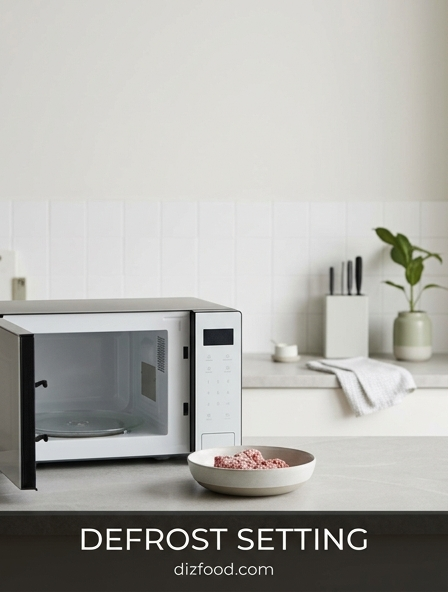
The Science Behind Microwave Pulse Power
The defrost setting on a standard microwave does not actually lower the intensity of the electromagnetic waves. Instead, it utilizes a mechanism known as pulse power. Most magnetrons are designed to operate at a fixed output; therefore, to achieve a lower energy state, the microwave cycles the magnetron on and off. During the "on" phase, the food is hit with full power, causing water molecules to vibrate rapidly. During the "off" phase, the machine remains silent, allowing thermal conduction to take place. This intermission is critical because it gives heat time to migrate from the outer layers toward the frozen center without overcooking the exterior.
- Magnetron Cycling: The rhythmic switching between active radiation and idle rest.
- Thermal Conduction: The process of heat transferring through direct molecular contact.
- Equilibrium: The state where temperature stabilizes across the entire food mass.
Without these pulses, the exterior of the food would absorb the majority of the energy, leading to a massive temperature gradient. By pulsing the energy, the microwave mimics a gentle thawing environment, ensuring that the ice crystals transition into liquid water at a controlled rate throughout the entire item.
Preventing Cooked Edges in Frozen Proteins
One of the most frustrating aspects of using a microwave for meat is the tendency for the corners and edges to turn gray and rubbery while the center remains a solid block of ice. This phenomenon occurs because the narrowest parts of the protein have a higher surface-area-to-volume ratio, making them more susceptible to rapid heating. To prevent this, the defrost setting is mandatory. It slows down the energy absorption, giving the dense interior a chance to catch up in temperature.
- Remove all store packaging, as plastic trays can trap steam against the meat.
- Shield the edges of large roasts with tiny strips of aluminum foil if your manual allows.
- Flip the protein frequently to redistribute the exposure to the microwave's standing waves.
- Allow for "standing time" halfway through the cycle to promote even heat migration.
By adhering to these steps, you ensure the protein fibers remain relaxed. Rapid heating causes muscle fibers to contract and expel moisture, resulting in a tough, dry texture. Controlled defrosting preserves the integrity of the meat, keeping it ready for a proper sear or roast later in the cooking process.
Understanding Duty Cycles for Better Thawing
The term "duty cycle" refers to the percentage of time the microwave is actively emitting radiation during a defrost program. Most manufacturers calibrate the defrost button to a 30% to 50% duty cycle. This means if you set the timer for ten minutes, the magnetron may only be active for three to five minutes total, interspersed with long pauses. Understanding this ratio helps you adjust your cooking habits for different food densities.
| Power Level | Duty Cycle % | Primary Kitchen Use |
|---|---|---|
| High (10) | 100% | Boiling water, cooking fresh vegetables. |
| Medium (5) | 50% | Simmering stews or dense casseroles. |
| Defrost (3) | 30% | Thawing meats, poultry, and seafood. |
When you select a weight-based defrost, the microwave's onboard computer calculates the necessary duty cycle duration to prevent the "thermal runaway" effect. This is when liquid water absorbs microwaves much more efficiently than ice, leading to localized boiling while the rest of the item is still frozen.
Defrosting Bread for Perfect Toaster Results
Bread is highly sensitive to microwave energy due to its porous structure and starch content. If you use a high power setting, the moisture inside the bread turns to steam instantly, which then collapses the starch cells and leads to a brick-hard crust once it cools. The defrost setting is the secret to reviving frozen slices without ruining their crumb. A low-power pulse softens the ice crystals just enough to make the slice flexible, mimicking the state of fresh bread.
- Wrap the bread in a paper towel to absorb excess surface moisture.
- Use the lowest defrost setting for no more than 15 to 20 seconds.
- Immediately transfer the softened bread to a toaster for a crisp finish.
This method bypasses the retrogradation of starch, which is the process that causes bread to go stale. By gently warming the bread through the defrost cycle, you re-gelatinize the starches slightly, providing a much better texture than if you attempted to toast a completely frozen slice, which often results in a burnt exterior and a cold, damp interior.
Avoiding Dangerous Hot Spots in Food
Microwaves operate by creating standing waves within the oven cavity, which naturally results in areas of high and low intensity. When defrosting dense items like lasagna or a thick soup, these hot spots can become dangerous. While the bulk of the food may feel cold, specific pockets can reach temperatures high enough to scald or begin the cooking process. This uneven distribution is why the defrost cycle includes significant "rest" periods.
- Utilize the turntable to ensure the food moves through different wave peaks.
- Stir liquids or semi-solids several times during the defrosting process.
- Arrange food in a ring shape, leaving the center empty for more even exposure.
- Let the food sit for several minutes after the timer ends to allow heat to level out.
Hot spots are not just a quality issue; they are a safety concern. In frozen pre-cooked meals, hot spots can lead to uneven reheating where bacteria might survive in the cold sections while the hot sections are overdone. The defrost setting mitigates this by lowering the energy input to a level the food can naturally distribute through its own thermal mass.
Food Safety Benefits of Controlled Defrosting
Food safety experts often warn against thawing perishables on the kitchen counter. This is because the "Danger Zone"-between 40°F and 140°F-is where bacteria like Salmonella and E. coli thrive. When food thaws at room temperature, the exterior can sit in the danger zone for hours while the interior remains frozen. The microwave defrost setting offers a much safer alternative by significantly compressing the time the food spends in this risky temperature range.
- Speed: Reduces thawing time from hours to minutes.
- Consistency: Keeps the surface temperature lower than ambient air.
- Containment: Prevents raw juices from dripping onto kitchen surfaces.
However, because the microwave may still create warm spots, it is essential to cook the food immediately after defrosting. You should never defrost meat in a microwave and then place it back in the refrigerator for later use. The localized heating could have already initiated bacterial growth that a standard refrigerator temperature cannot sufficiently suppress. Total transition from freezer to heat source is the safest workflow for the modern kitchen.
Optimal Timing for Uniform Temperature Distribution
Timing is the most critical variable when utilizing the defrost function. Many people make the mistake of setting the microwave for a short burst at high power to save time, but this contradicts the physics of heat transfer. For effective thawing, a longer duration at a lower power level is always superior. This allows the heat to penetrate the core without the risk of denaturing the proteins on the surface. The table below illustrates the recommended time-to-weight ratios for common items.
| Food Item | Weight | Estimated Defrost Time |
|---|---|---|
| Ground Beef | 1 lb | 5-7 Minutes |
| Chicken Breast | 1 lb | 6-8 Minutes |
| White Fish | 0.5 lb | 3-4 Minutes |
Note that these times include the necessary pauses in the duty cycle. If your microwave asks for the weight, be accurate. If it doesn't, start with the lower end of the time spectrum. It is always better to have food that is slightly under-thawed than food that has started to cook in its own juices. Constant monitoring ensures that you can stop the process the moment the food becomes pliable.
Common Microwave Thawing Mistakes to Avoid
Efficiency in the kitchen often leads to shortcuts, but skipping the nuances of the defrost setting can ruin expensive ingredients. One of the most common errors is leaving food in its original vacuum-sealed packaging. While convenient, some packaging isn't microwave-safe and can leach chemicals or trap steam, which effectively poaches the meat rather than thawing it. Another mistake is failing to break apart items like frozen sausages or hamburger patties as soon as they are soft enough to separate.
- Stacking: Never stack frozen items; spread them in a single layer for maximum surface exposure.
- Neglecting the "Stop" Beep: Many microwaves beep halfway through to remind you to flip the food; ignoring this leads to lopsided thawing.
- Using Too Much Power: Resorting to 50% or 70% power because you are in a rush.
Additionally, avoid defrosting delicate items like berries or leafy greens on a high-weight setting. These items have very little density and will turn to mush almost instantly. For fruits, use the shortest possible manual pulse or stick to room-temperature thawing if time permits to preserve their structural integrity and vibrant color.
Preserving Food Texture with Low Power
The culinary quality of an ingredient is largely defined by its moisture content and cellular structure. When food is frozen, water expands into ice crystals, which can puncture cell walls. If you apply high heat immediately via a standard microwave setting, these damaged cells rapidly leak their fluids, resulting in a soggy, unappealing texture. By using a low-power defrost setting, you allow these crystals to melt slowly, giving the cellular structure a chance to reabsorb some of the moisture or at least retain it through surface tension.
- Low power prevents the "tightening" of protein fibers in meat.
- It maintains the snap in vegetables like peas or corn.
- It prevents fats from separating prematurely in prepared frozen sauces.
This gentle approach is especially important for seafood. Shrimp and scallops are incredibly delicate; high heat makes them rubbery in seconds. A proper defrost cycle ensures they remain tender and ready for a quick sear. Ultimately, the defrost setting is not just about temperature; it is a tool for texture management, ensuring that frozen ingredients perform as close to fresh as possible.
Why High Heat Ruins Frozen Ingredients
High-intensity microwave radiation interacts with frozen food in a chaotic manner. Because ice is a poor absorber of microwave energy compared to liquid water, the first few molecules that melt begin to absorb almost all the incoming energy. This creates a runaway effect where the thawed sections begin to boil while the surrounding areas are still deep-frozen. This temperature disparity causes massive damage to the flavor and nutritional profile of the food. High heat also causes rapid protein denaturation, which is irreversible.
- Enzyme Breakdown: Rapid heating can destroy beneficial enzymes before cooking begins.
- Vitamin Loss: Heat-sensitive vitamins like C and B are degraded by unnecessary high temperatures.
- Flavor Volatility: Delicate aromatics are driven off by steam if the food is heated too quickly.
In summary, rushing the thawing process with high heat is a recipe for culinary failure. It results in food that is unevenly cooked, nutritionally diminished, and texturally inferior. Respecting the defrost setting's slower pace is the only way to ensure that your frozen ingredients serve as a high-quality foundation for your meals, maintaining the balance between convenience and kitchen excellence.



Comments