
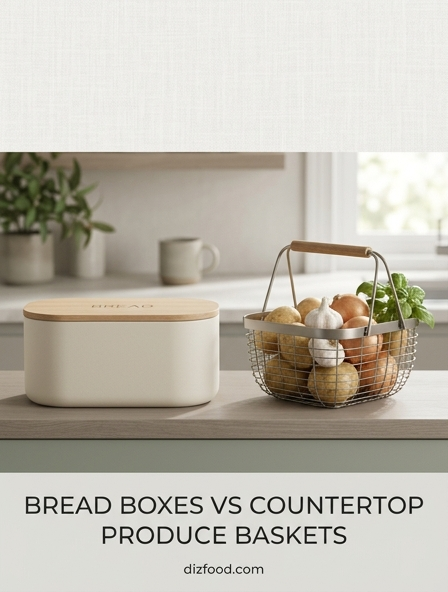
Achieving that bakery-quality crust at home is an art, but keeping it that way is a science. The secret lies in moisture-wicking properties that balance humidity; too much moisture leads to sogginess, while too little turns your loaf into a rock. By utilizing breathable materials, you can create a micro-environment that allows excess steam to escape while preventing the crumb from drying out prematurely. This delicate equilibrium ensures your sourdough or baguette stays crisp on the outside and tender on the inside. To find the best storage solution for your kitchen, compare the benefits of Bread Boxes Vs Countertop Produce Baskets.
Science of Moisture-Wicking Fabrics for Bread
The science behind moisture-wicking fabrics in bread preservation centers on capillary action and vapor pressure. When a loaf of bread is baked, it contains significant internal moisture that gradually migrates toward the surface. If this moisture is trapped by non-porous materials, it condenses, leading to a loss of crust crispness and accelerated mold growth. Moisture-wicking fabrics, such as specific linen weaves or technical kitchen textiles, utilize fine fibers that draw water molecules away from the bread's surface and distribute them across a larger surface area for evaporation.
- Capillary Action: Fibers pull liquid moisture through microscopic channels.
- Evaporative Cooling: The transition of water from liquid to vapor stabilizes surface temperature.
- Vapor Permeability: Allows the "breathing" process essential for maintaining crumb elasticity.
- Surface Tension Management: Prevents large droplets from forming on the loaf exterior.
By leveraging these physical properties, kitchen textiles act as a passive regulation system. They ensure the exterior remains dry enough to stay firm, while preventing the interior from dehydrating too rapidly, effectively balancing the hydration levels throughout the loaf's shelf life.
Linen versus Plastic Storage Comparison
Choosing the correct storage medium significantly alters the chemical aging process of baked goods. Plastic is an occlusive material, meaning it creates an airtight seal that prevents any moisture from escaping. While this keeps bread soft, it creates a high-humidity environment that ruins artisanal crusts and encourages fungal spores. In contrast, linen is a highly breathable fiber that allows for a controlled exchange of air and moisture, preserving the structural integrity of the crust.
| Feature | Plastic Bags | Linen Wraps |
|---|---|---|
| Airflow | Zero / Negligible | High / Natural |
| Crust Texture | Soft / Soggy | Crisp / Firm |
| Mold Risk | High due to condensation | Low due to ventilation |
| Staling Rate | Slow | Moderate |
| Moisture Control | Traps all moisture | Wicks and evaporates |
Linen remains the preferred choice for sourdough and crusty boules, as it manages the moisture migration without suffocating the product, whereas plastic is better suited for highly processed, soft sandwich breads containing preservatives.
Maintaining Optimal Airflow in Kitchen Containers
Airflow is the primary mechanism through which moisture-wicking properties are maximized in a kitchen setting. A container that lacks ventilation will eventually reach a state of humidity equilibrium where wicking fabrics can no longer evaporate the moisture they have pulled from the bread. To maintain optimal conditions, containers must facilitate a passive air exchange that allows humid air to exit and drier air to enter, albeit at a slow enough rate to prevent complete desiccation.
Effective airflow management often involves the use of bread boxes with small, strategically placed perforations. These vents are typically located at the rear or sides to prevent direct drafts from hitting the food, which would lead to rapid staling. By pairing a moisture-wicking liner with a ventilated box, you create a micro-climate where the relative humidity remains around 40% to 50%. This specific range is ideal for keeping the starch molecules in the bread from recrystallizing too quickly while ensuring the crust does not become a breeding ground for bacteria or mold.
How Humidity Impacts Bread Crust Integrity
The integrity of a bread crust is a result of the caramelization and Maillard reaction during baking, which creates a low-moisture barrier. However, this barrier is hygroscopic, meaning it naturally attracts water from both the moist interior crumb and the surrounding kitchen air. When environmental humidity levels rise, the crust absorbs this vapor, transitioning from a brittle, glassy state to a rubbery, tough texture.
- Adsorption: Water molecules from the air bind to the crust surface.
- Absorption: Moisture moves from the high-hydration crumb into the low-hydration crust.
- Plasticization: The starch-protein matrix softens as it hydrates.
- Degradation: The crisp texture is lost, leading to a "leathery" mouthfeel.
Wicking technologies mitigate this degradation by ensuring that any moisture reaching the crust is immediately drawn away and released. This interruption of the hydration cycle is essential for maintaining the "crunch" that defines artisanal baking. Without active moisture management, even the best-baked loaf will succumb to the equalizing forces of high kitchen humidity within hours.
Breathable Materials for Long-Lasting Freshness
Selecting the right material for bread storage involves understanding the porosity and fiber density of common kitchen items. Breathable materials provide a physical shield against pests and dust while allowing the loaf to regulate its own hydration levels. Unlike synthetic fibers, natural fibers possess intrinsic properties that complement the biological makeup of wheat-based products.
- Hemp: Exceptionally durable and naturally antimicrobial, providing superior moisture-wicking and longevity.
- Cotton: A soft, highly absorbent fiber that is excellent for short-term storage and preventing condensation.
- Beeswax Wraps: Semi-permeable membranes that allow some breathability while providing a more robust moisture barrier than plain cloth.
- Uncoated Paper: A traditional choice that offers high breathability but provides less insulation against drying out than fabric.
- Bamboo Fiber: Highly porous and sustainable, offering excellent moisture regulation for humid climates.
The choice of material should be dictated by the ambient humidity of the kitchen. In drier climates, a tighter weave like heavy cotton is beneficial, whereas, in humid coastal areas, the high breathability of linen or hemp is necessary to prevent the bread from becoming waterlogged.
Organizing Your Bread Box for Texture Retention
Organization within a storage container is as vital as the material of the container itself. Proper spacing ensures that moisture-wicking surfaces are not obstructed, allowing air to circulate around the entire surface of the loaf. When multiple loaves are crowded together, they create "moisture pockets" where air becomes stagnant. This localized high humidity causes the sides of the loaves to become soft and sticky, even if the container is technically ventilated.
To optimize texture retention, loaves should be placed on a raised wooden or bamboo rack within the box. This allows the moisture-wicking liner to work on the bottom of the loaf as effectively as the top. If storing different types of bread, keep artisanal, crusty loaves separate from enriched, soft breads. The high moisture content of enriched doughs (like brioche) can migrate to the crustier loaves, softening them prematurely. By maintaining clear pathways for airflow and utilizing the full volume of the storage unit, you maximize the efficiency of the moisture-wicking environment.
Natural Fibers and Moisture Migration Control
Natural fibers like linen and jute are composed of cellulose, a polymer that is inherently attracted to water. This molecular attraction is what makes these fibers so effective at controlling moisture migration in the kitchen. When bread is placed inside a linen bag, the fibers act as a buffer. If the bread releases too much steam, the fibers absorb the excess; if the environment becomes too dry, the fibers hold onto enough moisture to prevent the bread from turning into a hard rusk.
This "buffering" effect is a dynamic process. Natural fibers have a high surface area-to-volume ratio, which facilitates rapid evaporation of the moisture they collect. Unlike synthetic polyester, which may repel water or trap it in the weave without absorbing it, natural cellulose fibers integrate the water into their structure. This prevents the "clammy" feeling often associated with bread stored in low-quality containers. This sophisticated level of moisture control is why traditional bakeries have relied on flour sacks and linen couches for centuries to manage dough and finished products alike.
Preventing Soggy Crusts with Wicking Technology
Modern kitchen innovations have introduced specialized wicking technology designed specifically to combat "soggy crust syndrome." This often involves multi-layered textiles that combine a soft, absorbent inner layer with a highly breathable outer mesh. These layers work in tandem to pull moisture away from the bread's surface and move it toward the outer environment where it can be dissipated by kitchen airflow.
- Inner Layer: Rapidly absorbs liquid moisture from the warm bread.
- Intermediate Layer: Distributes the moisture to prevent saturation points.
- Outer Layer: Encourages air-exchange to facilitate the evaporation of stored vapor.
This technology is particularly useful for those who bake at home and need to store bread while it is still slightly warm. While standard practice suggests cooling bread completely before storage, these technical wicking bags provide a safety net, managing the residual steam that would otherwise turn a crisp crust into a sponge. By using advanced fiber blends, these tools provide a level of precision in humidity control that traditional wooden boxes or paper bags cannot achieve alone.
The Role of Porous Ceramics in Preservation
Porous ceramics, such as unglazed terra cotta or specific types of stoneware, offer unique moisture-wicking properties for kitchen storage. The material itself is riddled with microscopic pores that act similarly to the fibers in a linen cloth. When bread is stored in a ceramic "bread jointer" or crock, the walls of the vessel actively participate in the hydration balance of the internal atmosphere. If the humidity inside the crock rises, the ceramic walls wick the moisture into the clay body.
The beauty of ceramic storage lies in its thermal mass and its ability to maintain a consistent micro-climate. Because ceramics are heavy and dense, they are less affected by minor fluctuations in kitchen temperature. The moisture absorbed by the porous walls is slowly released to the outside air, keeping the internal environment stable. This makes porous ceramics an excellent choice for long-term storage of sourdough, where maintaining a specific level of acidity and moisture is key to preserving the flavor profile and the chewy-yet-crisp texture of the crust.
Strategic Storage Solutions for Artisanal Loaves
Artisanal loaves require a strategic approach to storage because their lack of preservatives makes them highly sensitive to environmental changes. The goal is to maximize the life of the bread without sacrificing the very qualities-like the crackly crust-that define the artisanal style. This requires matching the storage method to the specific hydration level and crust thickness of the loaf in question.
| Loaf Type | Recommended Storage | Wicking Goal |
|---|---|---|
| Baguette | Paper Bag / Open Air | Immediate evaporation |
| Sourdough Boule | Linen Bag in Wood Box | Balanced moisture exchange |
| Rye / Whole Grain | Beeswax Wrap | Slow moisture retention |
| Focaccia | Perforated Container | Prevent oil-moisture buildup |
By understanding that a "one size fits all" approach does not work, bakers can use wicking textiles and breathable containers to extend freshness. A high-hydration sourdough needs more wicking power than a dry yeasted loaf. Strategic storage ensures that the moisture migration from the crumb to the crust is slowed and managed, rather than simply stopped or accelerated, resulting in a superior eating experience over several days.

Comments