
Staying organized in today's fast-paced world doesn't have to be a struggle, especially when you leverage modern digital tools to enhance your shopping efficiency. By utilizing intuitive mobile apps and cloud-synced lists, you can effortlessly streamline your grocery runs, reduce unnecessary impulse buys, and ensure you never forget a key ingredient again. These smart technologies allow for real-time updates and seamless collaborative planning with family members, transforming a mundane chore into a highly productive, tech-driven experience. To truly master your kitchen workflow, it is essential to weigh your organizational options, particularly when evaluating the pros and cons of digital meal planners vs paper meal planners.
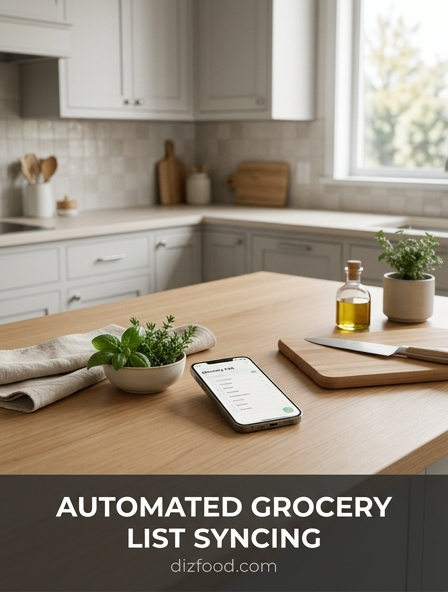
Smart Grocery Apps for Seamless Planning
The evolution of the digital kitchen begins with smart grocery applications designed to streamline how households manage their nutritional needs. These platforms serve as a centralized hub, allowing users to move away from fragmented paper notes toward a cohesive digital strategy. By utilizing these apps, families can maintain a living document of their requirements that evolves in real-time as items are consumed or discovered. The core benefit of these applications is their ability to categorize items automatically, which significantly reduces the time spent wandering through store aisles. Furthermore, many of these platforms allow for the delegation of tasks, ensuring that every member of the household can contribute to the planning process without overlapping efforts.
- Automated categorization of items by department or aisle.
- Collaborative lists that update instantly for all invited users.
- Integration with local store circulars to identify weekly specials.
- History tracking to identify frequently purchased staple items.
Ultimately, these tools transform the mundane chore of list-making into a strategic activity. By leveraging historical data and user preferences, smart apps minimize the cognitive load associated with meal preparation and pantry management, ensuring that essential ingredients are always accounted for before the cooking process begins.
Real Time Inventory Tracking and Alerts
Maintaining a precise awareness of what is currently inside your pantry or refrigerator is a cornerstone of the modern automated kitchen. Real-time inventory tracking systems utilize a combination of weight sensors, internal cameras, and manual input to provide a live snapshot of household supplies. This technology eliminates the guesswork associated with "doubling up" on items you already own, thereby reducing food waste and saving money. When a specific item reaches a predetermined threshold, the system triggers a low-stock alert, notifying the user immediately via their smartphone. This proactive approach ensures that the "out of milk" scenario becomes a thing of the past.
Advanced systems can even monitor the expiration dates of perishable goods. By alerting users when products are nearing their end-of-life, the kitchen environment becomes more sustainable. These alerts can be customized based on consumption patterns; for instance, if the system notices that bread is consumed rapidly, it can set a more aggressive reorder point. This level of granular control allows for a hands-off approach to inventory management, where the kitchen essentially "looks after itself," allowing the homeowner to focus on culinary creativity rather than logistics and stock-taking.
Syncing Digital Lists Across Multiple Devices
The true power of an automated grocery system lies in its connectivity. Cloud-based synchronization ensures that a list started on a kitchen tablet is instantly accessible on a smartphone at the grocery store. This seamless hand-off is vital for busy households where the person identifying the need is not always the person performing the purchase. When one user checks an item off the list, it disappears or moves to the "completed" section across all linked accounts, preventing duplicate purchases and confusion. This ecosystem approach bridges the gap between the home environment and the retail space, creating a unified experience.
- Install the application on all household smartphones and tablets.
- Enable push notifications to receive updates when the list is modified.
- Link the primary account to wearable devices for hands-free checking in-store.
- Utilize web browser extensions to add items directly from online recipes.
Beyond simple list sharing, synchronization often includes the syncing of preferences and dietary restrictions. This ensures that even if a guest or a teenager is doing the shopping, they have access to the specific brands and requirements established by the primary meal planner. This technological harmony reduces friction and enhances the overall efficiency of the domestic supply chain.
Maximizing Savings with Comparison Engines
Automation in the kitchen is not just about convenience; it is also about financial optimization. Comparison engines integrated into grocery platforms allow users to see price variances for their entire list across multiple local retailers. Instead of manually checking various apps or websites, the software aggregates data to show where the total basket cost is lowest. This transparency empowers consumers to make data-driven decisions about where to shop, often revealing significant price differences on high-frequency items like meat, dairy, and organic produce. By automating this comparison, users can save hundreds of dollars annually without extra effort.
| Product Category | Store A Price | Store B Price | Automated Recommendation |
|---|---|---|---|
| Organic Milk (Gallon) | $5.49 | $4.99 | Store B (Bulk Buy) |
| Chicken Breast (lb) | $3.99 | $4.50 | Store A (Sale Price) |
| Coffee Beans (12oz) | $12.00 | $11.50 | Store B (Coupon Sync) |
These engines often factor in active promotions and hidden discounts that might be missed by the naked eye. By analyzing the entire list as a single data set, the software can suggest "split trips" if the savings justify the extra travel, further maximizing the value of every dollar spent on household sustenance.
One Click Recipe to Cart Integrations
The transition from a digital recipe to a physical shopping cart has historically been a manual and error-prone process. However, one-click integrations have revolutionized this workflow by allowing users to import ingredient lists directly into their shopping apps. When a user finds a recipe online, the system parses the text, identifies the necessary ingredients, and cross-references them with the current home inventory. If an item is already in stock, the software smartly excludes it from the new list. This level of integration ensures that the user only buys exactly what is needed for the specific meal plan, reducing clutter and waste.
- Direct import from major recipe websites and food blogs.
- Automatic scaling of ingredients based on desired serving sizes.
- Smart substitution suggestions for out-of-stock items or allergies.
- Option to choose between "premium" or "store brand" for all imported items.
This functionality also facilitates a "shop-the-recipe" lifestyle, where complex meals become accessible because the logistics of gathering ingredients are handled by the software. It removes the intimidation factor of trying new cuisines, as the user can be confident that they have every niche spice and specific cut of meat required to execute the dish perfectly.
Voice Assistant Automation for Kitchen Inventory
In the heat of cooking, the ability to interact with a grocery list hands-free is a significant advantage. Voice assistants integrated with kitchen inventory software allow users to shout out items as they run out, without having to stop and dry their hands or find a pen. For example, saying "Add sea salt to the grocery list" immediately updates the digital record. This immediate capture is essential because the moment of realization-when a container is emptied-is the most accurate time to update the inventory. If the action is delayed, it is often forgotten, leading to missing ingredients during the next cooking session.
Beyond simple additions, voice assistants can provide status updates on existing stock. A user can ask, "How many eggs do I have left?" and receive an answer based on the last recorded inventory check. This two-way communication creates a conversational interface for kitchen management. Furthermore, these assistants can be set up to suggest additions based on previous habits; if you haven't bought olive oil in a month, the assistant might ask if you need to add it to your weekly run. This proactive dialogue transforms the voice assistant from a passive tool into an active domestic administrator that helps maintain the flow of the household.
Digital Couponing and Loyalty Program Integration
Modern automated grocery systems have largely replaced physical coupon clipping with seamless digital integrations. By linking loyalty program accounts directly to the list-syncing app, users can automatically apply manufacturer coupons and store-specific discounts to their items. The system scans the items on the list and searches for available digital rebates, ensuring that no discount is left unclaimed. This occurs in the background, requiring no effort from the consumer during the checkout process. The result is a frictionless savings experience that scales across every shopping trip throughout the year.
- Link all local grocery store loyalty cards to the central app.
- Browse "suggested deals" based on your frequent purchases.
- Watch as digital coupons are "clipped" automatically upon item addition.
- Review total savings and points accrued within the app dashboard.
This integration also helps in tracking loyalty points and reward milestones. Users can be alerted when they are close to earning a "free turkey" or a significant fuel discount. By centralizing these disparate programs into a single automated interface, the kitchen management system ensures that the household is always operating at peak economic efficiency while maintaining a fully stocked pantry.
AI Powered Meal Planning and Shopping Logistics
Artificial Intelligence has introduced a predictive element to kitchen management that goes far beyond simple list-making. AI-powered platforms analyze a household's eating patterns, dietary goals, and historical shopping data to generate optimized meal plans for the week. These plans aren't just collections of recipes; they are strategically designed to share ingredients, thereby minimizing the variety of items that need to be purchased. For instance, if one recipe calls for half a head of cilantro, the AI will suggest a second recipe that utilizes the remainder. This holistic view of the week's consumption ensures that every purchase has a designated purpose.
Logistically, these AI systems can predict when you will run out of recurring items like coffee or detergent based on your historical usage rates. This allows the system to build "predictive carts" that are ready for review before the user even realizes they are low on supplies. By blending nutritional science with logistical efficiency, AI takes over the heavy lifting of domestic planning. This allows families to enjoy diverse, healthy meals while spending significantly less time on the administrative overhead of maintaining a functional and efficient kitchen environment.
Barcode Scanning for Faster List Building
One of the most practical applications of mobile technology in the kitchen is the use of barcode scanning to manage inventory. Most modern grocery apps include a scanning feature that utilizes the smartphone's camera to identify products instantly. When a box of pasta is finished, the user simply scans the UPC code on the packaging before throwing it away. The app recognizes the specific brand and size and adds it to the shopping list immediately. This method is significantly faster than typing and eliminates errors regarding specific product variants, such as choosing the "low sodium" version over the original.
- Instant identification of thousands of consumer packaged goods.
- Ability to scan items while putting away groceries to log "start dates."
- Error reduction by ensuring the exact brand and size are captured.
- Quick-add functionality for pantry audits and seasonal cleanouts.
Barcode scanning also helps when discovering new products at a friend's house or a specialty shop. By scanning the item, a user can instantly see if their preferred grocery store carries it or add it to a "wish list" for future consideration. This tactile, visual way of managing data makes the digital transition feel more natural and integrated into the physical reality of the kitchen.
Organizing Grocery Trips with Route Optimization
Once the list is finalized, the final hurdle is the shopping trip itself. Automated grocery platforms now offer route optimization features that organize the list according to the physical layout of the chosen store. By knowing the aisle locations of every item, the software reorders the list so that the shopper can move through the store in a single, continuous path without backtracking. This can reduce the time spent in the store by up to 30%, which is a significant boon for busy individuals. Furthermore, for those who visit multiple stores, the software can optimize the driving route between locations to minimize fuel consumption.
| Aisle Number | Items to Collect | Estimated Time |
|---|---|---|
| 1 (Produce) | Kale, Tomatoes, Apples | 4 mins |
| 4 (Dairy) | Greek Yogurt, Salted Butter | 2 mins |
| 12 (Frozen) | Frozen Peas, Ice Cream | 3 mins |
This level of organization transforms a stressful, chaotic errand into a streamlined and predictable process. By removing the need to scan the list repeatedly or search for hidden items, the shopper can focus on selecting the best quality produce and enjoying the experience. The combination of digital precision and physical logistics ensures that the journey from the store to the kitchen is as efficient as possible.



Comments