
Choosing the right foundation for your marinade can be the difference between a culinary masterpiece and a kitchen disaster. Acidic marinades, utilizing ingredients like citrus, vinegar, or wine, work by denaturing surface proteins to create a firm, tangy bite that is perfect for thin cuts of poultry or seafood. On the other hand, enzymatic marinades-harnessing natural catalysts found in fruits like pineapple (bromelain) and papaya (papain), or dairy products like yogurt-actively digest tough muscle fibers and connective tissues. While acids provide a bright flavor profile and quick surface tenderization, enzymes offer a deeper, more transformative softening effect for sturdier meats, provided you don't over-marinate and risk a mushy texture. Selecting the "best" base ultimately depends on your protein choice and how much time you have to let those chemical reactions work their magic.
| Feature | Acidic Base (Citrus, Vinegar, Wine) | Enzymatic Base (Pineapple, Ginger, Yogurt) |
|---|---|---|
| Primary Action | Denatures and tightens surface proteins. | Breaks down protein chains and collagen. |
| Ideal Cuts | Fish, shrimp, chicken breast, thin pork. | Flank steak, brisket, ribs, game meats. |
| Tenderizing Depth | Mostly surface-level penetration. | Deep tissue breakdown; highly effective. |
| Marinating Time | Short (30 mins to 2 hours). | Variable (1 to 6 hours depending on strength). |
| Flavor Impact | Sharp, bright, and highly seasoned. | Mildly sweet or creamy; alters meat savory-ness. |
| Over-prep Risk | Meat becomes tough, rubbery, or "cooked." | Meat becomes mushy, mealy, or pasty. |
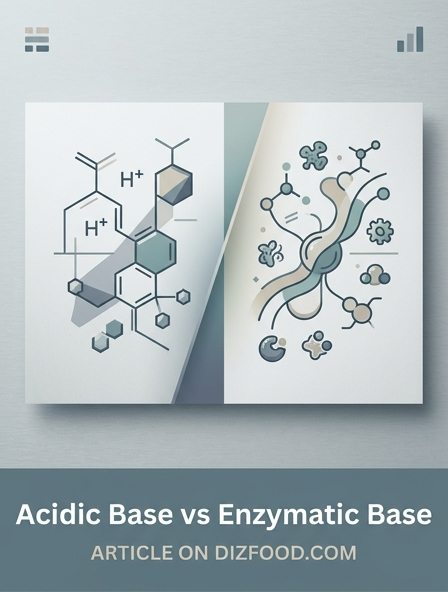
Understanding the Difference Between Acidic and Enzymatic Bases
In the specialized environment of a commercial or residential kitchen, the distinction between acidic and enzymatic bases is fundamental to maintaining both hygiene and equipment longevity. An acidic base is characterized by a low pH level, typically ranging from 0 to 6. These solutions rely on high concentrations of hydrogen ions to react chemically with inorganic substances. Common examples in a culinary context include citric acid, acetic acid (vinegar), and phosphoric acid. Their primary function is to neutralize alkaline residues and dissolve metallic salts that accumulate on hard surfaces over time.
In contrast, enzymatic bases are biological catalysts derived from living organisms, such as bacteria or yeast. Unlike acids, which use corrosive force, enzymes work by targeting specific molecular structures. They are generally pH-neutral and function by breaking down complex organic macromolecules into smaller, water-soluble fragments. In a kitchen, these are typically categorized by the type of "soil" they target:
- Proteases: Targeted toward protein-based stains like meat juices, egg, and dairy.
- Lipases: Specialized in breaking down fats, oils, and greases (FOG).
- Amylases: Designed to dissolve starches from pasta, potatoes, and sauces.
Understanding this difference is critical because using an acid on an organic clog may merely coat the grease, while using an enzyme on limescale will yield no reaction. Acids provide a rapid, aggressive chemical "burn" to inorganic matter, whereas enzymes provide a systematic, biodegradable decomposition of biological matter.
How Acidic Bases Dissolve Mineral Deposits and Oxidation
The efficacy of acidic bases in the kitchen is most visible when dealing with mineral buildup, often referred to as limescale or "hard water" spots. This white, chalky residue is primarily composed of calcium carbonate and magnesium carbonate, which are insoluble in water but highly reactive to protons. When an acidic cleaner is applied to these deposits, a neutralization reaction occurs. The acid donates hydrogen ions to the carbonate, converting it into water and carbon dioxide gas, effectively liquefying the solid mineral structure so it can be rinsed away.
Beyond simple scaling, acidic bases are essential for treating oxidation on metal surfaces. Stainless steel, while resistant to rust, can develop a dull "heat tint" or tea-staining when exposed to high temperatures and salts. Acidic solutions, particularly those containing phosphoric or oxalic acid, strip away the oxidized top layer to reveal the uncorrupted metal beneath. This process, known as passivation, also helps restore the protective chromium oxide layer that prevents further corrosion.
Common kitchen components that require regular acidic treatment include:
- Coffee machine internal heating elements and boilers.
- Commercial dishwashers and glass washers prone to scale.
- Steam tables and bain-maries where water constantly evaporates.
- Stainless steel prep tables and sinks showing signs of dulling or pitting.
Because acids can be corrosive to certain metals like aluminum or galvanized steel, their application must be timed precisely and followed by thorough rinsing to prevent surface etching.
The Biological Power of Enzymatic Bases for Organic Matter
Enzymatic cleaners represent a sophisticated approach to kitchen sanitation by utilizing "lock and key" biological mechanisms. While traditional surfactants simply lift grease from a surface, enzymes chemically dismantle the grease at a molecular level. This is particularly vital in a kitchen where organic matter-fats, proteins, and carbohydrates-fills every crevice. Because enzymes are not consumed in the reaction they catalyze, a single enzyme molecule can continuously work on a stain until the organic matter is entirely decomposed.
The power of enzymatic bases lies in their ability to penetrate porous surfaces. In a kitchen, grout lines between floor tiles often trap animal fats and vegetable oils that become rancid and emit odors. Traditional cleaners may clean the surface, but the enzymes can deep-clean the pores of the grout, breaking down the embedded organic material that feeds bacteria. This makes them the gold standard for floor maintenance and "deep-clean" cycles in high-volume food production areas.
Furthermore, enzymatic cleaners are the primary solution for managing grease traps and drains. By introducing lipases into the drainage system, the solidified fats are converted into fatty acids and glycerol, which are much easier for wastewater systems to process. This biological intervention prevents the formation of "fatbergs" and reduces the frequency of manual pump-outs, providing a long-term maintenance solution that goes beyond superficial cleanliness.
Chemical Reaction vs Biological Catalysis Mechanisms
The fundamental difference in how these two bases perform lies in their kinetic pathways: stoichiometric chemical reactions versus biological catalysis. When an acid reacts with a mineral deposit, it is a one-to-one relationship where the acid molecules are consumed as they react. Once the hydrogen ions are spent, the cleaning action stops. This is why heavy scaling often requires multiple applications of an acidic cleaner; the solution becomes "exhausted" as it neutralizes the alkaline minerals.
Biological catalysis operates on an entirely different principle. An enzyme acts as a facilitator for a reaction that would otherwise happen very slowly. It lowers the activation energy required to break molecular bonds in proteins or fats. Because the enzyme itself is not a reactant, it emerges from the process unchanged, ready to attach to the next molecule of grease or starch. This allows enzymatic cleaners to work over longer periods, often continuing to clean for hours or even days after the initial application, provided the environment remains moist.
The efficiency of these mechanisms is also governed by different environmental factors:
| Factor | Acidic Base Reaction | Enzymatic Catalysis |
|---|---|---|
| Temperature | Higher heat increases reaction speed. | Requires moderate heat; excessive heat kills enzymes. |
| pH Range | Works best at low pH (1-4). | Works best at neutral pH (6-8). |
| Speed | Immediate/Instantaneous. | Slow and sustained (Time-dependent). |
| Selectivity | Broad (reacts with any alkali). | Highly specific (targets specific bonds). |
Key Applications for Acidic Cleaners in Industrial Settings
In industrial kitchen settings, acidic cleaners are indispensable for the maintenance of high-throughput machinery. One of the most critical applications is the descaling of industrial-grade dishwashing units. These machines process thousands of racks daily, and the constant cycle of heating hard water leads to rapid mineral buildup on spray arms and heating coils. If left untreated, this scale acts as an insulator, forcing the machine to draw more power to heat water and eventually leading to mechanical failure. Acidic delimers are used in "boil-out" procedures to strip these deposits in minutes.
Another vital industrial application is found in the cleaning of beverage dispensing systems and beer lines. Mineral deposits known as "beer stone" (calcium oxalate) can accumulate inside lines, affecting the flavor profile and hygiene of the product. Acidic cleaners are circulated through these systems to dissolve the stones without damaging the plastic or stainless steel tubing. Similarly, in large-scale bakeries, acidic solutions are used to clean proofing cabinets and steam injection ovens where moisture levels are consistently high, leading to oxidation and mineral film.
Industrial acidic bases are also used for "brightening" aluminum trays and equipment that have become oxidized and grey through repeated exposure to alkaline dish soaps. By applying a mild acid wash, the aluminum is restored to its original luster, ensuring the equipment looks professional and remains easy to sanitize between uses. However, in all industrial applications, the use of acids requires strict adherence to safety protocols, including the use of PPE and specialized ventilation.
Why Enzymatic Bases are Essential for Professional Remediation
Professional remediation in the kitchen often involves addressing issues that traditional detergents cannot solve, specifically deep-seated odors and persistent grease accumulation in hard-to-reach areas. Enzymatic bases are essential here because they do not just mask odors; they eliminate the source. Most kitchen odors are the byproduct of bacteria consuming organic waste. By utilizing enzymatic cleaners, professionals remove the "food source" for these bacteria, effectively sterilizing the environment through starvation of the microbial population.
In cases of severe grease buildup on floors-often referred to as "slippery floor syndrome"-enzymes are the only effective remedy. Over time, polymerized grease creates a microscopic film on kitchen tiles that becomes incredibly slick when wet. Traditional mopping often just spreads this film. Enzymatic floor cleaners penetrate this polymerized layer, breaking the cross-linked fatty acid chains and restoring the floor's natural coefficient of friction. This is a critical safety intervention in high-pressure kitchen environments.
Furthermore, enzymes are the primary tool for cleaning exhaust hoods and ventilation ducts. While caustic degreasers are used for the initial "knock-down" of heavy grease, enzymatic foams are often applied as a secondary treatment to digest the remaining thin films in the long stretches of ductwork where manual scrubbing is impossible. This biological remediation reduces fire risks significantly by ensuring that the fuel source (grease) is completely removed rather than just thinned out.
Surface Safety Comparison for Acidic and Enzyme Solutions
When selecting a cleaning base, the physical integrity of kitchen surfaces must be the primary concern. Acidic cleaners, while powerful, pose a significant risk to several common kitchen materials. Calcareous stones, such as marble, limestone, and travertine, are chemically similar to the limescale that acids are designed to dissolve. Consequently, even a small spill of an acidic cleaner can "etch" a marble countertop, leaving a dull, permanent mark that requires professional regrinding to remove. Acids can also strip the protective chrome plating from faucets if left on too long, exposing the brass beneath to corrosion.
Enzymatic cleaners, by contrast, are among the safest chemicals available for kitchen surfaces. Because they are typically pH-neutral and non-corrosive, they can be used on almost any material without fear of damage. This includes sensitive surfaces like natural stone, wood butcher blocks, and even specialized plastics used in food processing equipment. Enzymes do not cause the pitting or hydrogen embrittlement that can occur when strong acids interact with certain metal alloys.
However, the safety of enzymes comes with a trade-off in terms of surface compatibility during the cleaning process itself. For example, if a surface has been recently treated with a strong disinfectant or an acidic cleaner, the residual pH or chemical presence may "denature" the enzymes, rendering them useless. Therefore, while enzymes are safer for the surface, they require a "clean slate" to work effectively, whereas acids are more robust in their ability to react regardless of the presence of other chemical residues.
Environmental Impact of Synthetic Acids vs Natural Enzymes
The environmental footprint of kitchen cleaning chemicals is an increasingly important factor for modern businesses. Synthetic acidic cleaners, particularly those containing high concentrations of phosphoric or hydrochloric acid, can significantly alter the pH of wastewater. This acidity must be neutralized before it reaches municipal treatment plants to prevent damage to infrastructure and the disruption of the biological processes used in sewage treatment. Furthermore, the runoff of phosphates from some acidic cleaners contributes to eutrophication in waterways, leading to harmful algal blooms that deplete oxygen and kill aquatic life.
Enzymatic cleaners are widely regarded as the environmentally superior choice. Being bio-based, they are fully biodegradable and typically break down into harmless amino acids. Because they work at neutral pH levels, they do not pose a threat to plumbing or the microbial balance of septic systems. In fact, many enzymatic kitchen cleaners are "beneficial" to the environment; as they wash down the drain, they continue to break down organic matter in the sewage pipes, effectively pre-treating the wastewater before it even reaches the treatment facility.
Key environmental advantages of enzymes include:
- Reduction in VOCs: Enzymes do not off-gas harmful volatile organic compounds.
- Energy Efficiency: They often work effectively in cool water, reducing the need for high-temperature cleaning.
- Safety for Personnel: Lower risk of chemical burns or respiratory irritation compared to concentrated acids.
- Sustainability: Most enzymes are produced via fermentation of renewable agricultural products.
Choosing the Right Base for Specific Stain and Odor Removal
Effective kitchen maintenance requires a diagnostic approach to cleaning. The user must first identify whether the "soil" is inorganic or organic. Using the wrong base is not only ineffective but can exacerbate the problem. For instance, applying an acidic cleaner to a protein stain (like egg) can actually "cook" or coagulate the protein, bonding it more tightly to the surface. Conversely, using an enzyme on a rust stain will have no effect because there are no biological bonds for the enzyme to target.
To assist in the selection process, the following table matches common kitchen issues with the correct chemical base:
| Target Problem | Recommended Base | Reasoning |
|---|---|---|
| Coffee/Tea Stains | Acidic | Dissolves tannins and mineral binders. |
| Floor Grease/Slickness | Enzymatic | Lipases break down slippery fat molecules. |
| Drain Clogs (Hair/Food) | Enzymatic | Digests organic blockages safely. |
| Dishwasher Scale | Acidic | Neutralizes calcium and magnesium salts. |
| Rancid Meat Odors | Enzymatic | Proteases eliminate decaying protein sources. |
| Rust on Knives | Acidic | Reduces iron oxide back into a soluble form. |
For complex situations, such as a dirty floor that is also scaled with hard water, a two-step process is required: an enzymatic wash to remove the organic grease, followed by an acidic rinse to remove the inorganic scale.
Future Trends in Bio-Based and Acidic Cleaning Technologies
The future of kitchen hygiene is moving toward "hybridization" and "smart chemistry." We are seeing the emergence of stabilized formulas that allow enzymes to coexist with mild organic acids. Traditionally, these two would be incompatible, as the acid would denature the enzyme. However, new encapsulation technologies allow enzymes to remain dormant in an acidic concentrated solution, only activating when diluted with water. This provides a "one-stop" solution that can tackle both limescale and grease simultaneously.
Another significant trend is the shift from harsh mineral acids (like hydrochloric) to "green" acids such as methanesulfonic acid. These newer acidic bases offer the same descaling power but with significantly lower toxicity profiles and higher biodegradability. In the realm of enzymes, directed evolution-a Nobel Prize-winning technology-is being used to engineer "super-enzymes" that are more resistant to heat and can work faster than naturally occurring variants. This means future enzymatic cleaners will be able to handle the high-heat environments of industrial ovens and dishwashers that currently kill standard enzymes.
Finally, the "probiotic" cleaning movement is gaining traction. Rather than just using enzymes, these products introduce live, beneficial bacteria into the kitchen environment. These bacteria colonize surfaces and drains, continuously producing the necessary enzymes to digest organic matter as soon as it appears. This shift from reactive cleaning to proactive biological management represents the next frontier in maintaining sanitary, odor-free, and environmentally responsible kitchen operations.


Comments