
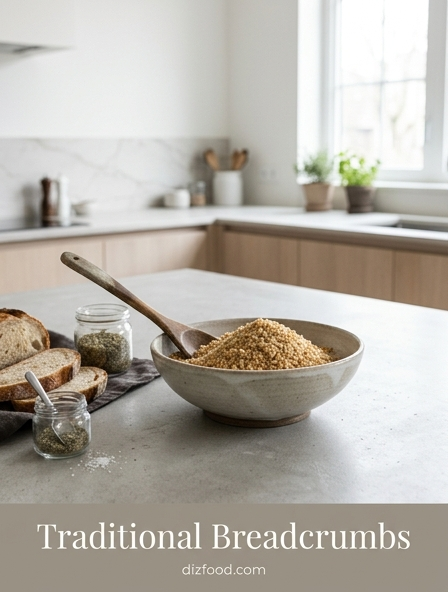
The Science of Binding Savory Ingredients
Traditional breadcrumbs serve as a primary functional agent in culinary science, specifically acting as a bridge between disparate ingredients. When mixed into savory preparations, the starch molecules within the breadcrumbs undergo a process of hydration. This occurs as they absorb moisture from liquid additives like eggs, milk, or the natural juices of proteins. As these starches swell, they create a sticky matrix that physically traps other ingredients, preventing the mixture from crumbling during the cooking process. This binding capability is essential for recipes that require a cohesive shape, such as terrines or complex stuffing.
- Starch Gelatinization: Enhances the adhesive properties of the mix.
- Protein Interaction: Facilitates a bond between muscle fibers and added liquids.
- Cohesion: Maintains structural integrity during thermal expansion.
Furthermore, the physical structure of the crumb provides a surface area for proteins to latch onto. Without this intermediary, many savory mixes would lose their form as heat causes proteins to contract and expel water. By incorporating traditional breadcrumbs, chefs ensure that the final product remains unified and aesthetically consistent throughout the transition from raw to cooked states.
Creating Texture in Meat-Based Fillers
The addition of traditional breadcrumbs to meat-based fillers is a deliberate technique used to manipulate the final mouthfeel of a dish. Pure ground meat often becomes dense and rubbery when cooked because the proteins knit together tightly. Breadcrumbs act as "interrupters" within this protein network. By physically spacing out the meat fibers, the crumbs prevent the formation of a singular, tough mass, resulting in a tender and more palatable bite. This is why breadcrumbs are indispensable in items like meatballs or Salisbury steaks, where a delicate, yielding texture is highly prized.
In addition to softening the bite, the crumbs provide a subtle resistance that adds complexity to the eating experience. This contrast is particularly noticeable in sausages or stuffed poultry, where the crumb absorbs fats and seasonings, transforming from a dry particle into a rich, flavorful component. The size of the crumb also dictates the degree of texture; finer crumbs result in a smoother, more uniform filler, while larger, rustic crumbs create a more diverse and interesting internal structure that mimics traditional artisanal preparations.
Moisture Retention and Breadcrumb Porosity
One of the most critical roles of traditional breadcrumbs is their ability to manage moisture through their inherent porosity. The microscopic holes within the crumb act as tiny reservoirs, capturing liquids that would otherwise evaporate or leak out during the cooking process. This capillary action is what distinguishes a succulent meatloaf from a dry one. As the internal temperature of a dish rises, the breadcrumbs hold onto the rendered fats and juices, effectively basting the food from the inside out.
| Feature | Functional Benefit |
|---|---|
| Pore Density | Increases the volume of liquid absorbed. |
| Starch Content | Locks in moisture through gelatinization. |
| Particle Size | Determines the speed of hydration. |
This retention is not merely about water; it is about preserving the essence of the ingredients. By keeping the moisture trapped within the structure of the dish, traditional breadcrumbs ensure that the flavors remain concentrated. This process also prevents the exterior of the dish from becoming waterlogged, as the internal crumbs draw moisture away from the surface, allowing for better browning and crust development on the outside.
Traditional Crumbs for Structural Integrity
Structural integrity is a significant challenge in the kitchen, particularly when working with delicate ingredients like minced seafood or finely chopped vegetables. Traditional breadcrumbs provide the necessary scaffolding to support these heavy or moisture-rich components. In crab cakes, for instance, the breadcrumbs prevent the fragile lumps of meat from falling apart during flipping or plating. The crumbs create a reinforced network that can withstand the physical stresses of high-heat cooking environments without compromising the intended shape.
This structural support is also vital for vegetarian options, such as lentil or bean burgers, which lack the natural binding proteins found in meat. In these applications, the breadcrumbs act as the primary skeleton of the patty. By adjusting the ratio of crumbs to the base ingredient, cooks can fine-tune the sturdiness of the dish. A higher concentration of crumbs allows for more adventurous shapes and larger portions, ensuring that the food remains intact from the pan to the table, providing a professional finish to home-cooked meals.
Enhancing Flavor Profiles with Toasted Fillers
While breadcrumbs are often valued for their functional properties, they are also a powerful tool for flavor enhancement. When breadcrumbs are toasted-either beforehand or during the cooking process-they undergo the Maillard reaction. This chemical change produces nutty, savory, and complex notes that deepen the overall flavor profile of a dish. Traditional crumbs act as a blank canvas, absorbing the flavors of the oils, herbs, and aromatics they are cooked with, then distributing those flavors evenly throughout the mixture.
- Pre-toasting: Develops a deep, roasted base flavor.
- Seasoning Absorption: Crumbs soak up garlic, onion, and herb essences.
- Fat Integration: Butter or olive oil used for toasting adds richness.
Beyond their own flavor, breadcrumbs serve as a carrier for high-potency seasonings. Because they have a large surface area relative to their volume, they can be seasoned with salt, pepper, and spices more effectively than a solid piece of meat. This ensures that every bite contains a balanced amount of seasoning, preventing "hot spots" of salt or spice and creating a more harmonious culinary experience for the diner.
The Role of Breadcrumbs in Deep Frying
In the context of deep frying, traditional breadcrumbs serve as a sophisticated thermal shield. When a food item is submerged in hot oil, the breadcrumb coating reacts instantly, forming a rigid, desiccated barrier. This barrier protects the delicate interior from direct contact with the oil, which prevents the food from becoming greasy or overcooked. The air pockets between the crumbs act as insulation, allowing the heat to penetrate slowly and cook the center evenly while the outside achieves a characteristic crunch.
The interaction between the oil and the breadcrumb is what creates the "golden-brown" ideal. As the moisture in the crumb evaporates, it is replaced by a small amount of oil, which carries flavor and heat. However, because traditional crumbs are denser than batters, they resist oil penetration more effectively, ensuring that the final product is crisp rather than soggy. This makes them the preferred choice for items like schnitzel or croquettes, where the contrast between a crunchy exterior and a soft interior is the hallmark of the dish.
Achieving Consistent Density in Savory Mixes
Consistency is the mark of a skilled cook, and traditional breadcrumbs are the key to achieving uniform density in savory mixes. In large-batch cooking, such as preparing stuffing or sausage filling, the distribution of ingredients can become uneven. Breadcrumbs act as a stabilizing agent, evening out the density of the mixture. Because they are uniform in size and weight, they fill the gaps between larger chunks of meat or vegetables, creating a homogenous mass that cooks at a predictable rate.
This consistency also affects the perceived "heaviness" of a dish. By carefully measuring the volume of breadcrumbs added, a chef can control whether a meatloaf feels light and airy or dense and substantial. This control is essential for tailoring dishes to specific dietary preferences or cultural styles. Without the regulating influence of breadcrumbs, savory mixes would be subject to the natural variations in the water and fat content of the primary proteins, leading to inconsistent results that vary from one preparation to the next.
Traditional Breadcrumbs as a Cost-Effective Filler
From an economic perspective, traditional breadcrumbs are one of the most efficient tools in the kitchen. They allow for the extension of expensive proteins without sacrificing quality or flavor. By increasing the volume of a dish with crumbs, a kitchen can serve more portions while maintaining a high standard of taste and texture. This practice has historical roots in "peasant cooking," where every scrap was utilized, but it remains a vital strategy in modern commercial and home kitchens alike.
| Ingredient | Cost Impact | Volume Impact |
|---|---|---|
| Ground Beef | High | Low (shrinks) |
| Breadcrumbs | Low | High (expands) |
| Vegetables | Medium | Medium |
The cost-effectiveness of breadcrumbs goes beyond simple volume. Because they absorb the rendered fats and liquids that are usually lost during cooking, they ensure that the consumer is getting the full nutritional and caloric value of the ingredients. This minimizes waste and maximizes the yield of every recipe, making traditional breadcrumbs an essential component for any budget-conscious yet quality-driven culinary operation.
Optimizing the Surface Area for Golden Crusts
The visual appeal of fried or baked foods is largely dependent on the surface area provided by the breadcrumb coating. Traditional breadcrumbs have an irregular, jagged shape that significantly increases the total surface area exposed to the heat source. This increased area facilitates more points of contact for the Maillard reaction to occur, resulting in a deeper, more uniform golden color. Unlike a smooth batter, the "mountain and valley" topography of a crumb-coated surface traps heat and oil in small pockets.
- Refraction: Multiple surfaces reflect light, making the crust look more vibrant.
- Heat Transfer: Increased surface area speeds up the crisping process.
- Aeration: The irregular shapes prevent the coating from becoming a solid, impenetrable sheet.
This optimization is particularly important in oven-baked dishes where the heat is less intense than in a deep fryer. A coating of traditional breadcrumbs can mimic the effects of frying by catching the circulating hot air, allowing for a crispy texture even with minimal oil. This makes them an ideal choice for healthier "oven-fried" recipes that do not want to compromise on the sensory experience of a traditional fried crust.
Preserving Juiciness in High-Heat Frying
High-heat frying poses a constant risk of desiccating the food, turning a tender piece of protein into something tough and dry. Traditional breadcrumbs mitigate this risk by creating a localized steam chamber. As the heat hits the breadcrumb coating, the moisture within the food begins to turn to steam. However, the dense layer of crumbs prevents this steam from escaping immediately. Instead, the steam is trapped against the surface of the food, effectively poaching the interior while the exterior fries.
This dual-action cooking method is the secret to the juiciness of classic breaded cutlets. The breadcrumbs act as a sacrificial layer; they take the brunt of the high-intensity heat and undergo dehydration so that the meat inside doesn't have to. By the time the crumbs have reached their peak crispness, the interior has reached its ideal temperature without losing its natural moisture. This protective quality makes traditional breadcrumbs an essential ingredient for any dish where the preservation of internal juices is paramount to the success of the recipe.

Comments