
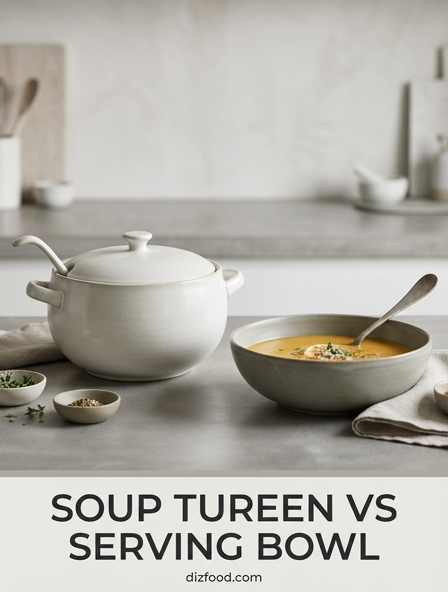
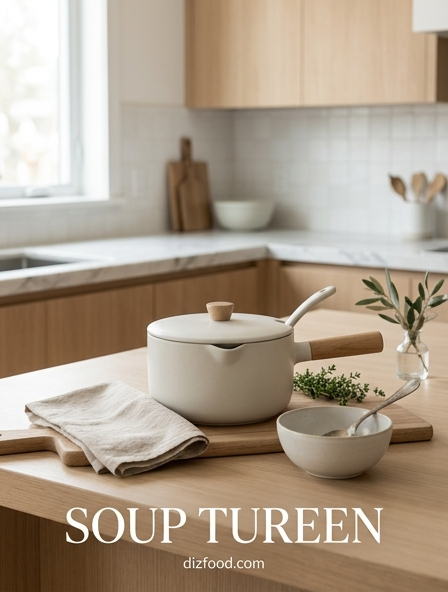
When hosting a dinner party, the choice between a soup tureen and a standard serving bowl often determines whether your guests enjoy a steaming second helping or a lukewarm disappointment. While a serving bowl is a versatile, open-topped essential perfect for quick side dishes or salads, the soup tureen is a specialized vessel engineered for temperature control. Designed with thick ceramic or porcelain walls and a tight-fitting lid-complete with a clever notch for your ladle-the tureen acts as a thermal reservoir that traps steam and preserves flavor. Choosing a tureen isn't just about the elegant tabletop aesthetic; it's a functional commitment to keeping your hearty stews and delicate broths piping hot from the moment you leave the stove until the very last ladle is served.
| Feature | Soup Tureen | Serving Bowl |
|---|---|---|
| Heat Retention | High; features thick walls and a lid to trap steam. | Low; open-top design leads to rapid heat loss. |
| Design Elements | Includes a fitted lid, handles, and a ladle notch. | Wide, open aperture with no lid or notch. |
| Primary Use | Long-duration serving of soups, stews, and chilis. | General-purpose serving of salads, pasta, or sides. |
| Versatility | Specialized; best for liquid-based hot dishes. | High; used for prep, mixing, and multi-dish service. |
| Spillage Risk | Low; deep body and lid prevent splashes. | Moderate; shallow edges prone to spills during transport. |
| Formal Appeal | Traditional centerpiece; enhances formal dining. | Casual to semi-formal; standard everyday use. |
Defining Soup Tureens vs Serving Bowls
In the culinary world, the distinction between a soup tureen and a serving bowl often dictates the tone of a meal. A soup tureen is a specialized, deep serving dish specifically engineered for liquid-based courses such as soups, stews, or chowders. Traditionally, it is accompanied by a tightly fitting lid and often sits upon a matching underplate or platter. The term itself is derived from the French word "terrine," reflecting its historical roots as a vessel for substantial, slow-cooked meals. Its primary purpose is not just to hold food, but to present it as a centerpiece while maintaining a specific serving temperature.
Conversely, a serving bowl is a broad category of open-topped kitchenware used for a wide variety of foods. Unlike the tureen, which is specialized, the serving bowl is the workhorse of the dining table. It ranges from small vessels for side dishes to massive basins for salads or pasta. While any tureen can technically function as a serving bowl, not every serving bowl can effectively serve as a tureen, particularly when thermal management and formal presentation are required. The serving bowl emphasizes accessibility and versatility, whereas the tureen emphasizes preservation and ritual.
- Soup Tureen: Deep, lidded, usually has handles, specifically for liquids.
- Serving Bowl: Open-topped, varying depths, multipurpose, for solids and semi-solids.
- Visual Impact: Tureens act as a focal point; bowls are often communal and understated.
Key Structural Differences and Design Features
The structural integrity of a soup tureen is designed to manage the weight and heat of several quarts of liquid. Most tureens feature two sturdy handles on either side, allowing the host to carry a heavy, hot volume of soup from the kitchen to the table with stability. The base is often footed or flared to provide a lower center of gravity, preventing accidental spills. The most defining feature, however, is the lid, which often includes a small notch to accommodate the handle of a ladle, allowing the vessel to remain covered even while the serving utensil stays in place.
Serving bowls are generally simpler in construction. They lack lids and rarely feature handles, as they are meant to be passed around the table or placed in a stationary position where guests help themselves. Their shapes vary significantly, from shallow, wide rims designed to showcase the textures of a salad, to deep, steep-walled designs for pasta or mashed potatoes. Without the need to support a lid or maintain high heat for long periods, serving bowls often prioritize aesthetic variety and stackability over the specialized hardware found on tureens.
| Feature | Soup Tureen | Serving Bowl |
|---|---|---|
| Lid Included | Yes (standard) | No (rarely) |
| Handles | Dual side handles | Usually handle-less |
| Primary Shape | Deep, oval, or round | Varied (shallow to deep) |
| Ladle Notch | Commonly present | Absent |
Functionality and Heat Retention Capabilities
The functional superiority of a soup tureen lies in its ability to regulate temperature. Because soups and stews are mostly liquid, they lose heat rapidly through evaporation and surface exposure. The tureen combats this through its lidded design and thick-walled construction. When a hot liquid is poured into a tureen and the lid is replaced, a pocket of steam is trapped, creating an insulative layer that keeps the contents at a safe and palatable temperature for the duration of a multi-course meal. This is essential for formal service where the soup may sit on the table for thirty minutes or more.
Serving bowls are not designed for long-term heat retention. Their open-air design allows steam to escape immediately, which is actually beneficial for foods like salads or room-temperature sides, but detrimental to hot liquids. If a thin-walled ceramic serving bowl is used for soup, the temperature will drop significantly within minutes. This makes the serving bowl more appropriate for foods that are meant to be consumed quickly or dishes that do not rely on high temperatures for their flavor profile. For the home cook, understanding this thermodynamic difference is key to ensuring that the main course remains appetizing from the first serving to the last.
- Thermal Mass: Tureens are usually heavier to hold heat longer.
- Evaporation Control: Lids prevent moisture and heat loss.
- Surface Area: Bowls have high surface-to-volume ratios, leading to faster cooling.
When to Choose a Tureen over a Serving Bowl
Choosing between these two vessels depends heavily on the menu and the number of guests. A tureen is the correct choice whenever a liquid-heavy dish is the primary focus of the meal. If you are serving a delicate consommé, a hearty beef stew, or a creamy bisque, the tureen provides the necessary depth to prevent splashing and the lid to keep the dish hot. It is also the preferred vessel for holiday gatherings or dinner parties where the "reveal" of the dish adds to the atmospheric experience of the evening. Lifting the lid of a tureen to release the aroma of a home-cooked soup is a classic culinary gesture that a simple bowl cannot replicate.
In contrast, a serving bowl should be chosen for foods that require easy access or tossing. Salads, bread rolls, roasted vegetables, and pasta dishes are better suited to the open architecture of a bowl. If the food is meant to be shared "family-style," where the dish is passed from hand to hand, the lighter weight and lack of a lid make the serving bowl the more practical and safer option. Using a tureen for a dry salad would be cumbersome and make serving difficult, just as using a shallow bowl for a thin soup would likely result in messy spills and cold food.
- Select a Tureen for: Bouillabaisse, chili, pot roast with gravy, or large batches of oatmeal.
- Select a Serving Bowl for: Caesar salad, mashed potatoes, fruit salad, or stir-fry.
- Atmosphere: Use a tureen for formal elegance and a bowl for casual convenience.
Formal vs Casual Table Setting Etiquette
In formal dining etiquette, the soup tureen holds a position of high honor. It is typically placed at the head of the table in front of the host or hostess, who is responsible for ladling the soup into individual bowls. This process ensures portion control and maintains the elegance of the service. The presence of a tureen signals a structured meal where the soup is a distinct course. Because it is often an heirloom piece or part of a fine china set, the tureen acts as a decorative anchor for the table's aesthetic, often matched with candlesticks or floral arrangements.
Casual dining favors the serving bowl for its "help yourself" philosophy. In these settings, multiple bowls are often scattered across the table, allowing guests to reach for what they need without formal intervention. There is less emphasis on the sequence of courses; instead, the focus is on communal sharing. Serving bowls are frequently made of more durable materials like stoneware or bamboo, reflecting a relaxed environment where the risk of chips or cracks is higher. While a tureen demands a certain level of performance from the host, the serving bowl promotes a democratic and laid-back dining experience.
| Setting Type | Preferred Vessel | Service Style |
|---|---|---|
| Formal Gala | Soup Tureen | Lid-lifted, host-served |
| Family Dinner | Serving Bowl | Passed around the table |
| Holiday Buffet | Lidded Tureen | Self-service with heat retention |
| Outdoor Picnic | Serving Bowl | Casual, open access |
The Importance of Lids and Ladle Cutouts
The lid of a soup tureen is its most vital functional component, but it is also a masterpiece of design. Beyond temperature control, the lid serves to protect the food from contaminants in outdoor settings and prevents a skin from forming on creamy soups or sauces. Many high-quality tureens feature a "ladle notch" or cutout. This small semicircular opening in the rim of the lid allows the ladle to remain inside the pot while the lid is fully seated. This prevents the mess of having to find a separate rest for a dripping ladle and ensures that the heat-trapping seal is only minimally broken.
Without a lid, a serving bowl is exposed to the environment. This is why you will rarely see a soup served in a large open bowl at a professional banquet; the quality of the dish degrades too quickly. The ladle notch also provides a safety benefit; by keeping the ladle upright and contained, it reduces the likelihood of the handle becoming too hot to touch or sliding into the liquid. In modern kitchenware, some serving bowls have begun to adopt lids for storage purposes, but they rarely feature the specialized ladle cutout that defines the classic tureen, remaining instead as simple containers rather than active serving tools.
- Steam Retention: Keeps the soup moist and prevents volume loss.
- Sanitation: Keeps dust or insects out during transport.
- Efficiency: The notch allows for continuous service without heat loss.
Versatility of Modern Serving Bowls
While the soup tureen is a specialist, the modern serving bowl is a generalist with endless applications. Its design has evolved to bridge the gap between kitchen preparation and table presentation. Many serving bowls are now designed to be "oven-to-table," meaning they can withstand high cooking temperatures and still look beautiful during the meal. This versatility reduces the number of dishes required for a single meal. A large porcelain serving bowl can transition from holding rising bread dough to serving a mountain of pasta, and finally to acting as a fruit bowl on the kitchen counter.
Furthermore, the variety of shapes in modern bowls allows for creative plating. Shallow "pasta bowls" have become increasingly popular as they combine the surface area of a plate with the depth of a bowl, making them ideal for saucy dishes that aren't quite soups. The lack of handles and lids makes serving bowls much easier to store in standard cabinetry, as they can be nested within one another. This practicality makes them the preferred choice for modern households with limited storage space. Even in the absence of a tureen, a set of high-quality serving bowls can handle nearly any culinary task presented to them.
- Preparation: Use for mixing ingredients or marinating meats.
- Display: Perfect for holding decorative items or fresh fruit.
- Adaptability: Suitable for microwave, oven, and dishwasher use.
Material Comparison: Ceramic, Porcelain, and Stone
The material of the vessel significantly impacts its weight, durability, and heat retention. Porcelain is the gold standard for formal soup tureens. It is fired at extremely high temperatures, resulting in a non-porous, delicate-looking yet surprisingly strong material. Porcelain's white, glass-like finish provides a neutral backdrop that makes the colors of a soup pop. However, it is prone to thermal shock if moved too quickly from a cold fridge to a hot oven. Ceramic, specifically earthenware, is more porous and casual. It is often glazed with vibrant colors and patterns, making it ideal for rustic serving bowls used in everyday dining.
Stoneware and "stone" vessels offer the best heat retention of the three. Because they are dense and thick, they act like a battery for thermal energy. A stoneware tureen will keep a stew hot for a significantly longer time than a porcelain one. However, stoneware is much heavier and can be cumbersome when full of liquid. For serving bowls, wood and bamboo have also become popular for cold dishes like salads, as they do not conduct heat and stay cool to the touch. When selecting a vessel, the cook must weigh the elegance of porcelain against the rugged utility and thermal mass of stone or heavy ceramic.
| Material | Heat Retention | Durability | Best Use |
|---|---|---|---|
| Porcelain | Moderate | High (Chipping risk) | Formal Tureens |
| Stoneware | Excellent | Very High | Hearty Stews / Casseroles |
| Ceramic | Good | Moderate | Everyday Serving Bowls |
| Wood/Bamboo | Poor | High | Salads and Bread |
Storage and Maintenance Considerations
A soup tureen is often a significant investment in terms of both money and kitchen real estate. Because of their handles and lids, they do not stack, meaning they require a dedicated shelf or a spot in a china cabinet. Maintenance can also be more complex; if the lid is lost or broken, the tureen loses much of its functional value. Hand-washing is generally recommended for tureens, especially those with gold leaf or intricate hand-painted designs, as the high heat and abrasive detergents of a dishwasher can dull the finish over time. Careful attention must be paid to the ladle notch, as it is a common point for cracks to initiate.
Serving bowls are much more forgiving. Most modern ceramic and glass bowls are dishwasher-safe and designed to be nested, which saves a tremendous amount of space in the pantry. If a serving bowl chips, it often remains functional for casual use, whereas a chipped tureen may no longer provide a proper seal for its lid. For those who entertain rarely, a tureen might be stored in its original box in a basement or attic to protect it from dust and accidental impact. Serving bowls, being used daily, should be kept in an accessible lower cabinet. Proper maintenance ensures that these vessels remain heirloom-quality pieces for generations.
- Padding: Use felt liners when stacking serving bowls to prevent scratches.
- Lid Care: Store tureen lids upside down on the vessel with a cloth between them.
- Temperature: Never place a cold ceramic vessel directly into a preheated oven.
Selecting the Best Vessel for Your Dining Style
The decision to purchase or use a soup tureen versus a serving bowl ultimately comes down to your personal lifestyle and how you prefer to host. If your dining style is centered around traditional, multi-course meals and you enjoy the ritual of serving guests, a soup tureen is an essential addition to your collection. It elevates the meal and demonstrates a level of care for the temperature and presentation of the food. For those who frequently host holiday dinners or Sunday roasts, the tureen is not just a dish, but a statement piece that defines the table's aesthetic.
If your home is more focused on efficiency, casual gatherings, and one-pot meals, a set of versatile serving bowls is likely the better choice. You can find bowls that are stylish enough for a party but durable enough for a Tuesday night salad. Many modern families find that a "large format" serving bowl with a silicone or wooden lid offers a compromise between the two, providing some heat retention without the formality of a classic tureen. Ultimately, the best vessel is the one that fits your most common menu items and makes the process of sharing a meal with others as seamless and enjoyable as possible.
- Assess your menu: Do you serve liquid-based mains or solid-based sides?
- Consider your space: Do you have room for a non-stacking tureen?
- Evaluate the vibe: Is your table usually "formal" or "family-style"?

Comments