
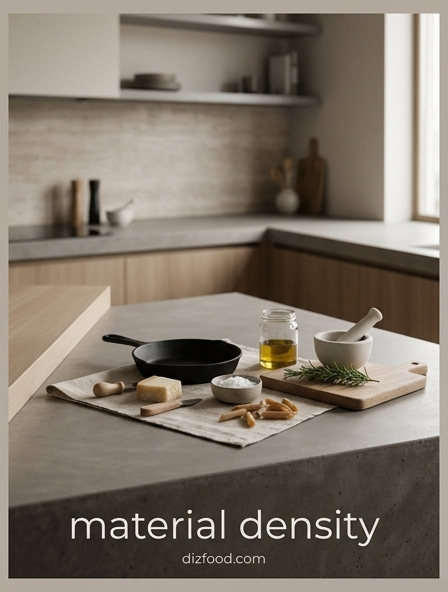
Thermodynamics of Material Density in Brewing
Density determines how much matter occupies a specific volume, which directly influences the thermodynamic profile of brewing equipment. In the context of a kitchen, high-density materials like cast iron or heavy stone possess a greater number of atoms within a given space, allowing for a more significant accumulation of thermal energy. When hot water interacts with a coffee brewer, the material's density dictates the rate at which energy is partitioned between the liquid and the vessel. This exchange is governed by the laws of thermodynamics, specifically the Zeroth Law, which drives the system toward thermal equilibrium.
A dense material often requires more energy to increase its temperature, but once heated, it acts as a robust thermal reservoir. In manual brewing, the thermodynamic challenge involves managing this energy transfer to ensure that the slurry temperature remains within the optimal range for solubility. If the density is high but the material is not preheated, it will aggressively "steal" heat from the water, stalling the extraction of flavorful compounds. Conversely, understanding the density-to-volume ratio allows brewers to predict the cooling curve of their coffee, ensuring a balanced cup through calculated energy management.
Thermal Mass and Water Temperature Stability
Thermal mass is the ability of a material to absorb and store heat, and it is a direct function of density and specific heat capacity. In the kitchen, the thermal mass of a brewing vessel determines how effectively it can resist temperature fluctuations during the extraction process. Water temperature stability is critical because the solubility of coffee solids-such as acids, sugars, and bitters-is highly temperature-dependent. Materials with significant thermal mass provide a buffering effect, maintaining internal energy longer than lower-density alternatives.
- Cast Iron: Extremely high thermal mass; provides unmatched heat retention but requires extensive preheating to avoid temperature drops.
- Stainless Steel: Moderate density with fast response times; often used in double-walled configurations to mimic high thermal mass through insulation.
- Plastic: Low density and low thermal mass; absorbs very little heat from the water, often resulting in higher and more stable slurry temperatures initially.
By selecting materials based on their thermal mass, one can tailor the brewing environment to suit specific roast profiles, where lighter roasts typically benefit from the high stability provided by dense ceramics or thick glass.
Impact of Dense Ceramics on Extraction Precision
Ceramics are a staple in the coffee world, valued for their aesthetic and tactile qualities, yet their performance is dictated by density. Dense ceramics, such as high-fired stoneware or porcelain, have low porosity and high mass, which affects extraction precision. When a brewer uses a thick-walled ceramic V60, the material acts as a heat sink. If the ceramic is not properly saturated with thermal energy before brewing, the water temperature will drop rapidly upon contact, leading to under-extraction and a sour, thin flavor profile.
However, when these dense materials are preheated to the brewing temperature, they provide a steady environment that minimizes the "sawtooth" temperature fluctuations common in lighter gear. Precision in extraction relies on maintaining a consistent thermal state throughout the three to four minutes of a pour-over. Dense ceramics offer the momentum needed to carry the brew through to the end without a significant thermal tail-off. This results in a more uniform extraction of oils and solids, as the kinetic energy of the water remains focused on breaking down the coffee particulates rather than warming the brewer's walls.
Heat Transfer Mechanics of Glass Versus Metal
The choice between glass and metal in brewing involves a fundamental trade-off in heat transfer mechanics. Glass, specifically borosilicate, is a poor conductor of heat compared to metals like stainless steel or copper. Its density is moderate, but its molecular structure inhibits the rapid movement of thermal energy. This makes glass an excellent insulator for maintaining the temperature of the liquid inside, but it also means it takes longer to heat up through its entire cross-section during a preheat cycle.
| Material | Thermal Conductivity (W/m·K) | Density (kg/m³) |
|---|---|---|
| Borosilicate Glass | 1.1 - 1.2 | 2,230 |
| Stainless Steel | 14 - 16 | 7,850 |
| Copper | 380 - 400 | 8,960 |
The high density of metal combined with high conductivity means energy moves quickly from the water to the environment. In contrast, the lower conductivity of glass ensures that while the surface might get hot, the bulk material does not drain the water's energy as aggressively as an un-preheated metal vessel would.
The Role of Specific Heat in Brewing Rituals
Specific heat capacity defines the amount of heat required to change the temperature of one gram of a substance by one degree Celsius. In the kitchen, this physical property works in tandem with density to define the "feel" and performance of brewing gear. Even if two items have the same density, the one with a higher specific heat will require more energy to warm up. This plays a silent but pivotal role in brewing rituals, as it determines how much "boiling water overhead" is needed for preheating.
Water itself has an exceptionally high specific heat, which is why it is the primary medium for energy transfer. Materials like silicone or certain plastics have surprisingly high specific heat capacities despite their low density, meaning they don't feel "heavy" but are very efficient at not stealing heat from the brew. Understanding these values allows a brewer to transition from a scientific approach to an intuitive ritual. You learn exactly how much rinse water is needed to "prime" a porcelain carafe versus a glass one, ensuring the final beverage hits the cup at the intended temperature.
Preheating Science for High Density Vessels
Preheating is the process of saturating a high-density material with thermal energy before the actual brewing begins. For dense vessels like heavy ceramic mugs or stone carafes, preheating is not optional; it is a thermodynamic necessity. Without this step, the material's high density acts as a massive energy drain. As hot water enters the vessel, energy flows from the water to the cooler material until they reach equilibrium. In a high-density system, this can result in a loss of 10 to 15 degrees Celsius in the first thirty seconds.
To calculate the preheating requirement, one must consider the mass of the vessel and its specific heat. A common practice is to use water that is hotter than the brewing temperature to "over-prime" the vessel. The steps typically include:
- Filling the vessel with boiling water and letting it sit for at least 60 seconds.
- Discarding the water and immediately beginning the brewing process to prevent energy loss.
- Monitoring the exterior surface; a warm exterior indicates that heat has permeated the entire density of the wall.
Molecular Flavor Profiles and Material Porosity
Material density is often inversely related to porosity, which has a significant impact on the molecular flavor profile of coffee. High-density materials like glass and glazed ceramics are non-porous, meaning they do not absorb the volatile oils or aromatic compounds released during brewing. This results in a "clean" cup where the clarity of the coffee's origin flavors is preserved. These materials are easily cleaned, preventing the buildup of rancid oils over time.
In contrast, lower-density or unglazed materials, such as terracotta or certain earthenwares, possess a porous structure. These pores can trap microscopic particles and oils. While this "seasoning" is prized in some tea traditions, it can lead to flavor carryover in coffee brewing. The molecular interaction between the coffee's lipids and the material's surface can soften the perceived acidity of a brew, as the material literally filters out some of the heavier molecules. Choosing a material based on its density and porosity allows a brewer to either highlight the bright, acidic notes of a light roast or provide a muted, rounded body to a darker roast.
Energy Conservation in Manual Pour Over Systems
Energy conservation in manual brewing is the art of keeping the heat in the water and the coffee grounds rather than letting it escape into the kitchen atmosphere. Density plays a double-edged role here. While dense materials can store heat, they also conduct it to the surface where it is lost via convection. To combat this, modern kitchen gear often uses a combination of material density and structural design, such as double-walled vacuum insulation.
In a standard single-walled ceramic dripper, energy is lost through the sides via conduction. To conserve energy effectively, one should consider the following:
- Use a lid to prevent evaporative cooling, which is the fastest way heat leaves the system.
- Select a low-density material like plastic for the dripper if preheating is not possible, as it has low thermal conductivity.
- Use a high-density, insulated carafe to store the finished brew, which utilizes the material's thermal mass to keep the coffee hot.
Effective energy conservation ensures that the volatile aromatics stay in the liquid rather than being lost to the air, preserving the complexity of the brew.
Quantifying the Thermal Inertia of Coffee Gear
Thermal inertia is a bulk material property that characterizes the rate at which the surface temperature of an object rises when exposed to a heat source. In the kitchen, quantifying the thermal inertia of your coffee gear is the key to consistency. It is defined as the square root of the product of thermal conductivity, density, and specific heat capacity. Gear with high thermal inertia, like a thick stone mortar or a heavy ceramic brewer, responds slowly to temperature changes.
This "slowness" is actually an advantage for long-duration brewing. It creates a stable thermal environment that is resistant to external drafts or slight variations in pour technique. If you are brewing in a cold kitchen, gear with high thermal inertia will protect the extraction process from the environment. Conversely, in a competition setting where rapid changes are required, low thermal inertia materials are preferred because they reach their operating temperature almost instantly. By understanding these quantities, brewers can choose the right tool for their specific environmental constraints, ensuring that the physics of the room doesn't ruin the chemistry of the cup.
Density Driven Consistency in Daily Brewing Rituals
The ultimate goal of understanding material density in the kitchen is to achieve consistency in daily brewing rituals. Consistency is the hallmark of a great brewer, and it relies on controlling as many variables as possible. When you use the same high-density ceramic dripper every morning, you learn its thermal personality. You know how long it takes to preheat, how it feels when it's ready, and how it affects the final temperature of your coffee.
Density-driven consistency means that the physical environment of your brew becomes a constant rather than a variable. By choosing gear with consistent density and thermal properties, you can isolate other factors like grind size, water chemistry, and agitation. To maintain this consistency:
- Select gear made of uniform materials to ensure predictable heat flow every session.
- Standardize your preheating routine to match the specific thermal mass of your equipment.
- Observe the cooling rate of your beverage to find the "sweet spot" for tasting, usually around 55 degrees Celsius.
This scientific approach transforms brewing from a guessing game into a repeatable process, where the density of your equipment serves as the foundation for the perfect cup.




Comments