
Deciding whether to roll up your sleeves at the sink or press "start" on a cycle is about more than just convenience; it's a vital choice for the longevity of your kitchenware. While modern dishwashers excel at sanitization through high-heat cycles that kill stubborn bacteria, the aggressive detergents and high-pressure jets can lead to the "etching" of glassware and the stripping of seasoning on cast iron. Conversely, hand washing offers a gentle, targeted touch that preserves delicate hand-painted ceramics and keeps professional-grade knives sharp, though it often consumes significantly more water. Striking the right balance means understanding that while the machine wins on efficiency, your hands remain the best defense for your most cherished culinary tools.
| Feature | Hand Washing | Machine Washing |
|---|---|---|
| Water Usage | ~20+ gallons per average load | ~3-5 gallons (Energy Star rated) |
| Sanitization | Limited by skin heat tolerance (~100°F) | High-heat cycles (140°F-155°F) kill germs |
| Time Investment | 30-60 mins of active manual labor | ~10 mins total loading and unloading |
| Material Safety | Ideal for wood, crystal, and carbon steel | Risk of dulling blades and warping plastics |
| Abrasive Force | Controlled, gentle physical scrubbing | High-pressure jets and harsh chemicals |
| Best Used For | Delicates, knives, and cast iron | Daily plates, stainless steel, and glass |
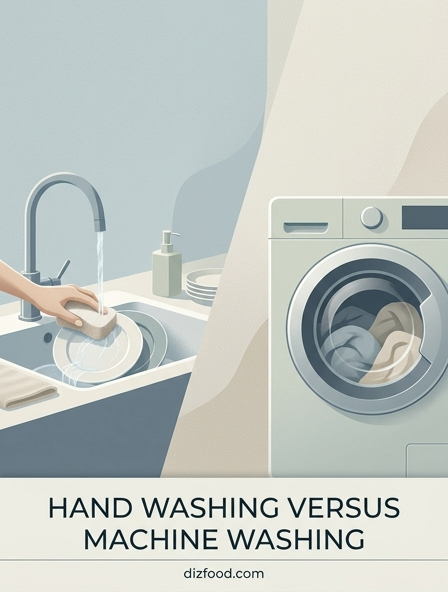
Benefits of Hand Washing vs Machine Washing
Deciding between hand washing and machine washing often depends on the specific needs of the textile and the level of soil present. Hand washing offers a level of control that no machine can replicate. By using your hands, you can apply targeted pressure to specific stains, such as grease spots on a kitchen apron or wine spills on a linen tablecloth, without subjecting the entire fabric to aggressive agitation. This method significantly reduces the risk of fiber breakage, pilling, and shrinkage, which are common issues in high-speed mechanical cycles.
On the other hand, machine washing provides unparalleled efficiency and sanitization. Modern washing machines are designed to handle large volumes of kitchen linens, such as heavy-duty towels and floor cloths, in a fraction of the time it would take to wash them manually. The primary benefits of each method can be summarized as follows:
- Hand Washing: Precision stain removal, preservation of fiber elasticity, and zero energy consumption from appliances.
- Machine Washing: High-temperature capabilities for killing bacteria, high-speed extraction of water for faster drying, and labor-saving automation.
Ultimately, hand washing is a gentle restorative process, while machine washing is a robust utility process. For items that are used daily and harbor significant bacteria, the mechanical power of a washer is often necessary. However, for decorative kitchen textiles or vintage linens, the manual touch remains the superior choice to ensure longevity.
Understanding Fabric Care Labels for Better Results
Fabric care labels serve as the manufacturer's blueprint for maintaining the integrity of a garment or kitchen textile. These small tags contain standardized symbols that dictate whether an item can withstand the heat and mechanical stress of a washing machine or if it requires the gentle immersion of a hand wash. Ignoring these instructions often leads to irreversible damage, such as the melting of synthetic fibers or the felting of wool components.
To achieve the best results, it is essential to decode the most common symbols found on kitchen apparel and linens. The following table provides a quick reference for the most frequent care instructions encountered in a domestic setting:
| Symbol Description | Meaning | Recommended Action |
|---|---|---|
| Washtub with Water | Machine Washable | Follow temperature dots inside the tub. |
| Washtub with a Hand | Hand Wash Only | Use lukewarm water and gentle detergent. |
| Circle | Dry Clean Only | Take to a professional cleaner. |
| Washtub with an 'X' | Do Not Wash | Avoid water; use alternative cleaning methods. |
Beyond the primary washing method, labels also provide guidance on bleaching, drying, and ironing. For kitchen items like chef coats or high-quality napkins, adhering to the recommended temperature is vital. Excessive heat can set protein-based stains, making them permanent, while too little heat may fail to activate the detergents required to break down animal fats and oils.
Water Consumption and Environmental Sustainability Comparison
The environmental impact of garment care is a growing concern for eco-conscious households. When comparing hand washing and machine washing, the results are often counterintuitive. Many assume that hand washing is more sustainable because it avoids electricity use. However, hand washing frequently consumes more water than modern, high-efficiency (HE) washing machines. When washing by hand in a sink or basin, individuals often leave the tap running or use multiple rinses to ensure all soap is removed, which can lead to significant water waste.
Modern washing machines, particularly front-loading models, are engineered to use the minimum amount of water necessary to saturate the load. These machines utilize sensors to detect the weight of the laundry and adjust the water level accordingly. In a head-to-head comparison, an HE machine might use only 15 gallons of water for a full load, whereas washing the same amount of clothing by hand could easily exceed 20 to 30 gallons depending on the rinsing technique.
Sustainability also involves the chemicals released into the environment. Hand washing often requires less detergent, and because the process is gentler, fewer microfibers are shed from synthetic fabrics. These microfibers are a major source of aquatic pollution. To minimize your footprint, the most sustainable approach is to machine wash full loads on cold cycles for everyday kitchen items and reserve hand washing for specific pieces that require longevity, using biodegradable soaps in a plugged basin to control water volume.
The Science of Cleaning Agitation vs Manual Scrubbing
The core of any cleaning process involves four variables: time, temperature, chemistry, and mechanical energy. Agitation and scrubbing represent the mechanical energy component. In a washing machine, agitation is provided by an agitator or an impeller that moves the clothes against each other and the sides of the drum. This creates friction that physically dislodges dirt and oils from the weave of the fabric. The "mechanical action" is consistent and repetitive, ensuring that every inch of the fabric is exposed to the cleaning solution.
Manual scrubbing, by contrast, relies on human force. While it lacks the consistency of a machine, it allows for "spot-specific" energy. When you scrub a stain by hand, you are applying localized friction. This is particularly effective for heavy soilage on kitchen rags or aprons where a machine might simply circulate the dirty water without breaking the bond between the stain and the fiber. However, the risk with manual scrubbing is the potential for "over-scrubbing," which can fray fibers or cause localized color loss.
The science of agitation also relates to how surfactants in detergent work. Mechanical movement helps the detergent molecules surround soil particles and lift them into the water. Without sufficient agitation-whether from a machine's pulse or a hand's rub-the chemistry of the detergent cannot fully penetrate the fabric. Choosing between the two depends on whether the item needs a general refresh or a concentrated structural cleaning.
Protecting Delicates and High End Fashion Garments
High-end fashion and delicate kitchen textiles, such as silk-screened aprons or lace-trimmed tea towels, require a protective approach to cleaning. The primary threat in a washing machine is not just the agitation, but the spin cycle. The centrifugal force can stretch delicate fibers, while zippers or buttons from other items in the load can snag and tear thin materials. Hand washing eliminates these physical risks by keeping the item stationary or gently swishing it through the water.
To protect your most valuable items, follow these specialized steps during the hand-washing process:
- Pre-treat: Dab stains with a soft cloth rather than rubbing.
- Temperature Control: Use cool to lukewarm water to prevent the breakdown of natural proteins in silk or wool.
- Avoid Wringing: Never twist a delicate garment to remove water; instead, roll it in a clean, dry towel to absorb moisture.
- Flat Drying: Reshape the item and lay it flat on a drying rack to prevent gravity from stretching the fibers.
When fashion garments feature embellishments like beads, sequins, or intricate embroidery, machine washing is almost never an option. Even the "delicate" cycle on a machine can cause these details to loosen or fall off. Hand washing ensures that these decorative elements remain intact, preserving the aesthetic value and resale price of luxury items. By investing the time to wash by hand, you extend the wearable life of your wardrobe by years.
Speed and Convenience When Machine Washing Wins
In a fast-paced environment, the convenience of machine washing is undeniable. For a busy household or a professional kitchen, the ability to "set it and forget it" is essential for effective time management. While hand washing a single silk scarf might take fifteen minutes of active labor, a machine can process twenty pounds of kitchen towels and linens in under an hour without any supervision. This allows the user to focus on other tasks, such as meal preparation or organization.
Machine washing also wins in terms of drying speed. The high-speed spin cycles in modern washers extract the vast majority of water from fabrics. Hand-washed items, conversely, remain heavy with water and can take days to air dry, especially in humid environments. The efficiency of a machine-based workflow can be broken down into three stages:
- Sorting and Loading: Quickly categorizing items by color and fabric weight.
- The Wash Cycle: Automated heating, soap dispensing, and rinsing.
- The Extraction Phase: High-speed spinning that prepares items for a brief stint in the dryer or a quick hang-dry.
For high-frequency items like oven mitts, dish rags, and daily uniforms, the machine is the logical choice. The trade-off in fiber wear is usually offset by the massive gains in hygienic safety and personal time. In the context of a kitchen where hygiene is paramount, the ability of a machine to reach temperatures above 60°C (140°F) ensures that pathogens are eradicated, a feat difficult to achieve comfortably by hand.
Cost Breakdown Energy Bills and Detergent Use
Evaluating the cost of laundry requires looking at both direct and indirect expenses. Machine washing incurs costs related to electricity for the motor and water heater, as well as the depreciation of the appliance itself. However, because machines are highly calibrated, they often use detergent more efficiently than a person "guessing" the amount needed in a sink. Over-using detergent during hand washing not only wastes money but also requires more water to rinse out the excess suds.
The following table illustrates the typical cost factors involved in both methods for an average household over a one-year period:
| Cost Factor | Machine Washing | Hand Washing |
|---|---|---|
| Electricity | Moderate (Motor + Heat) | Zero (Manual Labor) |
| Water Usage | Low (HE Machines) | High (Manual Rinsing) |
| Detergent Efficiency | High (Pre-measured) | Low (Commonly Overused) |
| Time Value | Low (Passive Time) | High (Active Labor) |
While hand washing saves on the monthly energy bill, the "opportunity cost" of your time is a significant factor. If you spend two hours a week hand washing items that could safely go in a machine, that labor has a theoretical value. Additionally, the cost of specialized "hand-wash only" detergents can be higher per ounce than bulk-buy HE detergents. For the most cost-effective kitchen management, use the machine for bulk items and reserve hand washing for truly delicate pieces that would be expensive to replace.
Essential Tools for Effective Hand Washing at Home
To achieve professional results when hand washing kitchen textiles or delicate clothing, having the right tools is essential. You cannot simply use dish soap and a kitchen sponge; the process requires items designed to treat fabrics gently while effectively removing debris. A dedicated basin is the first requirement. It should be large enough to allow the garment to be fully submerged and moved around without excessive folding.
A well-equipped hand-washing station should include the following items:
- Ph-Neutral Detergent: Prevents the breakdown of natural fibers and is gentler on your skin.
- Soft-Bristled Laundry Brush: For gently agitating stains on sturdy fabrics like canvas aprons.
- Clean White Towels: Used for the "roll and press" method to remove excess water without wringing.
- Collapsible Drying Rack: Provides airflow around the garment to prevent sour smells and mildew.
- Water Thermometer: Ensures you are washing at the exact temperature recommended on the care label.
Another often-overlooked tool is the washboard. While seen as antique, small silicone or plastic washboards can be placed in a kitchen sink to help scrub the grimy undersides of cuffs or the necklines of chef whites. By organizing these tools in a dedicated "laundry kit," the task of hand washing becomes less of a chore and more of a structured part of your home maintenance routine. Proper tools ensure that you don't accidentally damage the items you are trying to save.
Maintaining Your Washing Machine for Maximum Longevity
A washing machine is a significant investment, and its performance directly impacts the cleanliness of your kitchen linens. Without regular maintenance, machines can develop mold, limescale, and detergent buildup, which can leave your "clean" clothes smelling musty. Maintenance is particularly important if you frequently wash kitchen items covered in animal fats, as these oils can coat the outer drum and lead to odors.
To keep your machine running efficiently for years, follow a consistent maintenance schedule:
- Monthly Clean Cycle: Run an empty hot water cycle with a specialized machine cleaner or white vinegar to dissolve residue.
- Clean the Filter: Locate the drain pump filter (usually at the bottom front) and remove lint, coins, or debris.
- Wipe the Gasket: For front-loaders, dry the rubber door seal after every wash to prevent mold growth.
- Leave the Door Open: Allow the drum to air out between loads to keep the environment dry.
- Check Hoses: Every few months, inspect the water inlet hoses for cracks or bulges to avoid floods.
By maintaining the machine, you ensure that the agitation remains balanced and the water sensors function correctly. A well-maintained machine is also more energy-efficient, as the motor doesn't have to work as hard to spin a clean, balanced drum. This ultimately protects your wardrobe by ensuring that the machine operates within its intended parameters, providing a consistent and safe clean every time.
The Final Verdict Choosing the Best Method for Your Wardrobe
The debate between hand washing and machine washing does not have a single winner; rather, the best approach is a hybrid strategy. For the vast majority of kitchen items-towels, sturdy aprons, and everyday napkins-the machine is the superior choice. Its ability to use high heat and powerful agitation ensures that food-borne bacteria and heavy oils are completely removed, maintaining a hygienic home environment. The convenience and water efficiency of modern appliances make them indispensable for high-volume cleaning.
However, hand washing remains an essential skill for the preservation of high-value fashion and specialized textiles. Items made of silk, wool, or those featuring delicate embellishments should never see the inside of a washing machine drum. The manual method is a form of "slow care" that honors the craftsmanship of the garment. By taking the time to wash these items by hand, you are choosing sustainability through longevity, reducing the need to replace clothing frequently.
To decide which method to use, always start with the fabric care label. If the label allows for both, consider the level of soil. If the item is lightly worn, a quick hand wash may suffice and save energy. If it is heavily soiled, the machine's mechanical power is necessary. By balancing the efficiency of technology with the gentleness of manual care, you can ensure that every item in your wardrobe and kitchen remains in peak condition for as long as possible.



Comments