
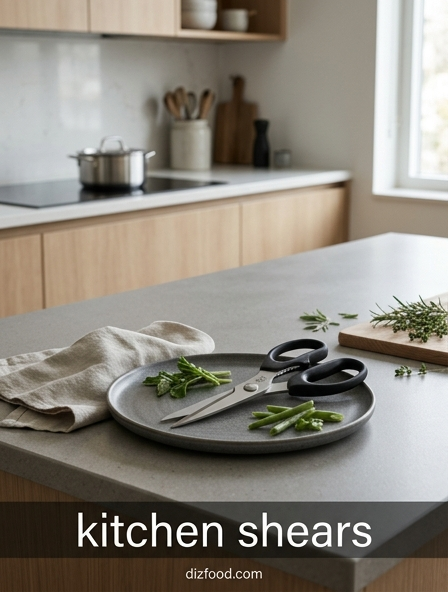
The Efficiency of Shear Based Dicing
Kitchen shears revolutionize dicing tasks by allowing users to cut ingredients directly over a bowl or pan. This method bypasses the need for a cutting board, significantly reducing setup and cleanup time. When handling scallions, celery, or small peppers, the lever action of the shears provides a mechanical advantage that facilitates rapid, repetitive movements. Unlike a chef's knife, which requires precise stabilization of the food item on a flat surface, shears grip the ingredient between two blades, preventing rolling or sliding. This stability is particularly beneficial for slippery or tubular vegetables.
By integrating shears into the dicing process, home cooks can achieve professional results without the steep learning curve associated with advanced knife techniques. The efficiency gains are most noticeable during high-volume meal preparation where speed is essential. Furthermore, the compact nature of shears makes them ideal for small kitchens with limited counter space. Transitioning from a knife to shears for specific dicing tasks simplifies the workflow, allowing for a more fluid and less interrupted cooking experience. The mechanical design ensures that the force is applied directly to the cut, maximizing output with minimal input effort.
Safety Benefits Compared to Traditional Knife Skills
Safety is a paramount concern in any culinary environment, and kitchen shears offer a distinct advantage over traditional knives. The design of shears inherently keeps the user's fingers further away from the sharp edges during the cutting process. While a knife requires one hand to guide the blade and the other to steady the food-often in close proximity to the edge-shears allow for a one-handed operation that keeps the free hand at a safe distance. Additionally, the pivot point provides controlled tension, reducing the risk of the blade slipping off a hard surface.
- Reduced risk of slipping on round or waxy vegetable surfaces.
- Elimination of the "claw" grip requirement for stabilizing food.
- Enhanced stability for tough-skinned items that resist knife edges.
- Safety lock mechanisms that ensure secure storage in drawers.
The controlled motion of the two blades meeting at a central point prevents the erratic energy transfers that can lead to accidents with a chef's knife. This makes shears an ideal tool for teaching beginners or for use in fast-paced environments where distractions are common.
Precision Snipping for Fresh Herbs and Aromatics
Fresh herbs are delicate and can easily be bruised or crushed by a dull knife or improper chopping technique. Kitchen shears provide a solution through precision snipping, which preserves the essential oils and vibrant colors of the herbs. By using the tips of the shears, a cook can snip chives, parsley, or cilantro directly into a dish as a garnish. This method ensures that the delicate cell walls of the plants are cleanly severed rather than smashed against a board.
| Herb Type | Snipping Technique |
|---|---|
| Chives | Uniform circles for fine garnishing |
| Basil | Clean chiffonade without leaf bruising |
| Rosemary | Stripping needles and mincing finely |
| Dill | Light snipping of feathers for seasoning |
The ability to control the exact point of the cut allows for intricate work that is difficult to achieve with a larger blade. This precision is essential for professional presentation and flavor integrity, ensuring that aromatics like dried chilies or ginger are distributed evenly throughout the meal.
Streamlined Meat Preparation and Fat Trimming
Processing raw protein is often the most labor-intensive part of meal preparation. Kitchen shears excel in this area, particularly when dealing with poultry and fatty cuts of meat. The powerful leverage of the blades allows users to cut through small bones, cartilage, and tendons with ease. Trimming excess fat becomes a much faster task, as the shears can easily follow the contours of the meat without snagging. Unlike a knife, which can struggle to bite into slippery fat, shears grip the material, providing a clean and efficient cut.
This is especially useful when breaking down a whole chicken or removing the backbone for spatchcocking. By using shears, cooks reduce the risk of cross-contamination because the meat is handled less and can often be cut directly into the cooking vessel. The durability of the blades ensures they remain effective even when encountering resistance from tough connective tissues. This streamlined approach not only saves time but also results in more professionally prepped cuts of meat, improving the overall quality of the final dish.
How Shears Improve Dicing Consistency and Speed
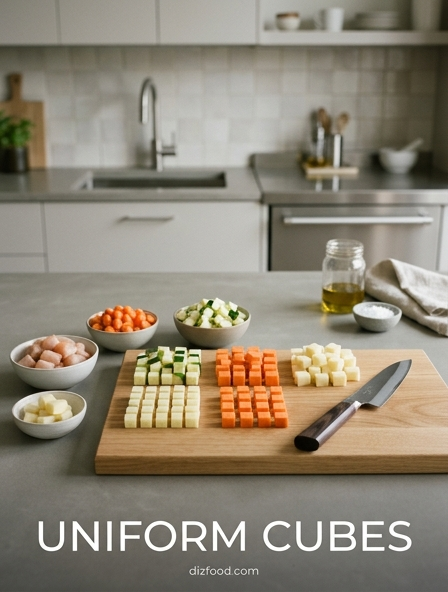
Consistency in dicing is crucial for even cooking and aesthetic appeal. Kitchen shears facilitate this consistency through their repeatable, mechanical action. Because the blades move in a fixed arc, the thickness of each cut can be easily gauged and maintained throughout the process. This is particularly advantageous for items like bacon, green beans, or sun-dried tomatoes where uniform pieces are required.
- Uniform lever pressure ensures consistent thickness across all pieces.
- Direct-to-pot cutting eliminates the time spent transferring items.
- Enhanced visibility of the cutting edge improves accuracy of the cut.
- Reduced physical resistance allows for faster repetitive cycles.
Speed is further enhanced because there is no friction against a cutting board, which can often slow down knife strokes. The user can rapidly click through ingredients, producing a pile of uniform pieces in a fraction of the time it would take to set up and execute a traditional chop. This combination of speed and uniformity makes shears an indispensable tool for high-efficiency kitchen workflows.
Ergonomic Design for Fatigue Free Meal Prep
Traditional knife work can put significant strain on the wrist and fingers, especially during long periods of preparation. Kitchen shears are designed with ergonomics in mind, featuring large, cushioned handles that distribute pressure evenly across the palm. This design minimizes the concentration of force on a single point, reducing the likelihood of developing blisters or joint fatigue. Many shears incorporate spring-loaded mechanisms that automatically reopen the blades, further reducing the effort required by the user.
This is particularly beneficial for individuals with arthritis or limited hand strength. The natural grip required to operate shears is more intuitive and less taxing than the specific finger positioning needed for a chef's knife. By rotating shears into the preparation process, cooks can alternate muscle groups, thereby extending their endurance and making the cooking process more enjoyable. Ergonomics isn't just about comfort; it is about maintaining a high level of performance throughout the duration of a busy meal prep session without physical setbacks. High-quality shears act as an extension of the hand, providing power and precision without the cost of physical exhaustion.
Multi Functional Utility Beyond Simple Cutting
Modern kitchen shears are far more than just scissors for food; they are versatile multi-tools designed to handle a variety of kitchen challenges. Many models include integrated features that expand their utility well beyond simple cutting and snipping. For instance, many shears feature a serrated center section between the handles designed for cracking nuts or opening tough jars. This multi-functional capability means that a cook can often complete a recipe using only a single tool.
- Integrated bottle openers for quick beverage service.
- Notched blades specifically for gripping and cutting poultry bone.
- Serrated edges designed for scaling fish efficiently.
- Flat-head screwdriver tips on handle ends for light maintenance.
The ability to switch from dicing vegetables to opening a bottle or cracking a shell without changing tools streamlines the entire process. This versatility makes high-quality shears one of the most hardworking items in the culinary arsenal, providing value that extends into every phase of food preparation, service, and even minor kitchen repairs.
The Role of Shears in Safe Kitchen Environments
A safe kitchen environment relies on tools that are predictable and easy to manage. Kitchen shears contribute to this safety by providing a stable cutting platform that does not rely on the slick surface of a cutting board. The risk of "tip-slip," where a knife point slides off an ingredient, is virtually eliminated with shears. Furthermore, the storage of shears is often safer than knives; most can be kept in a drawer with their blades closed, hiding the sharp edges from reaching hands.
| Design Feature | Safety Benefit |
|---|---|
| Take-apart blades | Enables thorough sanitization of the pivot hinge |
| Locking switch | Ensures secure storage and prevents accidental opening |
| Blunt tips | Reduces the risk of puncture wounds during use |
| Non-slip grips | Maintains secure handling even when hands are wet |
These features combined create a tool that supports a rigorous safety protocol. Hygiene also plays a role in safety, as shears that disassemble prevent the buildup of bacteria in hard-to-reach areas.
Optimizing Workflow with Quick Action Cutting
Workflow optimization is about reducing the number of steps between raw ingredients and a finished dish. Kitchen shears facilitate "quick action" cutting, which is the ability to modify or prepare ingredients on the fly without stopping to clear space for a cutting board. For example, if a soup needs more greens, they can be snipped directly over the steaming pot. This immediacy is a hallmark of an efficient kitchen. It allows for better timing and heat management, as the cook can stay close to the stove.
The reduction in equipment-no board to wash and no heavy knife to hone-means that the transition between different cooking phases is much faster. This agility is particularly helpful when multitasking, such as managing a simmering sauce while simultaneously prepping a garnish. By integrating shears into the standard operating procedure, the cook eliminates the "bottleneck" of the cutting board, leading to a faster and more responsive cooking process. Quick action cutting minimizes downtime and keeps the momentum of the meal preparation moving forward.
Maintenance Tips for Long Lasting Sharpness
To ensure that kitchen shears remain a high-performing tool, proper maintenance is essential. While shears are durable, the friction of the blades against each other and the materials they cut will eventually dull the edges. Regular sharpening using a dedicated tool or a sharpening stone is necessary to maintain their precision. It is also vital to hand-wash shears, even if they are labeled as dishwasher safe, to protect the integrity of the metal.
- Dry the blades immediately after washing to prevent rust and corrosion.
- Periodically tighten the pivot screw to maintain optimal blade tension.
- Apply a drop of food-grade mineral oil to the hinge for smooth action.
- Use a professional sharpening service for shears with complex serrated edges.
Following these maintenance steps will extend the life of the shears significantly. A well-maintained pair of shears should provide clean, effortless cuts for years, remaining a reliable staple in the kitchen. Proper care ensures the tool is always ready for the next task without compromising performance.


Comments