
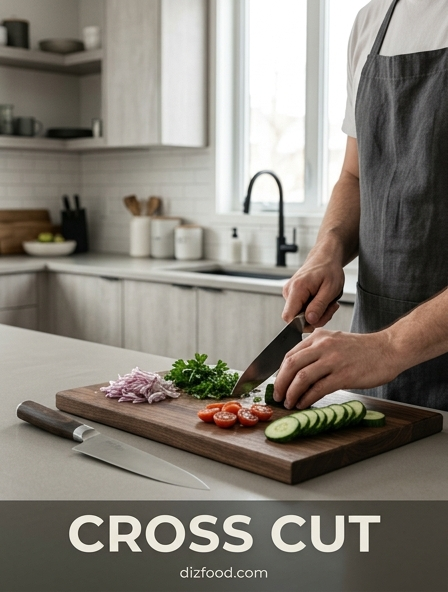
Understanding Fiber Direction and Grain
In the culinary arts, identifying the grain is the foundational step before any blade touches the ingredient. Fiber direction refers to the natural alignment of muscle fibers in proteins or the vascular bundles in vegetables like celery and rhubarb. These fibers are long, tough strands designed to provide structural integrity and transport nutrients. When a cook cuts parallel to these fibers, they remain intact, often resulting in a chewy or stringy texture that is difficult to masticate.
To identify the grain, one must examine the surface of the ingredient for linear patterns. In a flank steak, the muscle fibers run clearly in one direction, while in a stalk of lemongrass, the woody fibers are tightly packed along its length. By recognizing these patterns, a chef can determine the perpendicular path required for a successful cross cut. Understanding this orientation is crucial because it dictates how the ingredient will behave under heat and how it will ultimately feel on the palate.
- Identify the primary axis of growth or muscle attachment.
- Look for long, continuous lines running through the tissue.
- Rotate the ingredient 90 degrees to prepare for a transverse incision.
The Science of Cell Wall Rupture
The cross cut is more than a physical resizing of an ingredient; it is a biological intervention. At the microscopic level, plant tissues are composed of rigid cell walls made of cellulose, hemicellulose, and pectin. When a knife performs a cross cut, it shears through these cell walls transversely, causing an immediate release of intracellular fluids. This process, known as cell wall rupture, triggers enzymatic reactions that are otherwise dormant within the intact plant structure.
When the vacuoles are breached, enzymes like alliinase or polyphenol oxidase interact with their respective substrates. This is why a cross-cut onion smells more pungent than one sliced longitudinally. The shear force of the blade effectively destroys the cellular matrix, allowing for a more rapid exchange of heat and moisture during the cooking process. For the chef, mastering this rupture means controlling the chemical profile of the dish. A clean, sharp cross cut minimizes bruising, ensuring that the cellular contents are released cleanly rather than being crushed, which can lead to off-flavors and premature degradation of the ingredient's structural integrity.
Essential Knives for Precision Dicing
Executing a perfect cross cut requires a blade that offers a balance of sharpness, weight, and geometry. While many knives can technically perform the task, specific designs excel at minimizing resistance when moving against the grain. A dull knife will slide off the tough outer fibers or crush the delicate internal cells, whereas a specialized tool provides the clean shearing action necessary for professional results.
| Knife Type | Blade Characteristic | Best Used For |
|---|---|---|
| Gyuto / Chef's Knife | Curved belly for rocking | Dense root vegetables and large proteins |
| Santoku | Sheep's foot tip and flat edge | Precision dicing of aromatics and herbs |
| Nakiri | Rectangular, thin profile | Clean cross cuts through leafy greens |
| Utility Knife | Narrow and agile | Small citrus fruits and scallions |
Regardless of the knife chosen, the edge must be honed to a fine degree. A 15-degree angle is often preferred for precision cross cutting, as it reduces the force required to break through tough external membranes, ensuring the integrity of each individual cube or slice remains intact throughout the preparation.
Maximum Surface Area for Aromatic Release
The primary goal of cross cutting aromatics is to maximize the surface area exposed to the cooking medium, whether it be oil, water, or air. By cutting across the fibers, you create thousands of tiny exit points for essential oils and aromatic compounds. This is particularly vital for ingredients like lemongrass, ginger, and galangal, where the flavors are locked within dense, fibrous structures. A longitudinal slice might look elegant, but it leaves many of the flavor-containing cells sealed within the long strands.
When these ingredients are cross-cut into thin rounds or fine dice, the volatile compounds are more easily liberated by heat. This results in a more intense and immediate infusion of flavor into the dish. For example, in a stir-fry, the rapid heat requires aromatics to release their essence in seconds. The increased surface area provided by cross cutting ensures that the oil becomes fully seasoned before the primary ingredients are even added to the pan. This technique transforms the ingredient from a solid structural component into a concentrated delivery system for scent and taste.
Softening Tough Textures Through Cross Cutting
Many popular ingredients possess a natural toughness that can be off-putting if not properly managed. Cross cutting serves as a mechanical tenderizer by shortening the length of the fibers that the teeth must grind through. In the world of vegetables, stalks like asparagus or broccoli can be transformed from woody to tender simply by altering the angle and frequency of the cut. By severing the long cellulose chains, the cook effectively pre-chews the food, making it more palatable.
- Celery: Cross cutting removes the long, stringy vascular bundles.
- Kale: Slicing across the rib makes the leaf easier to wilt and chew.
- Flank Steak: Cutting perpendicular to the grain is essential to break down connective tissue.
- Ginger: Thin cross-slices ensure no long, woody fibers remain in the final bite.
This method is especially important for high-fiber diets where digestibility is a concern. By reducing the physical length of these structural components, the surface area for digestive enzymes is also increased, allowing for a more efficient breakdown of nutrients. In professional kitchens, this technique is used to ensure that even the humblest, toughest cuts of meat or vegetables are elevated to a gourmet standard.
Step by Step Cross Cut Mechanics
Achieving consistency in cross cutting requires a disciplined approach to hand positioning and blade movement. The goal is to produce uniform pieces while maintaining safety and efficiency. This process begins with the proper stabilization of the ingredient and ends with a clean follow-through of the knife.
- Place the ingredient on a stable cutting board, identifying the grain direction.
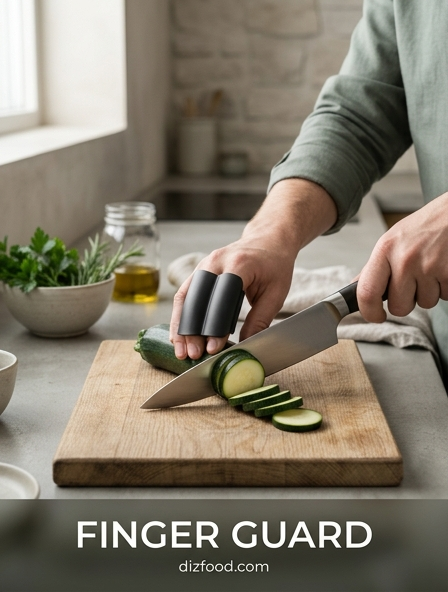
- Adopt the "claw grip" with your non-dominant hand, tucking your fingertips inward.
- Position the blade perpendicular to the long fibers of the ingredient.
- Use a smooth, forward-thrusting motion rather than pushing straight down.
- Maintain a consistent distance between cuts to ensure even cooking times.
- Apply steady pressure, allowing the sharpness of the blade to do the work.
Precision is maintained by using the middle knuckle of the claw grip as a guide for the blade. This allows the cook to feel the thickness of the slice without looking, facilitating a rhythmic and rapid cutting process. The "push-cut" or "thrust-cut" is typically the most effective mechanical motion for cross cutting, as it uses the entire length of the edge to shear through the fibers cleanly.
Unlocking Hidden Flavors in Alliums
Alliums, such as onions, shallots, and garlic, rely on the cross cut to develop their signature flavor profiles. These plants contain sulfur precursors and enzymes that are stored in separate compartments within the cells. When the cells are ruptured by a cross cut, these components mix, creating the pungent molecules we associate with these vegetables. Interestingly, the direction of the cut changes the flavor: a cross-cut onion (sliced into rings) is significantly more pungent and intense than one sliced from pole to pole.
For a chef, this means the choice of cut is a choice of flavor intensity. When making a raw salsa, a fine cross-cut dice provides a sharp, biting kick. Conversely, when preparing a delicate sauce, one might avoid heavy cross cutting to keep the flavor profile more subtle. The science of alliums dictates that the more cells you rupture, the more chemical reactions occur. Therefore, the cross cut is the most aggressive way to extract flavor from these bulbs, making it a critical technique for bold culinary applications where the "soul" of the onion needs to be the star.
Optimizing Ingredient Consistency for Even Cooking
Consistency is the hallmark of professional cooking, and cross cutting is the primary method used to achieve it. When ingredients are cut to the same size and shape-specifically by cutting across their naturally varied lengths-they respond to heat at the same rate. This prevents the common problem of some pieces being mushy while others remain raw. Uniformity in thickness, facilitated by a disciplined cross cut, ensures that the center of each piece reaches the target temperature simultaneously.
| Ingredient | Cut Style | Ideal Thickness |
|---|---|---|
| Carrots | Rondelle (Cross) | 1/8 inch for sautéing |
| Zucchini | Half-moon | 1/4 inch for grilling |
| Leeks | Cross-slice | 1/2 inch for braising |
| Beef Tenderloin | Medallion | 1.5 inches for searing |
By using a table of standard thicknesses, a kitchen can maintain a high level of quality control. The cross cut allows for the standardization of shapes like the rondelle or the paysanne, which are aesthetically pleasing and functional. This predictability is essential in high-volume environments where timing is everything and every second of heat exposure must be calculated.
Impact on Texture and Mouthfeel
The sensory experience of eating is heavily influenced by how the tongue and teeth interact with food fibers. This interaction is known as mouthfeel. A cross-cut ingredient generally offers a "tender-crisp" sensation. Because the long, fibrous strands are severed into short segments, the food offers a clean break when bitten, rather than stretching or resisting. This is particularly noticeable in salads; a cross-cut radish or cucumber provides a satisfying snap that enhances the perceived freshness of the dish.
In hot preparations, the cross cut allows sauces to penetrate deeper into the ingredient. The exposed ends of the severed fibers act like tiny straws, drawing in fats and seasonings through capillary action. This leads to a more succulent and flavorful interior. Whether it is a perfectly sliced roast or a finely diced mirepoix, the cross cut ensures that the texture is deliberate and refined. It eliminates the "stringy" frustration of poorly prepared vegetables and meats, replacing it with a luxurious, melt-in-the-mouth quality that defines high-end gastronomy.
Professional Tips for Speed and Safety
Mastering the cross cut at a professional speed requires a combination of muscle memory and strict adherence to safety protocols. Speed should never come at the expense of accuracy or physical well-being. Pros often use a "walking" motion with their guide hand, moving it back incrementally after each stroke to maintain perfect slice thickness. This synchronization between the knife hand and the guide hand is the secret to rapid prep work.
- Use a damp towel: Place it under the cutting board to prevent any slipping.
- Anchor the tip: For small items, keep the tip of the knife on the board to create a pivot point.
- Let gravity help: Use the weight of a heavy knife to assist in the downward shearing motion.
- Sharpen frequently: A sharp blade requires less force, reducing the risk of a slip.
Safety is also enhanced by maintaining a clear workspace. Clearing away cut pieces frequently prevents the blade from catching on "hitchhikers" or sliding off a pile of scraps. By focusing on the mechanics of the cross cut-specifically the perpendicular alignment and the claw grip-a cook can significantly increase their output while ensuring that every movement is controlled, rhythmic, and safe.


Comments