
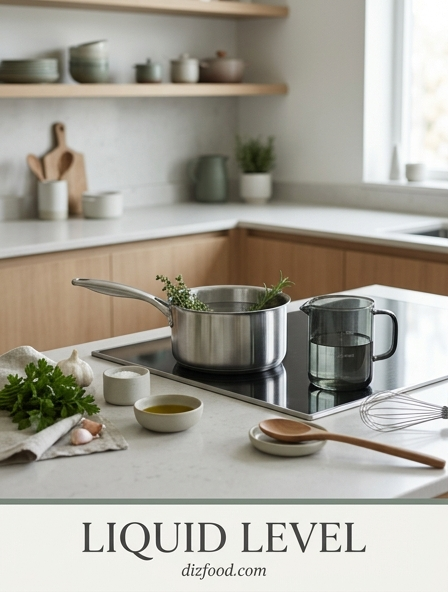
The Golden Ratio of Liquid to Protein
Achieving the perfect liquid level starts with understanding the specific cooking method being applied to the protein. For braising, the golden ratio generally dictates that the liquid should submerge the meat by one-half to two-thirds of its height. This allows for a combination of conductive heat through the liquid and convective heat through the steam trapped within the vessel. If the liquid level is too high, the protein effectively boils, leading to a loss of structural integrity and flavor dilution. If the level is too low, the exposed meat may become dry and tough before the connective tissues have sufficiently broken down.
| Cooking Method | Liquid Ratio (Liquid:Protein) | Primary Goal |
|---|---|---|
| Braising | 1:2 (Halfway up) | Tenderization |
| Poaching | 2:1 (Fully covered) | Gentle Infusion |
| Stewing | 1.5:1 (Submerged) | Uniformity |
Maintaining these ratios ensures that the liquid remains concentrated enough to form a flavorful glaze or sauce upon completion. When the liquid level is correctly calibrated, the protein stays succulent while the surrounding environment remains humid enough to prevent scorching.
Accounting for Vegetable Water Release
A common mistake in liquid management is failing to account for the inherent moisture content of vegetables, often referred to as "hidden liquid." Most mirepoix components, such as onions, celery, and carrots, consist of 80% to 90% water. As these vegetables break down during the cooking process, they release a significant volume of fluid into the pot, which can unexpectedly thin a sauce or raise the liquid level above the desired threshold.
- Onions: Release approximately 85% of their weight in moisture.
- Mushrooms: Function like sponges, releasing vast amounts of water quickly.
- Zucchini: Highly aqueous; can easily dilute a thick stew.
To control this, chefs often sweat vegetables separately to cook off excess moisture before adding the primary braising liquid. Alternatively, if adding vegetables raw, one must reduce the initial liquid volume by roughly 10% to 15% to compensate for the upcoming release. Monitoring the pot during the first thirty minutes of simmering allows for manual adjustments, ensuring the viscosity remains within the intended parameters for the final dish.
Evaporation Rates in Different Cooking Vessels
The geometry and material of a cooking vessel drastically influence how quickly liquid levels deplete. Evaporation is primarily a function of surface area; a wide, shallow skillet allows steam to escape more rapidly than a tall, narrow stockpot. For reductions and pan sauces, a large surface area is beneficial, as it accelerates the concentration of flavors. Conversely, when long-term moisture retention is required, a vessel with high walls and a narrow diameter is preferred to minimize the liquid-to-air contact point.
Material conductivity also plays a vital role. Copper and aluminum heat quickly and evenly, potentially increasing the simmer rate across the entire surface. Cast iron, while slower to heat, retains a steady temperature that can lead to a deceptive "creeping" boil, where liquid evaporates faster than anticipated if the heat is not carefully managed. When choosing a vessel, consider that a wide Dutch oven will require more frequent liquid replenishment than a deep cocotte over the same cooking duration. Understanding these physics allows a cook to predict liquid loss and adjust starting volumes accordingly to avoid a dry pot.
The Role of Collagen in Perceived Moisture
The success of a liquid-based dish is often judged by its "mouthfeel," which is heavily influenced by collagen conversion rather than just water content. When tough cuts of meat-such as shank, shoulder, or neck-are simmered, the collagen in the connective tissues slowly transforms into gelatin. This gelatin dissolves into the cooking liquid, increasing its viscosity and creating a silky texture that coats the palate. This process gives the impression of a moist, succulent dish even if the actual water content of the meat has decreased during cooking.
- Denaturation: Heat begins to unfold the triple-helix structure of collagen.
- Hydrolysis: Liquid and heat break the bonds, turning fibers into gelatin.
- Thickening: The dissolved gelatin increases the "body" of the braising liquid.
If the liquid level is too high, the gelatin becomes too diluted, resulting in a thin, watery sauce that lacks the richness associated with professional braises. Therefore, managing the liquid level is not just about keeping the meat wet, but about ensuring the resulting gelatin concentration is high enough to provide the desired luxurious consistency upon reduction.
Balancing Fat Ratios for Silky Sauces
Liquid management in the kitchen also involves the careful integration of fats. A sauce that is purely aqueous often feels "thin" and sharp, whereas a sauce with an integrated fat component feels "round" and balanced. The liquid-to-fat ratio is critical for creating stable emulsions. If there is too much fat and not enough aqueous liquid, the sauce will break and appear greasy. If the liquid level is too high relative to the fat, the sauce will fail to achieve the necessary cling or sheen.
| Sauce Type | Fat Source | Optimal Liquid-to-Fat Ratio |
|---|---|---|
| Beurre Blanc | Cold Butter | 1:4 (Liquid to Fat) |
| Pan Sauce | Rendered Fat/Butter | 3:1 (Liquid to Fat) |
| Vinaigrette | Oil | 1:3 (Liquid to Fat) |
To achieve a silky finish, the liquid level should be reduced until it reaches a syrupy consistency before fat is whisked in. This ensures that the water-based molecules can effectively trap the fat globules, creating a smooth, homogenous mixture that enhances the flavor of the protein without feeling overly heavy or oily.
Deglazing Techniques for Volume Control
Deglazing is the process of adding liquid to a hot pan to loosen the "fond," or the caramelized protein bits stuck to the bottom. While it is a primary flavor-building step, it is also a critical moment for volume control. Adding too much liquid during deglazing can drown the concentrated flavors, while adding too little can cause the fond to burn before it can be fully incorporated into the sauce. The ideal technique involves adding just enough liquid-usually wine, stock, or water-to cover the bottom of the pan by about an eighth of an inch.
- Remove excess rendered fat from the pan, leaving about a tablespoon.
- Pour in the deglazing liquid while the pan is over medium-high heat.
- Scrape the bottom vigorously with a wooden spoon or spatula.
- Reduce the liquid by at least half before adding the remaining bulk liquids.
By controlling the volume at this stage, the cook ensures that the foundational flavors are as concentrated as possible. This prevents the final dish from having a "washed out" taste and allows for a more controlled approach to the final liquid level of the sauce.
Managing Liquid Viscosity Through Reduction
Reduction is the intentional evaporation of water from a liquid to concentrate its flavor and increase its viscosity. As the liquid level drops, the ratio of solids-such as sugars, proteins, and minerals-to water increases. This is the primary method for turning a thin stock into a rich demi-glace. The rate of reduction should be managed based on the desired final intensity; a slow simmer yields a cleaner, clearer result, while a rolling boil can emulsify fats into the liquid, leading to a cloudier but faster reduction.
Viscosity is often checked using the "nappe" test, where the liquid should coat the back of a spoon and hold a line when a finger is drawn through it. If the reduction goes too far, the liquid can become overly salty or bitter as the flavored compounds become too concentrated. Therefore, it is often wise to use low-sodium stocks if a significant reduction is planned. Monitoring the liquid level visually against the sides of the pot serves as a reliable indicator of progress, allowing the cook to stop the process at the exact moment the desired thickness is achieved for the specific dish.
Impact of Lid Fit on Moisture Retention
The choice of lid significantly alters the micro-environment within a cooking vessel. A tight-fitting lid creates a closed system where evaporated moisture hits the cooler surface of the lid, condenses, and falls back into the pot. This cycle, known as "rain-back," allows for long cooking times with minimal liquid loss. If a lid is loose or has a steam vent, the liquid level will drop steadily, necessitating the addition of more water or stock to prevent the food from drying out.
- Tight Lid: Ideal for braises and stews where flavor concentration happens slowly.
- Cartouche: A parchment paper lid that sits directly on the food, allowing for very controlled, slow evaporation.
- Lid Ajar: Used when a slight reduction is desired while still maintaining a gentle heat trap.
In professional kitchens, chefs often use a layer of foil under the lid to create a truly hermetic seal. This prevents even the smallest amount of vapor from escaping, ensuring that the liquid level remains constant throughout a multi-hour braise. Understanding this dynamic allows for better control over the final texture and salt concentration of the cooking medium.
The Science of Osmosis in Braising
Osmosis plays a silent but pivotal role in how liquid levels interact with cellular structures during cooking. When meat is submerged in a seasoned liquid, the concentration of salt and solutes outside the meat cells differs from the concentration inside. Through osmosis, moisture moves across the cell membranes. If the surrounding liquid is properly seasoned, it can actually draw moisture into the protein fibers, provided the heat remains below the point where the fibers contract and squeeze the liquid back out.
However, if the cooking liquid is excessively salty, it can draw moisture out of the meat, leaving it dry even though it is submerged in liquid. This is why a balanced salinity in the braising medium is essential for maintaining the internal moisture of the protein. As the cooking progresses and the liquid level reduces, the salt concentration increases. If the reduction is too aggressive, the osmotic pressure shifts, potentially dehydrating the meat. Maintaining a consistent liquid level through periodic additions of unsalted stock can help mitigate this effect, ensuring the meat remains plump and hydrated throughout the entire cooking process.
Adjusting Ratios for Slow Cookers vs Dutch Ovens
Transitioning a recipe from a traditional Dutch oven to a slow cooker requires a significant adjustment in liquid levels. In a Dutch oven, even with a lid, a fair amount of evaporation occurs over several hours in the oven. In contrast, a slow cooker is a low-heat, sealed environment with virtually zero evaporation. If a cook uses the same amount of liquid in a slow cooker as they would in a Dutch oven, the final result will often be watery and under-flavored because the liquid never reduces.
| Feature | Dutch Oven (Oven) | Slow Cooker |
|---|---|---|
| Evaporation Rate | Moderate to High | Very Low |
| Liquid Requirement | Full Ratio | Reduce by 30-50% |
| Flavor Concentration | Through Reduction | Through Infusion |
When using a slow cooker, the liquid should barely cover the bottom third of the ingredients. The moisture released from the proteins and vegetables will be sufficient to create a sauce. If the final result is too thin, the liquid must be moved to a stovetop pan and reduced separately at the end of the cooking cycle to achieve the desired viscosity and flavor profile.

Comments