
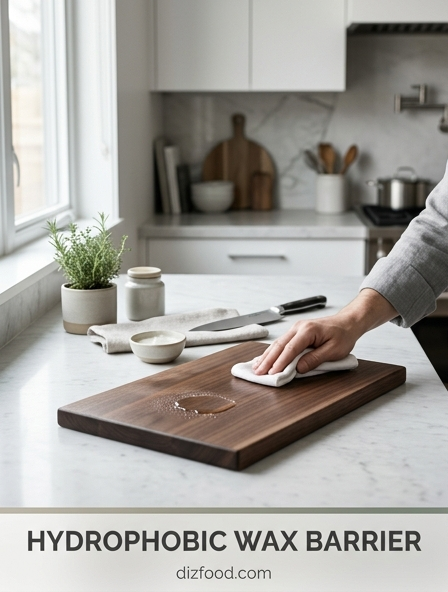
Keeping your kitchen's wooden surfaces in top shape is easier than you think. By applying a blend of food-grade mineral oil and beeswax conditioner, you create a powerful, hydrophobic wax barrier that repels moisture and prevents wood from drying or cracking. This dual-action treatment penetrates deep into the grain to hydrate the fibers while the wax seals the surface, ensuring your cutting boards and countertops remain durable and beautiful for years. It's a simple, non-toxic way to maintain hygiene and prevent warping in your favorite culinary tools. To find the perfect balance for your maintenance routine, it's helpful to understand the differences between Butcher Block Oil vs. Beeswax Conditioner.
Benefits of Food Grade Mineral Oil
Food grade mineral oil serves as the foundational treatment for wooden kitchen implements due to its inert nature and high penetration capacity. Unlike organic oils such as olive or vegetable oil, mineral oil is shelf-stable and does not become rancid over time, ensuring that cutting boards and wooden spoons remain free from unpleasant odors and bacterial growth. When applied to porous wood, the oil migrates into the cellular structure, displacing air and preventing the absorption of moisture and food juices. This saturation process is critical for maintaining the internal integrity of the wood, as it limits the expansion and contraction cycles that lead to warping or splitting.
- Prevents wood from becoming brittle and cracking over time.
- Creates a deep-seated moisture barrier within the internal fibers.
- Ensures a food-safe surface that meets strict health standards.
- Enhances the natural grain and aesthetic appeal of the timber.
The oil must be USP-certified to ensure it is safe for direct food contact, providing a reliable and inexpensive first line of defense for expensive kitchen woodwork and preparation surfaces.
Building a Durable Hydrophobic Wax Barrier
A hydrophobic wax barrier is the secondary defense layer that works in tandem with mineral oil to provide comprehensive protection. While oil penetrates the wood, wax remains primarily on the surface, creating a physical shield that repels water and prevents staining from acidic foods. This barrier is achieved by blending hard waxes like beeswax or carnauba with oils to create a spreadable paste. The hydrophobic nature of the wax ensures that liquids bead up on the surface rather than soaking into the grain, which significantly reduces the risk of cross-contamination and mold growth.
| Feature | Oil Treatment | Wax Barrier |
|---|---|---|
| Action | Deep Penetration | Surface Sealing |
| Primary Goal | Fiber Saturation | Water Repulsion |
| Finish | Matte/Satin | Lustrous Sheen |
| Frequency | Monthly | Bi-Monthly |
Building this layer requires heat and friction, as the wax must be supple enough to fill the microscopic pores of the wood surface. Once hardened, the barrier provides a tactile smoothness that makes cleaning easier.
Step by Step Beeswax Conditioner Application
Applying a beeswax conditioner requires a methodical approach to ensure the wax bonds effectively with the wood fibers. Before starting, ensure the surface is completely dry and free from any food debris or dust. A warm environment helps the wax spread more evenly and penetrate deeper into the wood grain.
- Apply a generous amount of conditioner to a lint-free cloth or applicator pad.
- Rub the wax into the wood using circular motions, ensuring every inch of the surface is covered.
- Pay special attention to end grains, as these areas are more porous and prone to drying out.
- Allow the conditioner to sit and "cure" for at least four to eight hours, or ideally overnight.
- Use a clean, dry microfiber cloth to buff the surface until the excess wax is removed and a soft glow appears.
This process should be repeated whenever the wood begins to look dull or when water no longer beads on the surface. Consistent application builds up a resilient protective layer that hardens over time, creating a superior seal.
Essential Kitchen Woodwork Maintenance Tips
Maintaining kitchen woodwork involves a balance of gentle cleaning and proactive conditioning to preserve the hydrophobic barrier. The most important rule is to never submerge wooden items in water or place them in a dishwasher, as the high heat and prolonged moisture will strip away protective oils and cause the wood to swell and eventually crack. Instead, use a mild dish soap and a damp cloth for daily cleaning, followed by immediate hand-drying.
- Avoid harsh chemical cleaners that can dissolve the protective wax seal.
- Reapply oil or conditioner at the first sign of wood "thirst" or discoloration.
- Store wooden boards upright to ensure even airflow on both sides.
- Sand away any deep knife scars that could harbor bacteria before re-sealing.
By monitoring the state of the wood grain, you can intervene before structural damage occurs. Wood is a living material that reacts to changes in humidity, so keeping it saturated with food-safe minerals and waxes is essential for its longevity in a high-moisture kitchen environment.
Protecting Cutting Boards and Butcher Blocks
Cutting boards and butcher blocks are the most heavily used wooden surfaces in the kitchen, requiring a specialized approach to protection. Because these surfaces are subjected to constant mechanical stress from knives, the hydrophobic barrier is frequently compromised. Every slice creates a microscopic channel where moisture and bacteria can enter. Maintaining a thick, durable wax coating helps seal these minor abrasions, keeping the board hygienic and preventing the wood from splintering.
| Surface Type | Care Level | Recommended Wax |
|---|---|---|
| End Grain | High | Beeswax/Oil Blend |
| Edge Grain | Medium | Mineral Oil |
| Bamboo | Low | Light Oil Coat |
| Hardwood | Medium | Carnauba Blend |
The edges and underside of butcher blocks are often neglected but are critical for structural stability. Moisture unevenly absorbed on one side will cause the block to cup or bow. Applying a consistent hydrophobic seal to all faces of the board ensures uniform moisture content.
Natural Solutions for Waterproofing Wood
For those seeking eco-friendly alternatives, natural solutions for waterproofing wood offer effective protection without the use of petroleum-based products. Beeswax is the gold standard for natural kitchen sealants, providing a non-toxic, edible, and highly effective hydrophobic layer. When combined with plant-derived oils like fractionated coconut oil-which has been processed to remove the long-chain fatty acids that cause rancidity-beeswax creates a powerful moisture barrier. Carnauba wax, derived from palm leaves, is another excellent natural additive; it is significantly harder than beeswax and provides a more durable, heat-resistant finish.
These natural waxes fill the tracheids of the wood, creating a smooth surface that resists liquid penetration and bacterial colonization. Utilizing these biological materials ensures that your food preparation surfaces remain free from synthetic chemicals while still benefiting from the best waterproofing technology nature has to offer. This approach is particularly favored by artisanal woodworkers who prioritize sustainability and the traditional "living finish" that natural waxes provide to high-end kitchenware and custom furniture.
The Science of Wood Penetration and Sealing
The effectiveness of a hydrophobic barrier on wood is rooted in the molecular interaction between the sealant and the cellulose fibers. Wood is naturally hygroscopic, meaning it attracts and holds water molecules. To counter this, a sealant must possess a lower surface energy than the liquids it intends to repel. Mineral oils work through capillary action, flowing into the narrow channels of the wood grain to saturate the internal structure. Once the interior is filled, a wax layer provides the final seal through the alignment of non-polar molecules.
Because water is a polar molecule, it is chemically repelled by the non-polar tails of the wax hydrocarbons. This interaction causes water to form spherical beads, minimizing surface contact and preventing the liquid from entering the pores. This science of "wetting" determines how well a board will resist stains. A properly sealed board has a very high contact angle for liquids, meaning water sits high on the surface. This physical state is what defines a successful hydrophobic barrier, ensuring that no liquid can penetrate the protective threshold.
Safe Food Surface Preservation Methods
Preserving food-contact surfaces requires strict adherence to safety standards to prevent the leaching of toxins into meals. The primary objective is to use materials that are recognized as safe for ingestion, such as those meeting FDA Title 21 regulations. Safe preservation methods focus on creating a barrier that is both durable and chemically inert.
- Use only "White" or "USP" grade mineral oils to ensure purity.
- Avoid nut-based oils like walnut or almond if allergies are a concern.
- Ensure any additives, like scents or solvents, are food-grade certified.
- Apply heat during application to ensure the wax sets deeply into the grain.
Effective preservation also involves managing the "biofilm" that can form on kitchen surfaces. A well-maintained wax barrier prevents the accumulation of protein and starch residues in the wood pores, making it difficult for microbial colonies to establish themselves. By combining regular cleaning with non-toxic sealing techniques, you create a kitchen environment that is both aesthetically pleasing and bacteriologically safe for daily food preparation.
Restoring Luster to Kitchen Wood Surfaces
Over time, kitchen wood surfaces can become dull, grey, or scratched, losing the vibrant luster they possessed when new. Restoring this finish is a two-part process involving surface preparation and deep conditioning. The goal is to remove the oxidized top layer of wood fibers and old, contaminated wax to reveal the fresh grain beneath.
- Lightly sand the surface with 220-grit sandpaper to remove stains and knife marks.
- Clean the dust away using a vacuum and a lightly dampened tack cloth.
- Apply a heavy coat of mineral oil and let it soak in until the wood is saturated.
- Layer a thick beeswax conditioner over the oil to lock in the moisture.
- Buff with a high-speed motion to generate heat, which helps the wax achieve a mirror-like shine.
This restoration process not only improves the look of the wood but also reinforces its structural integrity. The renewed luster is a visual indicator that the hydrophobic barrier has been successfully reinstated, providing renewed protection against the rigors of heavy kitchen use.
Long Term Durability for Wooden Fixtures
The long-term durability of wooden kitchen fixtures, from countertops to heavy-duty butcher blocks, depends entirely on the consistency of the maintenance cycle. Wood is susceptible to environmental stressors such as fluctuating humidity and temperature changes, which can lead to catastrophic failure if the wood is allowed to dry out. A cumulative protection strategy involves building up layers of wax over months and years, creating a seasoned surface that becomes increasingly resilient. This seasoned wood is less prone to "shock" when exposed to hot pots or cold liquids.
Furthermore, a well-maintained hydrophobic barrier protects the adhesives used in laminated wooden fixtures, preventing the joints from delaminating. By investing time into regular oiling and waxing, the lifespan of a wooden fixture can be extended from a few years to several decades. The durability is not just in the hardness of the wood itself, but in the integrity of the moisture-repelling seal that prevents the natural biological decay of the organic fibers. Consistent care ensures that these functional kitchen elements remain stable, beautiful, and hygienic for generations.

Comments