
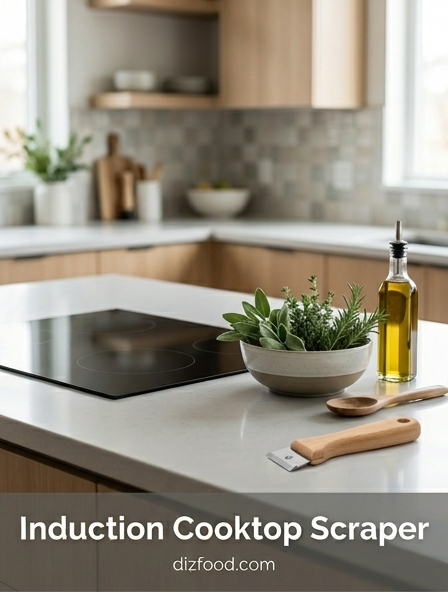
Preparing the Glass Surface
Before introducing a metal scraper to your induction cooktop, the glass surface must be properly staged to avoid unnecessary damage. The first and most critical step is ensuring the unit is completely powered off and cool to the touch. Induction cooktops do not generate heat directly, but the glass retains significant residual heat from the cookware. Scraping a hot surface can cause the metal blade to warp or create thermal stress on the ceramic glass. Once cool, use a damp microfiber cloth to remove loose crumbs, dust, and superficial grease that could interfere with the scraper's path.
- Verify all zones are deactivated and the "H" residual heat indicator is off.
- Clear any surrounding kitchen clutter to allow for a full range of motion.
- Perform a preliminary wipe with warm water to identify high-relief deposits.
- Check the glass for any existing cracks that might be exacerbated by pressure.
Removing these initial layers ensures that when the scraper is applied, it focuses solely on the stubborn, bonded materials. This preparation stage minimizes the risk of dragging abrasive grit across the smooth finish, which is the leading cause of micro-scratches during the deep cleaning process.
Softening Stubborn Burnt Residue
Attempting to scrape dry, carbonized food from an induction surface is often ineffective and increases the likelihood of the blade skipping or catching. To facilitate a smoother restoration process, you must soften the molecular bonds of the burnt-on residue. This is best achieved by applying a specialized cooktop cleaning cream or a simple mixture of white vinegar and baking soda. The moisture penetrates the porous structure of the charred food, making it more pliable and less brittle during the physical removal stage.
- Apply a generous layer of cleaning solution directly onto the affected area.
- Place a warm, damp paper towel over the site to prevent evaporation.
- Allow the solution to sit for at least ten to fifteen minutes.
- Gently press down on the residue to check if the edges have begun to lift.
By allowing a chemical or natural agent to dwell on the surface, you reduce the physical force required later. This "soaking" phase is particularly important for sugary spills or boiled-over milk, which create incredibly hard, glass-like bonds when dehydrated. Softened debris slides off with minimal effort, preserving the integrity of the induction surface.
Choosing the Right Scraper Blade
The efficacy of your cleaning routine depends heavily on the quality and material of the scraper blade. While plastic scrapers are available, they often lack the rigidity required to shear off carbonized proteins and sugars. High-quality induction scrapers typically utilize razor-grade stainless steel or carbon steel. It is imperative to use a blade specifically designed for glass-ceramic surfaces to ensure the edge is perfectly honed without microscopic burrs that could gouge the cooktop. Using a dull or rusted blade is hazardous, as it requires more force and provides less control.
| Blade Type | Material Suitability | Replacement Frequency |
|---|---|---|
| Stainless Steel | Heavy Carbonized Spills | After 5-10 deep cleans |
| Carbon Steel | General Dried Grime | Monthly (rust prone) |
| Plastic/Polymer | Light Grease/Sticky Film | When edges round off |
Always inspect the blade for nicks or bends before starting. A single imperfection in the metal can leave a permanent track across your expensive induction appliance, turning a simple cleaning task into a costly mistake.
The Ideal Scraping Angle
The physics of scraping an induction cooktop requires a delicate balance between the blade and the glass. The golden rule is to maintain a shallow angle, typically between 30 and 45 degrees. If the angle is too steep, the blade acts as a chisel, potentially digging into the glass or vibrating, which can lead to "chatter marks." Conversely, an angle that is too low may cause the blade to slide over the residue without catching the leading edge of the spill. Consistency is the key to preventing scratches while maximizing debris removal.
- Hold the scraper handle firmly with your dominant hand.
- Use your other hand to guide the head for increased stability.
- Maintain a fixed wrist position to keep the angle constant across the stroke.
- Approach the residue from the outer edges, working toward the center.
By keeping the blade at this precise orientation, the edge slides under the burnt-on food, lifting it away from the glass through shear force rather than blunt impact. This technique ensures that the metal only contacts the residue and the very top layer of the glass without penetrating the surface structure.
Applying Even Pressure Safely
When using a scraper on an induction cooktop, the amount of force applied is just as important as the angle. Many users make the mistake of pushing too hard in an attempt to speed up the process, which can lead to the blade snapping or the tool slipping uncontrollably. Instead, you should apply firm, even pressure that allows the blade to do the work. The goal is a steady, rhythmic motion. If a particular spot does not lift with moderate pressure, it is a sign that the area needs more lubrication or softening time rather than more muscle.
- Start with light pressure to test the resistance of the deposit.
- Gradually increase force until the residue begins to flake or peel.
- Avoid jerky or "stabbing" motions; use long, smooth strokes.
- Stop immediately if you hear a high-pitched screeching sound.
Uniform pressure helps maintain the contact patch between the blade and the cooktop. This prevents the corners of the blade from digging in, which is where most scratches occur. Patience is your best tool; multiple light passes are always safer and more effective than a single high-pressure attempt that risks damaging the ceramic glass permanently.
Removing Carbonized Food Deposits
Carbonized food deposits are the result of high-heat chemical reactions between food particles and the cooktop surface. These are typically the black, crusty rings that form around the edges of induction zones. Unlike fresh spills, these deposits are chemically bonded to the glass and require a methodical approach. The scraper is the only tool capable of breaking these bonds without using abrasive scouring pads that would ruin the finish. When tackling these areas, focus on the "shaving" technique, where you take thin layers off the top of the deposit until you reach the glass.
- Identify the thickest parts of the carbonized ring first.
- Work in small sections, roughly two inches at a time.
- Wipe the blade frequently to remove the carbon dust you've lifted.
- Re-moisten the area if the debris becomes too dry and dusty.
Once the bulk of the carbon is removed, you will often find a ghost-like stain underneath. This is normal and should be treated with a liquid cleaner rather than continued aggressive scraping. The scraper's job is to remove the physical mass of the food, leaving the surface flat and ready for final polishing.
Lubricating the Cooktop Surface
Dry scraping is a recipe for disaster on an induction cooktop. Lubrication serves as a protective barrier and a transport medium for lifted particles. A well-lubricated surface allows the scraper to glide effortlessly, significantly reducing the friction that generates heat and potential scratches. You can use a dedicated induction cleaning fluid, or even a dilute solution of water and dish soap in a spray bottle. The liquid acts as a buffer, ensuring that any grit released during the scraping process is suspended in fluid rather than being ground into the glass.
- Keep a spray bottle nearby to mist the surface as you work.
- Ensure the entire path of the scraper is visibly wet.
- Use lubricants that do not contain ammonia or harsh abrasives.
- Re-apply fluid if the heat of the room causes it to evaporate.
The presence of a lubricant also helps you see your progress. As the liquid turns cloudy or dark, you know the residue is being successfully integrated into the solution. This visual feedback is essential for determining when the scraping phase is complete and when it is time to move on to wiping and polishing.
Wiping Away Loose Debris
After the scraping is complete, the cooktop will be covered in a slurry of cleaning fluid and loosened food particles. This debris must be removed carefully to avoid re-depositing the grime or scratching the glass during the final stages. Use a clean, damp microfiber cloth or a high-quality paper towel to lift the debris away. Do not use a scrubbing motion at this stage; instead, use a single-direction wiping motion. This lifts the particles off the surface rather than dragging them around, which is crucial for maintaining the mirror-like finish of the induction glass.
- Fold the cloth to create a fresh, clean surface for every wipe.
- Start from the clean areas and move toward the messy center.
- Rinse the cloth frequently in warm water to clear out captured grit.
- Perform a final pass with a dry cloth to inspect for missed spots.
Inspection is key here. By removing the waste, you can clearly see if any stubborn "islands" of carbon remain. If they do, localized re-lubrication and a quick second pass with the scraper may be necessary. Only when the surface is completely smooth to the touch should you proceed to the polishing phase.
Polishing After Scraper Use
The scraper is a heavy-duty tool, but it does not provide the final luster that makes an induction cooktop look new. Once the physical deposits are gone, a polishing step is required to remove streaks and micro-residues. Use a specialized ceramic cooktop conditioner or a buffing cream designed for glass surfaces. These products often contain silicone or other protective agents that leave a microscopic film, making future spills easier to clean and providing a deep, reflective shine. Polishing also helps to fill in microscopic imperfections, smoothing out the surface at a molecular level.
- Apply a small amount of polish-usually a dime-sized drop is sufficient.
- Use a dry microfiber cloth or a dedicated polishing pad.
- Work in circular motions with light to moderate pressure.
- Buff the surface until the polish disappears and the glass is clear.
This final step is what restores the "showroom" look of your kitchen. Beyond aesthetics, the protective layer left behind acts as a barrier against mineral deposits from hard water and prevents new food spills from bonding as tightly to the glass. A polished cooktop is a more efficient and durable cooktop.
Maintaining Your Scraper Tool
A scraper is a precision instrument and must be maintained as such to remain safe and effective. Over time, the metal blade will develop microscopic nicks or lose its razor-sharp edge, making it more likely to scratch the glass or fail to lift residue. Proper maintenance involves cleaning the tool after every use, inspecting the blade for damage, and storing it in a dry environment to prevent corrosion. Most modern scrapers feature a retractable design or a safety cap; ensuring these mechanisms function correctly is vital for preventing accidental cuts in the kitchen drawer.
| Component | Maintenance Action | Benefit |
|---|---|---|
| Blade Edge | Replace if dull or nicked | Prevents glass scratching |
| Retraction Slide | Oil lightly with mineral oil | Ensures smooth operation |
| Handle Body | Degrease with soap/water | Improves grip and safety |
Never store a scraper with a dirty blade, as food acids can eat away at the metal edge. By spending a few moments maintaining the tool, you ensure that it is ready for the next cleaning session, protecting both your fingers and your induction cooktop's expensive glass surface from harm.

Comments