
If you've noticed your morning brew taking longer than usual or a strange bitterness creeping into your cup, it's likely time to tackle the hidden limescale lurking inside your machine. Deciding between a specialized coffee machine descaler and the budget-friendly DIY route of citric acid is a common dilemma for coffee enthusiasts, but the choice significantly impacts both flavor and equipment longevity. While citric acid offers an accessible, eco-friendly way to dissolve calcium deposits, commercial descalers are scientifically formulated with lactic or sulfamic acids and protective inhibitors that break down buildup faster without corroding sensitive internal seals. Choosing the right method ensures your heating element stays efficient, providing a pristine, limescale-free brew that keeps your machine running like new for years to come.
| Feature | Commercial Descaler | Citric Acid (DIY) |
|---|---|---|
| Active Agents | Lactic/Sulfamic acid + Corrosion inhibitors | Pure Citric Acid (Anhydrous) |
| Speed | Rapid; dissolves complex mineral buildup fast | Moderate; requires longer contact time |
| Machine Safety | High; engineered to protect rubber seals/valves | Moderate; can pit metal if concentration is high |
| Residue/Aftertaste | Low; usually rinses clean after 1-2 cycles | Minimal; can leave "sour" notes if not flushed |
| Price Point | $10 - $25 per bottle/treatment | $0.50 - $2.00 per treatment |
| Best For | High-end espresso & automatic machines | Budget drip brewers & kettle descaling |
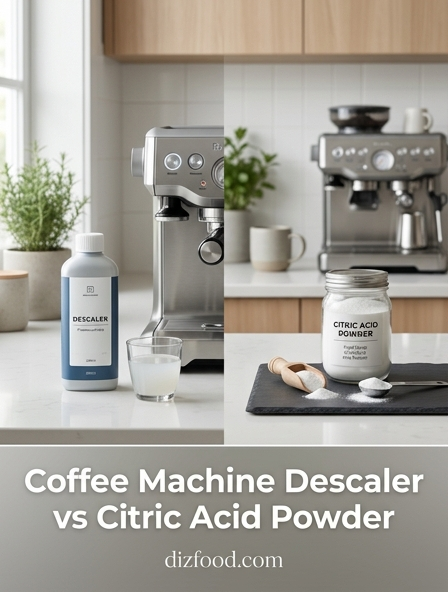
Coffee Machine Descaler vs Citric Acid Powder Key Differences
The primary distinction between a dedicated coffee machine descaler and pure citric acid powder lies in their chemical formulation and intended scope of action. A commercial descaling solution is typically a proprietary blend of several acids, such as lactic, sulfamic, or phosphoric acid, complemented by corrosion inhibitors and surfactants. These additives are designed to protect the internal metal components of a high-end espresso machine while ensuring that the limescale is dissolved quickly and thoroughly without leaving residues that could affect flavor.
In contrast, citric acid powder is a single-ingredient organic compound derived from citrus fruits. While it is a potent chelating agent capable of breaking down calcium carbonate, it lacks the complex buffering agents found in professional formulas. Key differences include:
- Composition: Commercial products are multi-acid blends; citric acid is 100% pure acid.
- State: Descalers often come in liquid or specialized tablet form, whereas citric acid is usually a crystalline powder.
- Rinsing Requirements: Citric acid often requires more extensive rinsing to remove its distinct sour aftertaste.
- Protection: Commercial formulas include "inhibitors" that create a microscopic film on copper and brass to prevent pitting.
While both agents aim to remove mineral buildup, the commercial descaler is engineered specifically for the heat and pressure environments found in modern brewing equipment, whereas citric acid is a general-purpose solvent often used in a wide variety of household cleaning tasks.
Which Is Better for Limescale Commercial Descaler or Citric Acid
Determining which agent is "better" depends heavily on the severity of the mineral buildup and the specific type of heating element within your machine. Limescale, primarily composed of calcium carbonate, reacts with acids to form water-soluble salts and carbon dioxide. Commercial descalers, particularly those utilizing sulfamic or lactic acid, are generally more effective at lower temperatures and faster at dissolving stubborn, thick scale deposits. These products are formulated to work efficiently within a single cleaning cycle, minimizing the downtime of the appliance.
Citric acid is highly effective for light to moderate maintenance; however, it has a notable drawback when used with high-heat systems. If the water is too hot, citric acid can react with the calcium to form calcium citrate, a secondary precipitate that is insoluble in water. This can lead to clogged narrow pipes and sensors, effectively replacing one problem with another. For professional-grade espresso machines with brass or copper boilers, a commercial descaler is superior because it balances aggressive scale removal with metal preservation. For basic drip coffee makers or kettles where the internal components are simple and accessible, citric acid provides a perfectly adequate and environmentally friendly solution. Ultimately, commercial products offer a "set and forget" reliability that pure citric acid lacks, especially in regions with extremely hard water.
Is Citric Acid Safe for Your Coffee Machine Internal Parts
The safety of citric acid is a subject of debate among coffee enthusiasts and appliance technicians. In most standard drip machines and plastic-heavy pod systems, citric acid is generally safe when diluted correctly. However, the concern arises with the internal metal alloys used in high-end espresso machines. Aluminum, brass, and copper are sensitive to prolonged exposure to strong acids. Because citric acid lacks the corrosion inhibitors found in commercial descalers, it can cause "pitting" on the surface of heating elements if left in the system too long or used in a concentration that is too high.
Furthermore, the physical state of the machine matters. If your machine uses a thermoblock or a boiler, the temperature of the descaling solution must be monitored. As mentioned previously, the risk of forming calcium citrate crystals is a genuine safety concern for the longevity of the solenoid valves and flow meters. While citric acid is non-toxic and "food safe," its chemical aggressiveness towards certain gaskets and its potential to create insoluble byproduct makes it a riskier choice for expensive, complex machinery. If you choose to use it, ensuring a ratio of no more than two tablespoons per liter of water is critical to maintaining a balance between cleaning power and component safety.
Cost Comparison Commercial Coffee Descaler vs DIY Citric Acid
When analyzing the financial impact of coffee machine maintenance, the disparity between DIY solutions and branded products is significant. Commercial descalers are often marketed by the machine manufacturers (such as De'Longhi, Breville, or Jura) and carry a premium price tag, often ranging from $10 to $20 per single-use treatment. These products are positioned as insurance for your machine's warranty and longevity. In contrast, citric acid powder can be purchased in bulk at a fraction of the cost, making it the most economical choice for frequent descaling.
| Feature | Commercial Descaler | Citric Acid Powder |
|---|---|---|
| Price per Use | $5.00 - $15.00 | $0.10 - $0.50 |
| Accessibility | Specialty stores/Online | Grocery stores/Bulk |
| Concentration | Pre-measured | Manual measurement required |
| Value for Money | Low (Premium service) | Very High (Budget-friendly) |
Over the course of a year, an espresso enthusiast living in a hard-water area might descale their machine four to six times. Using a branded commercial product could cost upwards of $90 annually, whereas a $10 bag of citric acid could last for several years. However, users must weigh these savings against the potential cost of repairing a machine damaged by improper acid concentrations or the formation of calcium citrate precipitates, which could easily exceed the savings gained from the DIY approach.
The Pros and Cons of Using Citric Acid for Coffee Machine Maintenance
Utilizing citric acid for coffee machine maintenance is a common practice due to its availability and eco-friendly nature. However, it is essential to understand the trade-offs involved in using a raw chemical versus a engineered cleaning product. Citric acid is a natural, biodegradable substance that effectively tackles mineral buildup without the harsh synthetic odors associated with some industrial cleaners. It is easy to store and provides a versatile cleaning agent for the entire kitchen.
Pros:
- Highly cost-effective and available in bulk.
- Environmentally friendly and biodegradable.
- Effective at dissolving calcium carbonate in most household appliances.
- Safe to handle and does not require special disposal methods.
Cons:
- Can leave a lingering sour taste if not rinsed thoroughly.
- May react with calcium to form insoluble calcium citrate in high-heat boilers.
- Lacks corrosion inhibitors to protect copper, brass, and aluminum.
- Requires precise measurement to avoid damaging internal rubber seals.
While the benefits of cost and environmental impact are clear, the risks to high-performance espresso machines make it a "proceed with caution" choice. For users with basic equipment, the pros heavily outweigh the cons, but for owners of prosumer-grade machines, the lack of protective additives is a significant drawback.
Why Professional Descalers Are Often More Effective Than Citric Acid
Professional descaling solutions are engineered to handle the specific challenges of coffee-making environments, which involve varying temperatures, narrow fluid paths, and sensitive metal alloys. The primary reason for their superior effectiveness is the inclusion of "synergistic" ingredients. While citric acid relies on a single mechanism of action, commercial formulas often combine lactic acid with other organic acids. Lactic acid is particularly valued because it is highly effective at dissolving scale while being much gentler on the internal components than pure citric or acetic acid.
In addition to the acids, professional descalers contain surfactants-detergent-like molecules that lower the surface tension of the water. This allows the descaling solution to penetrate deep into the porous structure of the limescale, breaking it down from the inside out. Furthermore, these products are optimized to remain stable at the high temperatures produced by the machine's boiler. They do not precipitate into secondary solids, ensuring that every part of the water circuit is flushed clean. The result is a faster, more thorough cleaning process that requires fewer rinse cycles and provides a layer of protection against future corrosion, something a simple kitchen pantry acid cannot replicate.
Understanding the Impact of Citric Acid on Rubber Seals and Gaskets
The longevity of a coffee machine depends largely on the integrity of its rubber seals, O-rings, and gaskets. These components prevent leaks and maintain the pressure necessary for brewing espresso. Citric acid, being an organic acid, can have a dehydrating effect on certain types of elastomers over time. If a citric acid solution is mixed too strongly, it can cause natural rubber and some types of silicone to become brittle or lose their elasticity. Once a gasket becomes "dry" or cracked, the machine will lose pressure, leading to poor-quality coffee and potential water damage to internal electronics.
Commercial descalers are typically formulated with these materials in mind. They are tested to ensure compatibility with EPDM (Ethylene Propylene Diene Monomer) and Viton, the two most common materials used for gaskets in modern appliances. Because these commercial blends are buffered, they maintain a pH level that is aggressive enough to dissolve minerals but mild enough to avoid stripping the essential oils from the rubber components. When using citric acid, it is paramount to avoid leaving the solution in the machine for an extended period. A quick cycle followed by immediate, multiple rinses with fresh water is the only way to minimize the potential for long-term degradation of the internal sealing system.
How to Choose Between Liquid Descaler and Citric Acid Powder
Choosing between a liquid commercial descaler and citric acid powder requires an assessment of your machine's value, your local water hardness, and your technical comfort level. The decision-making process can be simplified by looking at several key factors regarding your specific kitchen setup. If you own a high-end espresso machine with a dual boiler or a heat exchanger, the risks associated with pure citric acid usually outweigh the savings. In these cases, a liquid commercial descaler is the safer, more professional choice.
Consider the following criteria when making your choice:
- Machine Complexity: Use commercial descalers for complex espresso machines with sensors and solenoid valves. Use citric acid for simple drip makers or kettles.
- Water Hardness: For extreme scale buildup, liquid descalers are faster and more reliable.
- Convenience: Liquid descalers are often pre-measured and dissolve instantly, whereas powder requires stirring and careful measurement to ensure the correct concentration.
- Budget: If you are on a tight budget and have a basic machine, citric acid is the clear winner for economy.
Generally, if the manufacturer explicitly states that using a non-approved agent will void the warranty, it is best to stick with the recommended commercial liquid. For out-of-warranty or simpler appliances, citric acid powder provides a powerful, low-cost alternative for the savvy homeowner.
The Science of Limescale Removal Commercial Formulas vs Pure Acid
The science of descaling is rooted in an acid-base reaction. Limescale is primarily calcium carbonate (CaCO3), which is alkaline. When an acid is introduced, it provides hydrogen ions that react with the carbonate to produce carbon dioxide gas, water, and a soluble salt. In the case of citric acid, the reaction produces calcium citrate. While this salt is technically soluble, its solubility decreases as temperature increases, which is the "inverse solubility" trap that can lead to clogging in coffee machine boilers.
Commercial formulas often utilize the science of "chelation" more effectively. Acids like sulfamic acid (H3NSO3) are used because they form highly soluble salts that do not easily precipitate even at boiling temperatures. Furthermore, the chemical engineering behind commercial products includes "passivation agents." These are chemicals that react with the metal surfaces of the boiler to create a thin, unreactive protective layer. This prevents the acid from "eating" the metal after the scale has been dissolved. This dual-action approach-dissolving the mineral while simultaneously protecting the substrate-is why specialized formulas are technically superior to raw, single-acid solutions for maintaining the mechanical precision of high-pressure brewing systems.
Final Verdict Selecting the Best Descaling Agent for Your Espresso Machine
In the debate between coffee machine descaler and citric acid powder, the final verdict depends on the tool you are trying to maintain. For the vast majority of consumers who own premium espresso machines, the recommendation is to use a high-quality commercial descaler. The inclusion of corrosion inhibitors, the lack of secondary precipitates, and the precise pH balancing provide a level of safety that protects a significant financial investment. The additional cost per cleaning is a minor price to pay for the assurance that the internal boilers and seals will remain in peak condition for years.
However, citric acid should not be dismissed entirely. It remains an excellent, eco-friendly choice for cleaning kettles, basic drip coffee makers, and pod machines where the internal components are easily replaced and the plumbing is less intricate. If you choose the DIY route, always ensure the powder is fully dissolved in lukewarm water before adding it to the reservoir, and never exceed a 5% concentration. For the ultimate results in flavor and machine longevity, a dedicated lactic-acid-based commercial descaler is the gold standard, ensuring that your morning ritual remains uninterrupted by mechanical failure or mineral-induced off-flavors.


Comments