
Keeping your kitchen woodwork in top condition is easy when you use the right combination of food-grade mineral oil and beeswax conditioner. This powerful duo works by deeply hydrating the wood fibers while establishing a durable hydrophobic wax barrier that repels moisture and prevents unsightly warping or cracking. By maintaining your cutting boards and butcher blocks with this natural treatment, you ensure a long-lasting, food-safe surface that stands up to daily prep work. It's an essential maintenance step for preserving the natural beauty and structural integrity of your favorite culinary tools. To find the perfect match for your surfaces, explore the benefits of Butcher Block Oil vs Beeswax Conditioner.
Benefits of Food Grade Mineral Oil
Food grade mineral oil serves as the foundational treatment for all wooden kitchenware, including cutting boards, butcher blocks, and wooden spoons. Unlike organic oils such as olive or vegetable oil, mineral oil is a non-drying oil that does not go rancid over time. This characteristic is vital for maintaining a hygienic kitchen environment, as it ensures that the surfaces remain free from unpleasant odors and bacterial growth caused by decaying fats. Its primary function is to penetrate deep into the cellular structure of the wood, displacing air and moisture that can lead to structural instability.
- Prevents wood fibers from becoming brittle and cracking.
- Creates an odorless and tasteless barrier for food preparation.
- Deeply saturates the wood to keep it hydrated from the inside out.
- Easy to apply and absorbs quickly into porous surfaces.
By regularly applying this oil, users can extend the lifespan of their wooden tools significantly. The oil acts as a lubricant for the wood fibers, allowing them to expand and contract naturally without splitting. This deep hydration is the first critical step in a comprehensive wood care regimen, preparing the surface for the application of a protective beeswax conditioner.
The Power of Beeswax Conditioner
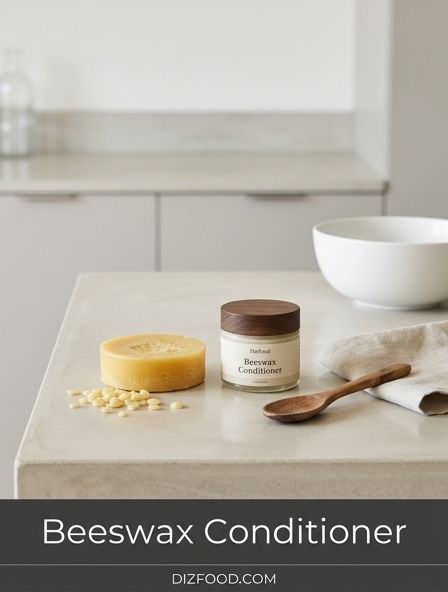
While mineral oil provides the necessary internal hydration, a beeswax conditioner adds a critical secondary layer of protection to the surface of the wood. Beeswax is a natural substance that provides a physical shield, filling in the microscopic nicks, scratches, and pores that develop through daily kitchen use. When combined with mineral oil, the resulting conditioner offers a semi-solid consistency that is easy to spread and buff into a high-luster finish. This blend provides a tactile smoothness that makes wooden handles and boards comfortable to hold and use.
The synergy between the oil and the wax ensures that the hydration provided by the oil is "locked" inside the wood. Without the wax seal, the mineral oil would eventually evaporate or be washed away during cleaning. The beeswax acts as a plug for the pores, ensuring that the wood remains saturated for longer periods. This reduces the frequency of maintenance required to keep the wood in peak condition. Additionally, the natural properties of beeswax provide a mild antibacterial quality, further enhancing the safety of food-contact surfaces in a busy kitchen setting.
Creating a Durable Hydrophobic Barrier
The most significant advantage of using a beeswax-based conditioner is the creation of a hydrophobic barrier. Wood is naturally hygroscopic, meaning it readily absorbs moisture from the environment. In a kitchen, this exposure to water, juices, and humidity can cause wood to swell, warp, and eventually rot. A well-applied wax barrier forces liquids to bead up on the surface rather than soaking in, allowing the user to wipe away spills before they cause damage.
| Feature | Untreated Wood | Wax-Treated Wood |
|---|---|---|
| Water Absorption | High - leads to warping | Low - water beads on surface |
| Stain Resistance | Minimal - dyes soak in | Enhanced - barrier prevents depth |
| Surface Texture | Rough and porous | Smooth and sealed |
This barrier is essential for preventing cross-contamination. When liquids from raw meats or colorful vegetables are prevented from entering the wood grain, the risk of deep-seated bacteria and permanent staining is drastically reduced. The hydrophobic nature of the wax ensures that the wood remains dry and stable, even after repeated washings in the sink.
Essential Steps for Surface Preparation
Proper preparation is the most important part of the conditioning process. Applying conditioner over a dirty or damp surface will trap contaminants and moisture, which can lead to mold growth underneath the wax layer. The wood must be thoroughly cleaned and completely dry before any oil or wax is introduced. For older boards that have become fuzzy or scarred, a light sanding may be required to restore a smooth surface. This opens up the wood grain, allowing the conditioner to penetrate more effectively.
- Clean the surface with a mild dish soap and warm water.
- Remove stubborn stains or odors using a lemon juice and salt scrub.
- Allow the wood to air dry completely for at least 24 hours.
- Lightly sand the surface with 220-grit sandpaper if the grain feels raised.
- Wipe away all dust with a clean, lint-free microfiber cloth.
By following these steps, you ensure that the beeswax conditioner adheres properly to the fibers. A clean surface allows for an even application, preventing blotchiness and ensuring that the protective barrier is consistent across the entire piece of woodwork, from the edges to the center of the board.
Applying Mineral Oil for Deep Hydration
Before the beeswax is applied, the wood must be saturated with mineral oil. This step is often referred to as "seasoning." To apply the oil, pour a generous amount onto the clean, dry wooden surface. Using a clean cloth or a dedicated applicator, spread the oil evenly across the entire surface, including the sides and the underside of the item. It is important not to be stingy during this phase; the goal is to let the wood drink as much oil as it can hold. If the wood absorbs the oil instantly, apply a second or third coat until the surface stays wet for several minutes.
Ideally, the oil should be left to soak into the wood for several hours, or even overnight. This long dwell time allows the oil to reach the deepest fibers of the butcher block or cutting board. Once the wood is fully saturated, use a clean paper towel or cloth to wipe away any excess oil that has not been absorbed. The wood should feel oily but not dripping. This internal hydration prevents the wood from becoming thirsty and drawing in moisture from food or washing, which is the primary cause of cracking and splitting in kitchen woodwork.
Sealing Wood with Beeswax Polish
After the mineral oil has hydrated the internal fibers, the beeswax polish serves as the final seal. This step transforms the wood from a dull, oiled state to a vibrant, protected finish. The polish is typically a thicker paste. Apply a small amount to a clean cloth and rub it into the wood using firm, circular motions. The friction from the rubbing helps to warm the wax slightly, allowing it to flow into the pores and bond with the mineral oil already present in the wood grain.
- Work in small sections to ensure even coverage.
- Apply extra wax to end-grain areas, as they are more porous.
- Let the wax sit for 15 to 20 minutes to harden slightly.
- Buff the surface with a fresh cloth to achieve a soft, satin sheen.
This process fills in the microscopic gaps that oil alone cannot bridge. The result is a smooth, glass-like finish that feels dry to the touch but remains highly resistant to moisture. The wax seal also provides a sacrificial layer; when you cut on the board, the knife marks the wax rather than the wood, preserving the integrity of the timber underneath for a longer period of time.
Maintaining a Food Safe Kitchen Environment
Safety is the primary concern when choosing finishes for kitchen items. Many commercial wood stains and varnishes contain volatile organic compounds (VOCs) or heavy metals that are toxic if ingested. By using a combination of food-grade mineral oil and pure beeswax, you are choosing a solution that is entirely safe for direct contact with food. These ingredients are often used in the pharmaceutical and food industries, ensuring they meet strict purity standards. This is particularly important for families with young children or individuals with chemical sensitivities.
Maintaining the wood with these natural products also contributes to a cleaner workspace. Because the conditioner prevents food particles and liquids from being absorbed, the wood is much easier to sanitize. A simple wipe with a damp cloth and mild soap is usually sufficient for a well-maintained board. Without this protection, the porous nature of wood can harbor bacteria deep within the grain, where standard cleaning cannot reach. Regularly reapplying the conditioner ensures that the "seal" remains intact, keeping your kitchen tools hygienic and safe for every meal prepared on them.
Protecting Woodwork from Moisture Damage
Moisture is the single greatest threat to the longevity of kitchen woodwork. When water enters wood, it causes the fibers to expand. As the wood dries, it contracts. This constant cycle of expansion and contraction leads to "checking," which are small cracks that eventually grow into large splits. In extreme cases, the wood may warp so severely that it no longer sits flat on the countertop, making it dangerous to use for cutting. A beeswax conditioner is the most effective defense against this destructive cycle.
| Hazard | Effect on Wood | Prevention Method |
|---|---|---|
| Standing Water | Rot and mold growth | Wax hydrophobic barrier |
| Humidity Shifts | Warping and bowing | Internal oil saturation |
| Dishwashers | Severe splitting | Hand wash only + conditioning |
By maintaining a thick wax barrier, you effectively waterproof the wood. Even if a board is accidentally left in a damp sink for a short period, the wax prevents the water from penetrating the surface. This protection is especially vital for the end-grain of the wood, which acts like a bundle of straws and can pull moisture deep into the center of a block very quickly if left unsealed.
Long Term Durability of Wax Barriers
The durability of a beeswax finish depends heavily on the frequency of use and the cleaning methods employed. Every time a wooden board is washed with soap, a tiny amount of the protective wax is stripped away. Over time, the surface will begin to look dull or feel "dry," which is a clear indicator that it is time for a reapplication. For a board used daily, a monthly conditioning session is usually sufficient to maintain a permanent barrier. Items used less frequently, such as salad bowls or serving trays, may only need treatment every few months.
The beauty of this maintenance routine is that it is cumulative. Each application of beeswax conditioner builds upon the previous layers, gradually creating a deeper and more resilient finish. Unlike synthetic coatings that flake or peel, wax wears away gracefully and can be spot-repaired at any time. There is no need to strip the old finish; simply clean the surface and apply a new layer. This long-term approach to wood care ensures that high-quality kitchen investments, such as expensive butcher blocks, can be passed down through generations in excellent functional and aesthetic condition.
Restoring Natural Beauty to Kitchen Wood
Beyond the functional benefits, beeswax conditioner significantly enhances the aesthetic appeal of kitchen woodwork. Dry wood looks gray, washed out, and lifeless. When mineral oil and beeswax are applied, they change the way light interacts with the wood fibers, bringing out the natural colors and intricate grain patterns. This "wet look" stays permanent once the wax is buffed, turning a utilitarian kitchen tool into a piece of functional art. The transformation is often dramatic, making old, neglected wood look brand new again.
- Apply the conditioner to see the grain "pop" immediately.
- Buff to a sheen that highlights the wood's natural character.
- Fill in light scratches to create a uniform, smooth appearance.
- Enjoy the rich, warm tones of hydrated wood.
Restoring a piece of wood is a satisfying process that rewards the owner with a tactile and visual improvement. Whether it is a maple cutting board, a walnut bowl, or a cherry rolling pin, the combination of oil and wax provides a professional-grade finish that highlights the unique beauty of each species. This restoration not only protects the wood but also encourages a greater appreciation for the natural materials used throughout the heart of the home.


Comments