

Understanding Coffee Solubility Fundamentals
The science of coffee extraction centers on the solubility of the roasted coffee bean, which is composed of roughly 30% water-soluble material. The remaining 70% consists of insoluble cellulose and plant fibers that provide structure but do not contribute to the liquid beverage's flavor profile. When hot water comes into contact with ground coffee, it acts as a solvent, dissolving various chemical compounds in a specific, predictable sequence. This process begins with the extraction of fruit acids and organic salts, followed by light oils and complex sugars, and concludes with heavier organic compounds and bitter polyphenols.
- Fruit Acids: Provide brightness and immediate acidity.
- Lipids and Oils: Contribute to mouthfeel and aromatic intensity.
- Melanoidins: Produced during roasting, these add color and body.
- Caffeine: Highly soluble, typically extracting early in the process.
Achieving a balanced extraction involves targeting the "sweet spot" where approximately 18% to 22% of the bean's mass is dissolved. Exceeding this range leads to the breakdown of woody fibers, while falling short leaves the most desirable sugars behind in the spent puck.
Impact of Water Temperature on Extraction
Water temperature serves as the primary catalyst for the kinetic energy required to pull flavors from coffee grounds. Higher temperatures increase the molecular motion of the water, allowing it to penetrate the cellular structure of the coffee more aggressively. If the water is too cool, it lacks the energy to dissolve complex sugars, resulting in a brew that tastes thin and sour. Conversely, water that is too hot can over-extract the coffee, pulling out astringent tannins that mask the bean's inherent sweetness.
| Temperature Range | Extraction Effect | Common Application |
|---|---|---|
| 195°F - 200°F | Gentle, highlights acidity | Light roasts, Pour-over |
| 200°F - 205°F | Standard, balanced yield | Medium roasts, Auto-drip |
| Over 205°F | Aggressive, high bitterness | Dark roasts (caution) |
Consistency is paramount; even a fluctuation of a few degrees can significantly alter the chemical composition of the final cup. Thermal stability within the brewing vessel ensures that the rate of extraction remains linear throughout the entire duration of the brew cycle.
Grind Size and Surface Area Dynamics
The physical breakdown of the coffee bean is the most influential variable under the brewer's direct control. Grinding increases the total surface area exposed to water, which dictates the speed at which compounds can be dissolved. A fine grind, resembling powdered sugar, creates a massive surface area and high resistance to water flow, making it ideal for rapid extraction methods like espresso. Coarser grinds, similar to sea salt, offer less surface area and lower resistance, requiring longer contact times to achieve the same level of dissolved solids.
Uniformity in grind size is essential for a balanced profile. If a grinder produces a wide distribution of "fines" (microscopic particles) and "boulders" (large chunks), the fines will over-extract and become bitter before the boulders have even begun to release their sugars. This inconsistency leads to a "muddy" flavor profile where both sour and bitter notes coexist. High-quality burr grinders are designed to minimize this variance, ensuring that every particle contributes equally to the final extraction yield, resulting in clarity and flavor definition.
The Role of Contact Time in Brewing
Contact time refers to the duration that water and coffee grounds interact. This variable must be inversely proportional to the grind size to maintain balance. In immersion brewing, such as a French Press, the water sits with the coffee for several minutes, necessitating a coarse grind to prevent over-extraction. In percolation methods, like a V60 or Chemex, the time is determined by the "drawdown" rate-the speed at which gravity pulls water through the coffee bed. Mastering this timing requires a rhythmic approach to pouring and an understanding of the following stages:
- The Bloom: Saturating grounds to release CO2, usually lasting 30-45 seconds.
- Initial Extraction: The phase where the majority of acids and sugars are dissolved.
- Final Drawdown: The closing phase where the flow rate slows and final balance is achieved.
If the water stays in contact with the grounds for too long, the brew enters the zone of over-extraction, regardless of temperature or ratio. Conversely, if the water passes through too quickly, the result is an under-developed, watery cup that lacks the necessary complexity and body associated with specialty coffee.
Identifying Under and Over Extraction Profiles
Recognizing the sensory markers of extraction levels is the only way to effectively troubleshoot a brew. Under-extraction occurs when the water has not had enough opportunity to pull out the sugars and balancing elements. This manifests as a sharp, salt-like acidity and a thin mouthfeel. The finish is often short and unsatisfying. Over-extraction, on the other hand, is the result of pulling too much from the coffee, specifically the heavy organic matter and bitter plant fibers. This creates a dry, "sandpaper" sensation on the tongue known as astringency.
- Under-Extracted: Sour, salty, metallic, thin body, quick finish.
- Over-Extracted: Bitter, dry, ashy, hollow, lingering unpleasantness.
- Ideally Extracted: Sweet, transparent, vibrant acidity, smooth finish.
The goal of the barista is to navigate between these two extremes. When a cup tastes too sour, one might increase the temperature or fine the grind. If the cup is unpleasantly bitter, coarsening the grind or reducing the brew time will typically move the flavor profile back toward the center of the extraction spectrum.
Water Chemistry and Mineral Composition
Since a cup of coffee is approximately 98% water, the chemical makeup of that water is a critical factor in extraction efficiency. Pure distilled water is actually a poor solvent for coffee because it lacks the minerals necessary to bind with coffee compounds. Specifically, magnesium and calcium ions act as "hooks" that help pull flavorful oils and acids out of the grounds. However, an excess of minerals-particularly bicarbonates-can act as a buffer, neutralizing the pleasant acidity of the coffee and leaving it tasting flat or chalky.
| Mineral Component | Role in Extraction | Ideal Range (ppm) |
|---|---|---|
| Magnesium (Mg2+) | High energy binder for fruit flavors | 10 - 30 |
| Calcium (Ca2+) | Enhances body and creamy notes | 40 - 70 |
| Bicarbonate (Alk) | Buffers acidity and regulates pH | 40 - 50 |
To achieve a truly balanced extraction, many professionals use "remineralized" water, starting with a blank slate via reverse osmosis and adding precise amounts of minerals. This ensures that the water has the exact pulling power required to highlight the coffee's terroir.
Turbulence and Agitation Techniques
Turbulence is the physical movement of water as it passes through or sits with the coffee grounds. This can be caused by the force of the water stream from a kettle, or by manual intervention such as stirring with a spoon. Agitation increases the extraction rate by ensuring that "fresh" water (water not yet saturated with coffee solids) is constantly coming into contact with the grounds. Without any turbulence, a layer of saturated water can surround the coffee particles, creating a barrier that slows down the diffusion process and leads to an uneven brew.
However, excessive agitation can be detrimental. Aggressive stirring can cause the coffee bed to collapse or "clog," leading to an uneven flow and localized over-extraction. The key is controlled turbulence. In pour-over brewing, a circular pouring motion provides enough movement to keep the particles suspended and ensure even wetting. In immersion brewing, a single, gentle stir after the initial pour is often sufficient to break up clumps and guarantee that every grain of coffee is contributing its flavor to the final extraction.
Measuring Total Dissolved Solids
While taste is the ultimate arbiter of quality, professionals use Total Dissolved Solids (TDS) as an objective metric for strength and extraction yield. Measured using a digital refractometer, TDS tells the brewer exactly what percentage of the liquid in the cup is actually coffee. By combining the TDS reading with the weight of the coffee grounds used, one can calculate the Extraction Yield (EY%). This formula allows a barista to see if they are within the internationally recognized "Golden Cup" standard.
- Measure the weight of the final brewed coffee.
- Take a sample and use the refractometer to find the TDS percentage.
- Multiply the brew weight by the TDS to find the mass of dissolved coffee.
- Divide that mass by the original dry coffee weight to get the Extraction Yield.
This quantitative data removes the guesswork from brewing. For example, if a coffee tastes "weak" but the extraction yield is high (21%), the brewer knows to increase the coffee-to-water ratio rather than changing the grind size, which would have pushed the extraction into the bitter range.
The Golden Ratio for Flavor Balance
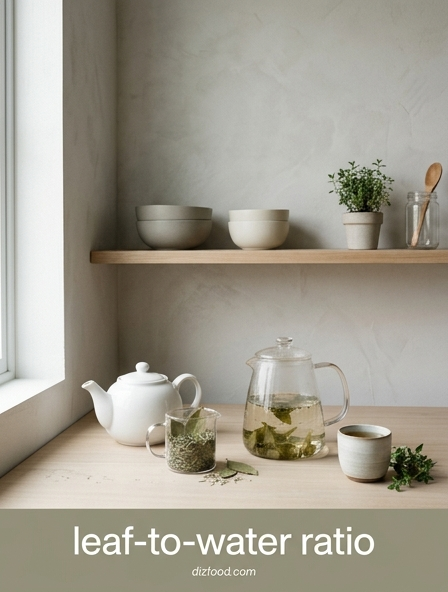
The "Golden Ratio" is a foundational guideline that suggests a starting point for the relationship between coffee and water. Typically, this ratio falls between 1:15 and 1:18 (one gram of coffee for every 15 to 18 grams of water). This range is designed to balance "strength" (TDS) with "extraction yield." A 1:15 ratio will result in a stronger, more concentrated cup with a heavier mouthfeel, while a 1:18 ratio will be more dilute but often showcases more delicate, tea-like floral notes and clarity.
Choosing a ratio depends heavily on the brewing method and the roast profile of the coffee. Darker roasts, which are more soluble and porous, often benefit from a wider ratio (1:17) to prevent them from becoming overwhelming. Denser, light-roasted highland coffees may require a tighter ratio (1:15) to provide enough body to support their high acidity. By keeping the ratio constant while adjusting other variables like grind size, a brewer can systematically isolate the factors that lead to the most delicious result. Consistency in weighing both water and coffee is the only way to ensure the ratio remains accurate across every brew.
Precision Equipment and Calibration Methods
Achieving a balanced extraction consistently requires precision equipment that can be calibrated and monitored. A kitchen scale with 0.1g resolution is the most vital tool, as volume-based measurements (like scoops or fluid ounces) are too inaccurate due to variations in bean density and water aeration. Similarly, a variable-temperature gooseneck kettle allows for specific thermal targets and controlled flow rates, which are essential for repeatable pour-over brewing. Even the choice of filter paper matters, as different thicknesses can alter the flow rate and the amount of oils allowed into the cup.
- Digital Scale: Ensures exact coffee-to-water ratios.
- Burr Grinder: Provides uniform particle distribution.
- Thermometer: Monitors thermal decay during the brew.
- Refractometer: Validates extraction yield through data.
Calibration isn't just for the tools; it is also for the palate. Regular "cupping" or side-by-side tastings of different extraction levels helps calibrate the brewer's senses to identify subtle shifts in flavor. When equipment and technique are both calibrated, the process of extraction moves from a matter of chance to a repeatable culinary science.



Comments