
The Role of Oxygen in Beverage Spoilage
Oxygen is the primary catalyst for degradation in the kitchen, specifically regarding sensitive beverages like wine, juice, and beer. While oxygen is vital for life, its interaction with liquid compounds often leads to irreversible spoilage. When oxygen enters a container, it initiates oxidation-reduction reactions that break down the complex organic molecules responsible for fresh flavors. This process frequently results in the development of acetaldehyde, which imparts a harsh, chemical taste, or acetic acid, which turns a pleasant drink into vinegar.
In addition to flavor shifts, oxygen promotes the growth of aerobic bacteria and wild yeasts. These microorganisms consume the sugars and nutrients within the beverage, producing unwanted byproducts. For beverages containing high pigment levels, such as red wine or grape juice, oxygen causes browning through the oxidation of polyphenols. Utilizing a robust oxygen barrier is the only effective way to prevent these biochemical changes, ensuring that the beverage remains stable and palatable throughout its intended shelf life. Without such protection, even the highest quality ingredients will eventually succumb to oxidative rancidity.
Understanding Oxygen Transmission Rates in Brewing
In the world of brewing, the Oxygen Transmission Rate (OTR) is a critical metric used to determine how much oxygen passes through a specific material over a 24-hour period. This measurement is typically expressed in cubic centimeters per square meter per day (cc/m²/day). Understanding OTR is essential for brewers who package their products in plastic fermenters or kegs, as different polymers offer vastly different levels of protection.
| Material Type | Typical OTR Level | Suitability for Long-Term Storage |
|---|---|---|
| Standard Polyethylene (PE) | High | Poor (Days to Weeks) |
| Polyethylene Terephthalate (PET) | Moderate | Fair (Months) |
| EVOH-Lined Barrier Films | Very Low | Excellent (Years) |
| Glass or Stainless Steel | Zero | Absolute Protection |
A lower OTR is always preferable for finished beer, as even trace amounts of ingress can lead to staling. Commercial brewers often prioritize materials with an OTR close to zero to maintain the "brewery-fresh" quality of their product during distribution and storage.
How Oxygen Barriers Preserve Delicate Hop Aromas
The characteristic aromas of modern craft beers, such as citrus, pine, and tropical fruit, are derived from volatile essential oils found in hops. These compounds, including myrcene, linalool, and humulene, are extremely sensitive to oxidative stress. When oxygen molecules permeate a storage container, they bind with these volatile oils, transforming them into odorless or unpleasant-smelling oxides. This leads to a phenomenon known as "hop fade," where a beer loses its aromatic punch within weeks.
High-performance oxygen barriers serve as a defensive shield for these delicate compounds. By preventing the ingress of O2, these barriers ensure that the hydrophobic hop oils remain intact and suspended in the liquid. This is particularly vital for dry-hopped styles like IPAs, where the aroma is the primary selling point. To maximize aromatic longevity, brewers utilize the following methods:
- Using multi-layer barrier tubing for draft lines.
- Selecting oxygen-scavenging bottle caps.
- Packaging in aluminum cans with internal protective liners.
- Utilizing vacuum-sealed foil bags for raw hop storage.
Preventing Staling and Off Flavors in Homebrew
Homebrewers often face the challenge of "cold side" aeration, which occurs after the boiling process is complete. If a fermenter or storage vessel does not possess an adequate oxygen barrier, the beer will inevitably develop off-flavors that ruin the profile of the brew. The most common byproduct of this oxidation is trans-2-nonenal, a compound that creates a distinct "wet cardboard" or papery taste and aroma. This compound is detectable by the human palate even at incredibly low concentrations.
To prevent these issues, homebrewers must transition away from permeable plastics toward high-barrier solutions. Proper management involves more than just the container; it requires a holistic approach to the kitchen environment. Key steps to prevent staling include:
- Purging all transfer vessels with carbon dioxide before use.
- Using fermentation bungs that allow gas to escape without letting air in.
- Choosing PET fermenters with active oxygen-scavenging additives.
- Limiting the amount of headspace in bottles or kegs.
By maintaining a strict anaerobic environment, homebrewers can extend the peak drinking window of their creations from a few weeks to several months.
Material Science of High Performance Barrier Films
The effectiveness of an oxygen barrier is rooted in its molecular structure. Standard plastics like low-density polyethylene (LDPE) have a relatively "loose" molecular matrix, allowing small oxygen molecules to wiggle through the gaps. In contrast, high-performance barrier films are engineered using complex co-extrusion techniques that layer different polymers to create a tortuous path for gases. The most prominent material used in these films is Ethylene Vinyl Alcohol (EVOH).
EVOH is prized for its exceptional gas barrier properties, which are significantly higher than standard food-grade plastics. However, because EVOH is sensitive to moisture, it is typically sandwiched between layers of polyethylene or polypropylene. This "multi-layer" construction provides a dual benefit: the outer layers provide structural integrity and moisture resistance, while the inner EVOH core acts as a high-density wall against oxygen. In the kitchen, this technology is found in premium vacuum sealer bags and long-life juice cartons, providing a level of protection that single-layer plastics simply cannot match. The resulting material is thin, flexible, yet incredibly resistant to gas permeation.
Impact of Oxidation on Fermented Food Shelf Life
In the realm of kitchen fermentation, such as making sauerkraut, kimchi, or kombucha, oxygen management is the difference between a successful ferment and a moldy failure. Most traditional fermentation processes are anaerobic, meaning they rely on bacteria that thrive in the absence of oxygen. When an oxygen barrier is compromised, aerobic yeasts and molds can take hold on the surface of the food. These organisms not only cause visible spoilage but can also produce mycotoxins that make the food unsafe to consume.
Furthermore, oxygen interaction can alter the texture and color of fermented vegetables. For example, garlic may turn blue or green, and cabbage may soften and lose its crunch due to enzymatic activity triggered by air exposure. To ensure product integrity, fermenters use various tools to maintain an oxygen-free zone:
- Water-lock crocks that allow CO2 to vent while blocking air.
- Glass weights that keep solids submerged below the brine.
- Silicone valves that maintain a one-way gas flow.
- Vacuum-sealed bags for "dry" fermentation methods.
The Chemistry of Oxygen Interaction with Essential Oils
Essential oils found in spices, herbs, and citrus zests are highly volatile and chemically reactive. The process of lipid peroxidation occurs when oxygen interacts with the unsaturated fats and aromatic compounds within these oils. This chemical reaction creates free radicals, which then trigger a chain reaction that breaks down the oil into smaller, foul-smelling molecules. In the kitchen, this is most commonly observed when spices lose their "heat" or when cooking oils develop a rancid, fishy odor.
The presence of light and heat can accelerate this chemical interaction, but oxygen is the fundamental requirement for the process to begin. High-performance barriers, particularly those incorporating metallized layers or thick foils, are essential for protecting these high-value ingredients. By excluding oxygen, the shelf life of spices can be extended from months to years. This preservation is vital for maintaining the medicinal properties and flavor potency of culinary oils, ensuring that the antioxidants they contain are not spent fighting off oxygen before they ever reach the plate.
Comparing Standard Plastics to Advanced Oxygen Barriers
Choosing the right storage material requires an understanding of the vast difference between standard kitchen plastics and advanced barrier technologies. Most consumers assume that all plastic wraps or containers are airtight, but at a microscopic level, many are quite porous to oxygen. Standard plastics like PVC wrap are designed for short-term use and provide very little protection against gas ingress over time.
Advanced barriers, however, are specifically designed for long-term preservation. The following comparison highlights the differences in utility:
- Standard PE Containers: Best for leftovers consumed within 24-48 hours; high oxygen permeability.
- Nylon-Reinforced Bags: Used in vacuum sealing; provides a significantly better barrier than PE alone.
- Metallized Mylar: Offers near-zero OTR; ideal for long-term storage of dry goods and grains.
- EVOH Co-extrusions: Found in modern flexible packaging; provides a transparent yet highly effective oxygen shield.
By selecting a material based on its oxygen barrier properties rather than just its shape or size, cooks can significantly reduce food waste and maintain ingredient quality for much longer durations.
Protecting Volatile Compounds in Culinary Storage
Culinary excellence often hinges on the preservation of volatile organic compounds (VOCs). These are the molecules responsible for the complex scents of a truffle, the zest of a lemon, or the deep aroma of roasted coffee. Because these compounds have a high vapor pressure, they tend to escape into the air or react with oxygen as soon as they are exposed. Superior oxygen barriers are necessary to create a "closed system" that keeps these volatiles trapped within the food matrix.
In professional kitchens, techniques such as sous-vide cooking and nitrogen flushing are used in tandem with barrier technology to lock in these flavors. When food is vacuum-sealed in a high-barrier bag, the lack of oxygen prevents the VOCs from oxidizing and changing their scent profile. This is why coffee beans stored in a valve-sealed barrier bag retain their character far longer than those in a standard tin. The barrier serves a dual purpose: it keeps the life-giving oxygen out and keeps the flavor-giving volatiles in, ensuring a sensory experience that is as close to the original source as possible.
Maintaining Product Integrity Through Superior Sealing Technology
Even the most advanced oxygen barrier material is useless if the seal is compromised. Product integrity in the kitchen depends heavily on the quality of the "closure" or "seal." Sealing technology has evolved from simple friction-fit lids to sophisticated induction seals and thermal bonds. These methods ensure that the interface between the container and the lid is as impermeable as the walls of the container itself.
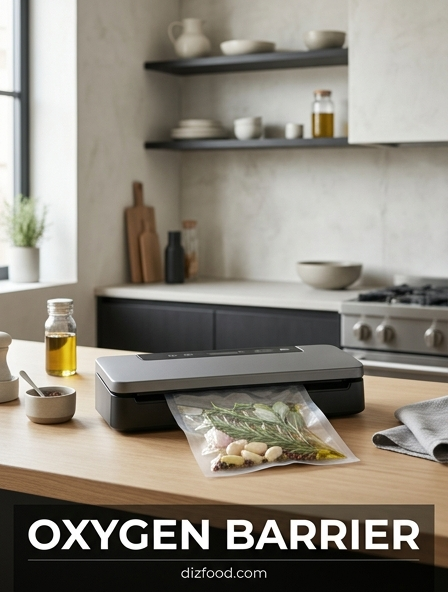
In home food preservation, the vacuum sealer is the most common tool for creating a high-integrity seal. It uses heat to fuse two layers of barrier film together, creating a permanent bond. However, users must be aware of factors that can weaken these seals:
- Moisture or fat contamination in the seal area.
- Insufficient heat during the sealing cycle.
- Mechanical stress or "wrinkles" in the film.
- Degradation of silicone gaskets in the sealing machine.
By combining superior barrier materials with precise sealing techniques, it is possible to create a micro-environment that is completely isolated from the outside atmosphere, guaranteeing the freshness and safety of the contents for extended periods.


Comments