
Choosing between a glass carboy and a plastic fermenter is a pivotal decision for any homebrewer aiming for professional-grade purity. While lightweight plastic buckets offer unbeatable convenience and affordability for beginners, seasoned zymurgists often swear by the impermeable, non-porous nature of glass to prevent oxidation and chemical leaching. Glass carboys provide a crystal-clear view of the fermentation process and are virtually scratch-resistant, ensuring that no hidden bacteria compromise your batch, whereas modern food-grade plastics provide a durable, shatterproof alternative that is easier to handle during heavy brew days. Ultimately, the quest for the purest brew hinges on balancing superior oxygen barrier properties against practical safety and ease of use.
| Feature | Glass Carboy | Plastic Fermenter (PET/HDPE) |
|---|---|---|
| Oxygen Barrier | 100% Impermeable; zero oxidation risk. | Slightly permeable; risk increases over time. |
| Sanitation | Non-porous; highly resistant to scratches. | Prone to micro-scratches that harbor bacteria. |
| Safety/Durability | Fragile; heavy; risk of dangerous shattering. | Shatterproof; lightweight; impact resistant. |
| Chemical Inertness | Fully inert; no flavor or BPA leaching. | Food-grade, but can absorb odors/flavors. |
| Visibility | Excellent clarity for monitoring trub/yeast. | Varies from clear (PET) to opaque (HDPE). |
| Best Application | Long-term aging and secondary fermentation. | Fast primary fermentation and high-turnover batches. |
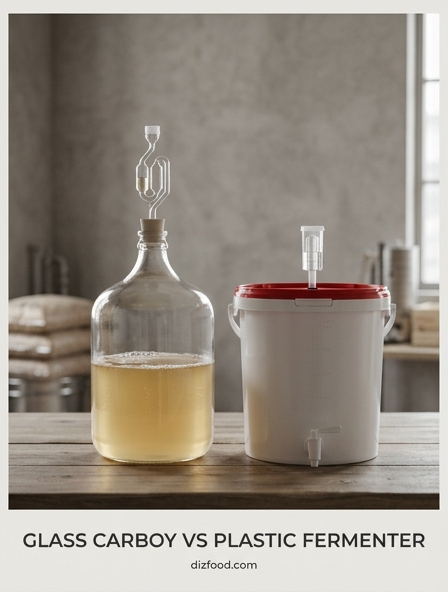
Glass Carboy vs Plastic Fermenter Choosing the Right Vessel
Selecting the ideal fermentation vessel is one of the most critical decisions for a homebrewer, as it directly impacts the quality, safety, and longevity of the beverage. The two primary contenders in this space are glass carboys and plastic fermenters, the latter of which includes both high-density polyethylene (HDPE) buckets and polyethylene terephthalate (PET) carboys. Each material offers a distinct set of characteristics that cater to different brewing styles, experience levels, and storage requirements. While glass has been the traditional choice for decades due to its impermeable nature, plastic has surged in popularity because of its affordability and ease of use.
When making a choice, brewers must consider several factors that influence the fermentation environment:
- Clarity: Glass and PET plastic allow for visual monitoring of yeast activity and sediment layers, whereas opaque HDPE buckets require opening the lid to inspect the brew.
- Airtight Integrity: The seal of the vessel determines how well the contents are protected from environmental contaminants.
- Versatility: Some vessels are better suited for primary fermentation with high krausen, while others excel at long-term aging.
Ultimately, the "right" vessel depends on whether you prioritize the inertness of glass or the lightweight convenience of plastic. Beginners often start with plastic for its low entry cost, while those focusing on delicate wines or sour ales frequently lean toward glass to ensure total protection against oxygen ingress over months of maturation.
Oxygen Permeability and Oxidation Risks in Brewing
Oxygen is the enemy of finished beer and wine, leading to stale, cardboard-like flavors and color degradation. The material of your fermentation vessel plays a significant role in how much oxygen reaches your brew over time. Glass is completely non-porous and impermeable to gases, making it the gold standard for preventing oxidation. If the stopper and airlock are fitted correctly, a glass carboy provides a near-perfect barrier against the outside atmosphere.
In contrast, all plastic vessels exhibit some degree of oxygen permeability. While modern PET plastic is engineered to be highly resistant to gas transmission, it is not absolute. HDPE plastic buckets are the most permeable, often losing their seal integrity over time as the soft plastic of the lid or rim warps. This makes plastic less ideal for aging products for more than a few weeks.
| Material | Permeability Level | Best Use Case |
|---|---|---|
| Glass | Zero | Long-term aging (6+ months) |
| PET Plastic | Very Low | Standard primary and short secondary |
| HDPE Plastic | Moderate | Rapid primary fermentation only |
For brewers who specialize in hoppy IPAs or delicate lagers, even a small amount of oxygen can ruin a batch. Therefore, glass is often preferred for these styles, or for any brew that will sit in a secondary fermenter for an extended period.
Durability and Longevity of Glass vs Plastic Fermenters
The lifespan of a fermentation vessel is a key consideration for the budget-conscious brewer. Glass carboys are theoretically permanent tools. If handled with extreme care, a glass carboy can last for decades without degrading, leaching, or losing its shape. It does not wear out from repeated use or exposure to acidic brewing environments, and its surface remains smooth and resistant to the deep scratches that can harbor bacteria.
Plastic fermenters, however, have a finite lifespan. HDPE buckets and PET carboys are relatively soft. Over time, the internal surfaces can develop micro-scratches from stirring or cleaning brushes. These scratches are problematic because they provide a haven for wild yeast and spoilage bacteria that sanitizers cannot easily reach. Furthermore, plastic can become brittle or stained over years of use. Most professional advice suggests replacing plastic buckets every 12 to 24 months to ensure batch consistency and hygiene. While glass wins in terms of material longevity, its extreme fragility means a single accidental impact can end its service life instantly, whereas a plastic vessel can survive being dropped on a concrete floor without issue.
Safety and Handling Comparison for Homebrewers
Safety is the area where plastic fermenters have a clear advantage. A full 5-gallon glass carboy can weigh over 50 pounds and becomes extremely slippery when wet with star-san or water. Because glass is brittle, it can fail catastrophically if bumped against a hard surface or subjected to thermal shock. When glass carboys break, they tend to shatter into large, razor-sharp shards that can cause severe injury. Many veteran brewers insist on using carboy crates or nylon harnesses to move glass safely.
Plastic vessels are significantly safer to handle for several reasons:
- Impact Resistance: Plastic will bounce or dent rather than shatter if dropped.
- Weight: An empty plastic carboy weighs a fraction of its glass counterpart, reducing strain on the back during cleaning.
- Integrated Handles: Many plastic buckets come with built-in handles, making them much easier to carry from the brewing area to the fermentation chamber.
- Thermal Stability: Plastic is less likely to crack when exposed to sudden temperature changes, such as during a hot PBW soak.
For brewers with children, pets, or those who lack a dedicated, stable brewing space, the safety profile of plastic often outweighs the technical benefits of glass.
Cleaning and Sanitization Challenges of Different Materials
Achieving clinical levels of cleanliness is the hallmark of a successful brewer. Glass carboys are generally easier to sanitize because they are non-porous and resistant to nearly all cleaning chemicals. You can use heavy-duty alkaline cleaners like PBW or acidic rinses without fear of damaging the material. Because the surface is so hard, you can use carboy brushes vigorously to remove "krausen rings" (dried yeast and hop residue) without leaving scratches.
Cleaning plastic requires a much more delicate touch. To maintain the integrity of a plastic fermenter, brewers should avoid abrasive sponges or stiff-bristled brushes. Instead, a long soak in a cleaning solution is often required to chemically dissolve organic matter. If a plastic vessel does get a deep scratch, it is often recommended to retire it from fermentation and demote it to a grain storage bin.
- Rinse the vessel with warm water immediately after transferring the beer to prevent residue from hardening.
- Fill with a non-abrasive cleaner like PBW or OxyClean Free.
- Let soak for 12-24 hours to ensure all proteins are dissolved.
- Sanitize with a no-rinse sanitizer like Star-San just before the next use.
While glass is more resilient to scrubbing, its narrow neck makes it difficult to reach all internal surfaces without specialized tools, whereas wide-mouth plastic buckets allow for easy hand-cleaning of the entire interior.
Chemical Leaching and Flavor Integrity in Fermentation
Flavor integrity is the ultimate goal in the kitchen and the brewery. Glass is chemically inert, meaning it will not react with the acidic environment of fermenting wort or must. It does not absorb odors from previous batches, allowing a brewer to ferment a pungent fruit cider one week and a delicate pilsner the next without any flavor carryover. This makes glass the preferred medium for those who demand the purest expression of their ingredients.
Plastic, being a petroleum-based product, carries a slight risk of chemical leaching, especially if the plastic is not BPA-free or food-grade. High-quality HDPE and PET are generally safe, but they can absorb aromas over time. For instance, if you ferment a beer with a heavy addition of peppermint or peppers in a plastic bucket, that aroma may linger even after thorough cleaning, potentially tainting future batches. Furthermore, some users report a subtle "plastic" taste if the fermenter is exposed to high temperatures or if the plastic is of lower quality. For short-term primary fermentation, these issues are usually negligible, but for connoisseurs focusing on long-term flavor stability, glass remains the superior choice for maintaining a neutral environment.
Weight and Portability Factors for Brewing Containers
The physical demands of homebrewing are often underestimated. A standard 6-gallon batch of beer results in a heavy, awkward load that must be moved multiple times. The material of the vessel significantly impacts the total weight and the ease of transport. Glass is inherently dense; a standard 6-gallon glass carboy weighs roughly 12 to 15 pounds when empty. Once filled with 50 pounds of liquid, the total weight exceeds 60 pounds, often requiring two people or specialized equipment to move safely.
| Vessel Type | Empty Weight (Approx) | Full Weight (5 Gallons) | Portability Rating |
|---|---|---|---|
| Glass Carboy | 12 - 16 lbs | 54 - 58 lbs | Low |
| PET Carboy | 1.5 - 2 lbs | 43 - 44 lbs | High |
| HDPE Bucket | 2 - 3 lbs | 44 - 45 lbs | Very High |
Plastic fermenters are much more portable. PET carboys are incredibly light, and HDPE buckets usually feature sturdy metal or plastic bale handles that allow for one-handed carrying. This portability is especially important for brewers who must move their fermenters into basements, closets, or temperature-controlled refrigerators. Reduced weight also makes the cleaning process easier, as flipping a plastic vessel over in a sink to drain is much less taxing than doing the same with a heavy glass carboy.
Cost Analysis of Glass Carboys and Plastic Buckets
When analyzing the cost of brewing equipment, one must look at both the initial purchase price and the long-term value. Plastic buckets are the most economical entry point. A food-grade 6.5-gallon fermenting bucket with a lid usually costs between $15 and $25. This low barrier to entry allows beginners to start multiple batches simultaneously without a massive investment. PET carboys are a middle-ground option, typically ranging from $30 to $50.
Glass carboys are the most expensive option, often retailing between $50 and $80 depending on the size and source. However, the cost analysis changes when considering the replacement cycle. Because plastic buckets should be replaced every year or two due to scratching and odor absorption, the cumulative cost over a decade can exceed the price of a single glass carboy. If a brewer is disciplined and careful, the glass carboy is a one-time purchase that provides a lower "cost per batch" over twenty years. Conversely, if a glass carboy breaks, the cost includes not only the replacement vessel but also the loss of the ingredients and the potential medical costs of an injury. Most hobbyists find that plastic is better for their wallet in the short term, while glass is a long-term investment for the dedicated enthusiast.
Suitability for Long Term Aging and Secondary Fermentation
Not all fermentations are created equal. High-gravity beers like Barleywines, Imperial Stouts, and most wines require months of aging to mellow and develop complex flavors. During this "bulk aging" phase, the primary goal is to protect the liquid from oxygen. Glass carboys are the undisputed champions for this task. Their lack of permeability ensures that the beverage remains stable for six months, a year, or even longer. Furthermore, the narrow neck of a carboy minimizes the surface area of the liquid exposed to the small amount of air trapped in the headspace.
Plastic buckets are generally unsuitable for long-term aging because the large lid seal is rarely 100% airtight, and the plastic itself allows oxygen to migrate through the walls over time. PET carboys are a better plastic alternative for aging than buckets, but they still fall short of glass for durations exceeding six months.
- Primary Fermentation: Plastic buckets are excellent due to their headspace and easy access.
- Short Secondary: PET carboys are suitable for 2-4 weeks of clearing.
- Bulk Aging: Glass carboys are essential for periods lasting 3 to 12 months.
For those who brew "big" beers or traditional wines, having at least one glass carboy in the inventory is highly beneficial for the maturation phase.
Final Verdict on Selecting Your Best Fermentation Vessel
The choice between a glass carboy and a plastic fermenter ultimately hinges on your brewing priorities and your physical environment. If you are a beginner on a budget or a brewer who values safety and ease of movement above all else, plastic is the superior choice. Modern PET carboys offer a fantastic middle ground, providing the clarity and oxygen resistance of glass with the safety and lightweight benefits of plastic. For most standard ales that are fermented and kegged within two to three weeks, plastic is more than sufficient and significantly more convenient.
On the other hand, if you are a purist who plans on aging meads, wines, or sour beers for extended periods, glass is an indispensable tool. Its total impermeability and inert surface ensure that your hard work isn't ruined by oxidation or chemical leaching. Many experienced brewers eventually adopt a hybrid approach: they use plastic buckets for the vigorous primary fermentation phase where ease of cleaning is paramount, and then rack the liquid into glass carboys for secondary aging and clarification. By assessing your specific needs-whether it is the durability of glass or the portability of plastic-you can select the vessel that best ensures the success of your kitchen brewery.




Comments