
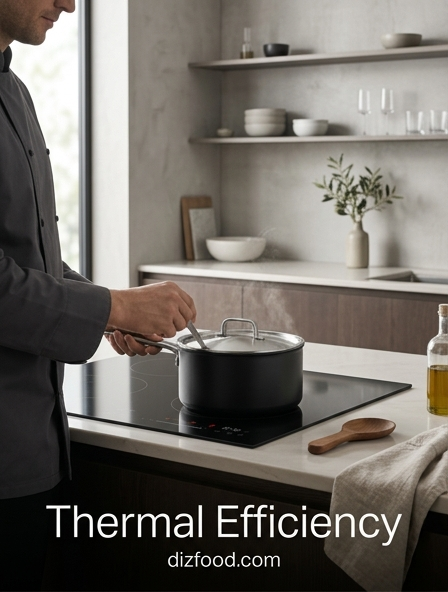
Selecting High-Conductivity Cookware Materials
Selecting the right material for cookware is the foundation of thermal efficiency in any kitchen environment. Materials with high thermal conductivity, such as copper and aluminum, allow for rapid energy transfer from the heat source to the food. Copper is the most efficient, offering a thermal conductivity of roughly 401 W/(m·K), which allows it to heat up almost instantaneously. Aluminum follows with a conductivity of 237 W/(m·K), making it a popular and cost-effective alternative for even heat distribution. Conversely, stainless steel and cast iron possess much lower conductivity, often leading to uneven heating unless they are engineered with conductive cores.
To maximize efficiency, professional kitchens frequently utilize multi-clad cookware, which layers stainless steel over an aluminum or copper core. This design ensures that heat is drawn away from the burner and spread across the entire cooking surface quickly. By choosing materials that respond rapidly to temperature changes, cooks can reduce the total energy consumed during the preheating phase and maintain precise control over the cooking process, ultimately minimizing thermal waste and preventing hot spots.
The Impact of Lids on Thermal Retention
The application of a lid during the heating process significantly alters the thermal dynamics of a vessel. When water or food is heated in an open pot, a substantial amount of energy is lost through the latent heat of vaporization. As steam escapes, it carries away the most energetic molecules, requiring the burner to work harder to maintain the temperature. By placing a lid on the vessel, a cook creates a pressurized environment that traps steam and reflects radiant heat back toward the contents.
- Reduces boiling time by up to 30 percent.
- Maintains consistent internal temperatures for braising.
- Prevents moisture loss, preserving food texture and nutrients.
- Minimizes ambient heat gain in the kitchen workspace.
Utilizing glass lids can further enhance efficiency by allowing the cook to monitor progress without lifting the cover and releasing trapped thermal energy. This simple habit is one of the most cost-effective strategies for energy conservation in both domestic and commercial settings, as it drastically lowers the energy input needed to sustain a simmer.
Matching Burner Size to Pot Diameter
Efficiency in stovetop cooking is heavily dependent on the physical alignment between the heat source and the cookware. When a small pot is placed on a large burner, a significant percentage of the generated heat escapes around the sides of the vessel. This wasted energy heats the surrounding air rather than the food, increasing the kitchen's ambient temperature and potentially damaging the pot's handles. Conversely, using a large pot on a small burner leads to poor heat distribution, as the periphery of the pot remains cool while the center risks scorching.
| Condition | Thermal Impact |
|---|---|
| Oversized Burner | High convective loss to air |
| Undersized Burner | Uneven heating and longer duration |
| Matched Diameter | Maximum energy absorption |
To optimize thermal transfer, the diameter of the cookware should match the diameter of the burner or induction coil within a half-inch margin. This ensures that the majority of radiant and conductive energy is absorbed directly by the base of the pan, reducing cooking times and total energy expenditure.
Efficiency Gains from Induction Cooking Technology
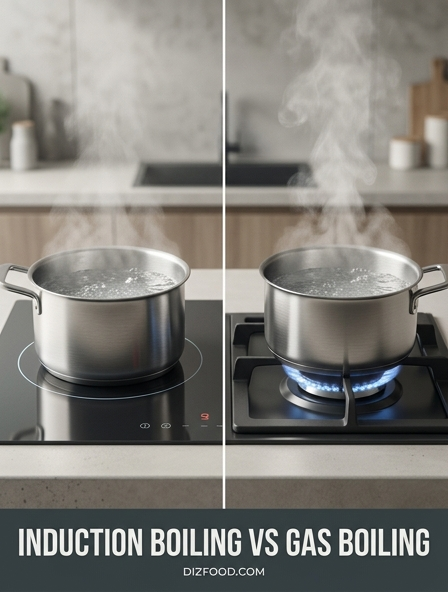
Induction technology represents a paradigm shift in kitchen thermal efficiency by utilizing electromagnetic fields to heat the cookware directly. Unlike traditional gas or electric radiant ranges, which must first heat a burner or the air before transferring energy to a pot, induction stoves bypass the intermediate steps. This results in a thermal efficiency rating of approximately 85% to 90%, compared to roughly 70% for standard electric and 40% for gas. Because the cooktop surface itself does not get hot, very little energy is lost to the environment.
- Direct energy transfer via magnetic induction.
- Instantaneous response to temperature adjustments.
- Automatic shut-off when cookware is removed.
- Lower cooling costs for the kitchen due to less waste heat.
The precision of induction cooking also prevents overshooting target temperatures, which conserves energy during delicate tasks like tempering chocolate. While it requires compatible ferromagnetic cookware, the long-term energy savings and speed make it the most efficient cooking method currently available for modern residential kitchens.
Reducing Water Volume for Faster Results
One of the most common oversights in kitchen efficiency is the use of excessive water for boiling or steaming tasks. The specific heat capacity of water is remarkably high, meaning it requires a significant amount of energy to raise the temperature of every additional liter. For example, boiling two liters of water takes nearly twice as much energy and time as boiling one liter. By reducing the volume of water to the minimum necessary to cover the food, cooks can reach the desired temperature much faster.
This practice is particularly effective for cooking pasta, vegetables, or eggs. Modern techniques, such as the "cold water start" for pasta in a shallow pan, demonstrate that high-quality results can be achieved with a fraction of the traditional water volume. Not only does this save energy at the stove, but it also reduces the energy required for municipal water treatment and heating. Furthermore, using less water helps retain water-soluble vitamins and minerals within the food, providing nutritional benefits alongside significant thermal efficiency gains.
Maintaining Heating Elements and Surfaces
The cleanliness and physical condition of heating elements and cooktop surfaces are critical factors in thermal performance. On electric radiant stoves, blackened or burnt-on food residues act as insulators, preventing efficient heat transfer from the coil to the pan. Similarly, for gas ranges, clogged burner ports can result in incomplete combustion, evidenced by a yellow flame instead of a sharp blue one. This inefficiency not only wastes fuel but also produces more carbon monoxide.
- Clean reflectors under electric coils to bounce heat upward.
- Scrub glass-top stoves to ensure flush contact with cookware.
- Clear gas orifices to maintain optimal oxygen-to-fuel ratios.
- Remove oxidation from copper or aluminum pan bottoms.
Regular maintenance ensures that the energy consumed by the appliance is converted into heat and directed into the cookware without obstruction. A well-maintained kitchen environment can see an efficiency improvement of up to 10% compared to one where appliances are neglected, as the heat flow remains unimpeded, predictable, and focused on the vessel.
Minimizing Convective Heat Loss During Boiling
Convective heat loss occurs when air currents move across the surface of a hot vessel, stripping away heat through the movement of gas. In a kitchen, this is often exacerbated by strong ventilation hoods, open windows, or nearby fans. While ventilation is necessary for air quality, excessive airflow directly over the stove can pull heat away from the burners and the sides of pots, significantly increasing the time required to reach a boil. To minimize this loss, cooks should adjust ventilation to the minimum effective level.
Using tall, narrow pots for boiling liquids can also help, as they minimize the surface area of the liquid exposed to the air relative to their volume. This structural choice reduces the opportunity for convection to carry heat away from the water's surface. Additionally, maintaining a steady, low boil rather than a vigorous, rolling boil conserves energy, as the temperature of boiling water remains constant regardless of the intensity of the heat source once the phase change has begun, thus preventing unnecessary fuel consumption.
The Role of Surface Area in Evaporation
Surface area plays a dual role in thermal efficiency, primarily influencing the rate of evaporation and heat dissipation. A vessel with a large surface area, such as a wide skillet or a shallow sauté pan, allows more liquid molecules to escape into the air simultaneously. While this is advantageous for reducing sauces or searing meats, it is highly inefficient for tasks like boiling water. The large surface area increases the interface between the hot liquid and the cooler atmosphere, leading to rapid cooling.
| Vessel Type | Surface Area | Primary Efficiency Impact |
|---|---|---|
| Stock Pot | Low | High heat retention; low evaporation |
| Sauté Pan | High | Rapid reduction; high heat loss |
| Dutch Oven | Medium | Balanced for long-term thermal mass |
Choosing a pot with a smaller diameter for liquid-heavy tasks ensures that more thermal energy stays within the vessel. By matching the surface area to the specific culinary goal, a cook can prevent unnecessary energy consumption and ensure that heat is used to cook food rather than warm the surrounding room environment.
Preheating Strategies for Energy Conservation
Preheating is often necessary for achieving the correct texture in baked goods, but it is frequently done inefficiently. Many cooks preheat ovens or pans for far longer than required, leading to substantial energy waste. Modern ovens often signal when they reach the target temperature, but they continue to draw high levels of power to stabilize the thermal mass of the interior walls. To maximize efficiency, cooks should coordinate their preparation time so that the food is ready to enter the appliance immediately.
- Avoid opening the oven door unnecessarily to prevent heat drops.
- Use staggered preheating for pans to avoid overheating the metal.
- Utilize residual heat by turning off the appliance early.
- Preheat only the necessary components, such as a pizza stone.
In professional settings, using infrared thermometers to verify surface temperatures can prevent the common habit of leaving burners on "high" indefinitely. This ensures that energy is only used when the cooking surface is actually ready for use, rather than letting heat dissipate into the kitchen for extended periods.
Optimizing Cookware Bottom Thickness and Flatness
The physical geometry of a pan's bottom is a primary determinant of conductive efficiency, especially on electric and induction cooktops. A perfectly flat base ensures maximum surface contact with the heating element, allowing heat to flow directly through the metal via conduction. If a pan is warped or has a concave bottom, air gaps are created. Since air is a poor conductor of heat, these gaps act as insulators, forcing the burner to run hotter and longer to achieve the same internal temperature.
The thickness of the base also matters; a thick, heavy base provides greater thermal mass, which helps maintain a steady temperature even when cold food is added. This prevents the "temperature dip" that occurs with thin pans, which then require a surge of energy to recover. While thin pans heat up faster, they often lead to scorching and inefficient energy use during longer cooking cycles. Investing in high-quality cookware with a heavy, machined-flat bottom ensures that every watt of energy provided by the stove is effectively utilized, leading to consistent results and lower costs.

Comments