
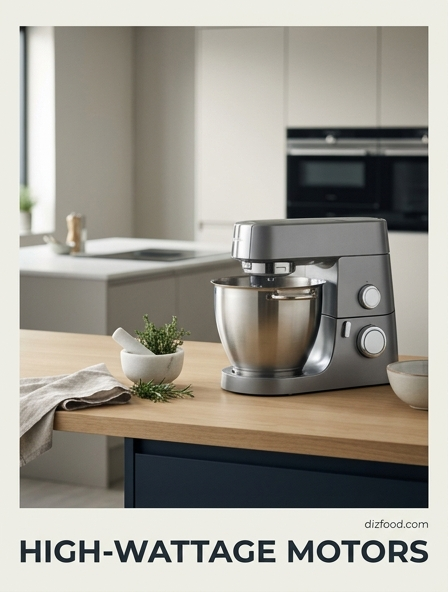
Motor Wattage and Blending Power Explained
In the realm of kitchen appliances, motor wattage serves as the primary indicator of a machine's potential electrical consumption and mechanical output. High-wattage motors, typically ranging from 1,000 to 1,800 watts, are engineered to handle significant electrical loads without faltering under resistance. This measurement reflects the power the motor draws from the outlet, which is then converted into the kinetic energy required to spin blades through dense mixtures. While wattage alone does not determine efficiency, it provides the necessary headroom for the appliance to maintain high speeds when encountering thick ingredients.
- High-wattage motors facilitate consistent blade RPMs.
- They allow for longer run times during demanding culinary tasks.
- Greater wattage often correlates with industrial-grade internal components.
- These systems are designed to overcome the initial inertia of heavy loads.
Ultimately, a higher wattage rating ensures that the blender has the "muscle" required for professional-grade food preparation. By providing a robust energy reserve, these motors allow home chefs to achieve results previously reserved for commercial kitchens, ensuring that the device remains a versatile tool for various recipes.
The Impact of Torque on Ingredient Breakdown
While wattage represents raw power, torque is the rotational force that allows a kitchen motor to overcome physical resistance. In high-wattage systems, the relationship between torque and ingredient breakdown is critical, especially when dealing with viscous substances like nut butters or thick doughs. When the blades encounter a dense mass, a low-torque motor will slow down or stall, whereas a high-torque, high-wattage motor maintains its momentum, effectively shearing through the material. This force is what physically ruptures the cell walls of fibrous vegetables and hard grains, ensuring that the physical structure of the food is completely transformed.
The synergy between high wattage and optimized gear ratios results in a machine that does not just spin fast, but spins with authority. This ensures that even at lower speeds, the blender can provide the crushing force necessary for heavy-duty processing. By focusing on torque, manufacturers create appliances that can pulverize the toughest skins, seeds, and stalks, unlocking nutrients and flavors that are often missed by weaker, less capable consumer-grade units.
Achieving Silky Smooth Textures with High Power
The hallmark of a high-performance blender is its ability to produce textures that are entirely void of grit or lumps. This level of refinement is directly attributable to the high-wattage motor's ability to maintain extreme blade speeds, often exceeding 20,000 RPM. At these velocities, the blades act more like hammers, pulverizing ingredients at a microscopic level. This process is essential for creating professional-quality emulsions, coulis, and green smoothies where a velvety mouthfeel is desired.
- The high-speed impact breaks down insoluble fiber into tiny particles.
- Consistent power prevents the stratification of liquids and solids.
- Rapid circulation ensures every particle passes through the blade path multiple times.
- Increased friction from high-speed blades can even homogenize fats and liquids.
Achieving this level of smoothness requires a motor that does not drop in frequency when the container is full. High-wattage systems provide the stability needed to ensure that the final product is consistently aerated and refined, resulting in a culinary output that rivals the sophisticated textures found in fine dining establishments.
How Wattage Prevents Blending Motor Burnout
Motor burnout is a common failure in kitchen appliances, typically occurring when a motor is forced to work beyond its thermal or mechanical limits. High-wattage motors are inherently more resilient to this phenomenon because they operate well within their capacity even during strenuous tasks. When a low-wattage motor struggles with a thick mixture, it draws excessive current, leading to rapid heat buildup in the copper windings. In contrast, a high-wattage motor possesses the electrical "overhead" to process the same load without reaching critical temperature thresholds.
Furthermore, these powerful motors are often equipped with advanced cooling systems and thermal sensors. Because they can complete tough tasks faster, the total time the motor is under strain is significantly reduced. This efficiency not only protects the internal circuitry but also extends the overall lifespan of the appliance. By investing in higher wattage, users are effectively purchasing a safety margin that ensures the motor remains cool and functional, even when tasked with the most demanding daily kitchen chores, thereby preventing the premature failure of the drive system.
Processing Frozen Ingredients and Tough Solids
Handling frozen fruit, ice cubes, and hard nuts requires a motor that can deliver immediate, explosive power. High-wattage kitchen systems are uniquely qualified for this because they can sustain the necessary force to crack and crush solids without the blades becoming lodged. When ice is introduced to a blending carafe, it creates a massive amount of drag; a high-wattage motor compensates for this resistance instantaneously, maintaining the blade's "bite."
| Ingredient Type | Wattage Requirement | Outcome |
|---|---|---|
| Crushed Ice | 1000W - 1200W | Snow-like consistency |
| Frozen Berries | 1200W - 1400W | Smooth sorbet texture |
| Hard Nuts | 1500W+ | Creamy, fluid butter |
The ability to process these tough solids is not just about speed but about the motor's ability to handle the "shock" of impact. High-wattage systems use reinforced drive sockets and heavy-duty motor mounts to absorb the vibrations and stresses associated with breaking down frozen or dehydrated foods, ensuring a smooth and efficient operation every time.
The Role of Speed in Professional Performance
In a professional kitchen setting, speed translates to efficiency and specific culinary results. High-wattage motors allow for a wider range of speeds, from a slow stir to a high-velocity pulverization. This range is vital for tasks that require delicate handling, such as folding in ingredients, as well as tasks that require extreme friction. For instance, high-speed blending can generate enough kinetic energy to heat a soup from room temperature to steaming in just a few minutes. This is only possible when a motor is powerful enough to maintain high RPMs for several minutes without overheating.
Professional performance also relies on the speed of recovery. When new ingredients are added to a running blender, a high-wattage motor returns to its set speed almost instantly. This responsiveness allows chefs to maintain precise control over the texture and temperature of their preparations. The high-speed capability also ensures that aerated mixtures, like foams and mousses, achieve the desired volume and stability, making high-wattage motors an indispensable tool for modern gastronomic techniques.
Heat Management for Heavy Duty Blending Tasks
One of the primary challenges of high-wattage motors is the generation of heat. However, these systems are specifically engineered with sophisticated thermal management strategies to ensure long-term reliability. Unlike smaller motors that rely on passive cooling, high-capacity kitchen motors often feature large, dedicated cooling fans and optimized airflow paths within the housing. This allows the motor to expel hot air efficiently, even when the appliance is running at maximum power for extended periods.
- Large internal fans increase cubic feet per minute (CFM) of airflow.
- Thermal cut-off switches prevent damage by shutting down the motor if it exceeds safe temperatures.
- All-metal motor housings can act as heat sinks to dissipate warmth.
- Advanced insulation protects the sensitive electronics from heat soak.
Effective heat management ensures that the motor's performance does not degrade during back-to-back blending cycles. This is particularly important in commercial environments or for home users who engage in meal prepping, where the machine may be required to run multiple times in a single session without a cooling-off period.
Vortex Optimization Through Increased Motor Force
The effectiveness of a blender is largely determined by the quality of the vortex it creates. A vortex is the whirlpool that pulls ingredients down from the top of the carafe into the blades. High-wattage motors provide the force necessary to create a deep, powerful vortex that ensures every piece of food is processed. Without sufficient power, the ingredients may simply spin around the edges of the jar, a phenomenon known as "cavitation," where the blades spin in an air pocket and nothing gets blended.
By providing consistent and high-speed rotation, a powerful motor maintains the suction required to keep the ingredients in constant contact with the blade assembly. This is especially important for thick recipes like hummus or frozen desserts, where the mixture has a tendency to stick to the walls. The increased motor force overcomes the internal friction of the food, forcing it back into the center of the container. This results in a more uniform blend and eliminates the need for manual intervention with a spatula or tamper in many cases.
Durability Benefits of High Capacity Blenders
Investing in a high-wattage blender is often an investment in long-term durability. These machines are built to withstand the rigors of high-torque and high-speed operation, which necessitates the use of premium materials. Manufacturers typically pair high-wattage motors with heavy-duty components such as stainless steel blade assemblies, ball-bearing motor designs, and metal-to-metal drive couplings. These parts are significantly more resistant to wear and tear than the plastic components found in lower-powered alternatives.
The mechanical robustness of a high-capacity system means that it can handle daily use for years without a significant loss in performance. Because the motor is not struggling at its absolute limit during normal operation, the internal brushes and bearings experience less stress. This "over-engineered" approach results in a product that provides consistent results throughout its lifespan. For the consumer, this means fewer replacements and a lower cost of ownership over time, as the machine is capable of performing thousands of cycles while maintaining its original power and efficiency.
Precision Control in High Wattage Kitchen Systems
Despite their immense power, high-wattage kitchen systems are designed to offer exceptional precision. Modern blenders often feature microprocessor-controlled speed settings that allow the user to harness the motor's power with accuracy. This control is essential for tasks that require a specific touch, such as pulsing vegetables for a chunky salsa or slowly incorporating oil into an egg base for mayonnaise. The motor must be able to start and stop instantly, a feat that requires high-quality braking systems and responsive electronics.
- Variable speed dials allow for infinitesimal adjustments in blade velocity.
- Pulse features provide short bursts of maximum wattage for targeted chopping.
- Pre-programmed cycles adjust the wattage automatically based on the recipe.
- Soft-start technology ramps up power gradually to prevent splattering.
This level of precision ensures that the user is never overwhelmed by the motor's strength. Instead, the high wattage serves as a foundation for a wide range of culinary techniques, allowing for both the brute force needed to mill grain and the delicate control required for fine emulsifications, all within a single appliance.



Comments