
The Science of High Carbon Stainless Steel
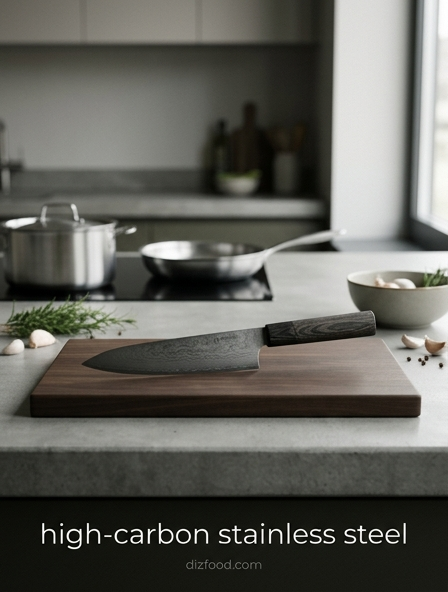
High-carbon stainless steel is a specialized alloy that bridges the gap between traditional carbon steel and standard stainless steel. In the kitchen, this material is prized for its unique molecular structure. Carbon is the primary hardening agent; when its concentration is increased, the steel becomes significantly more durable and capable of holding a razor-sharp edge. However, high carbon content usually invites rust, which is where chromium comes into play. By adding a minimum of 12-15% chromium, manufacturers create a passive layer of chromium oxide that protects the blade from oxidation.
| Component | Primary Function |
|---|---|
| Carbon | Increases hardness, tensile strength, and edge retention. |
| Chromium | Provides corrosion resistance and prevents staining. |
| Molybdenum | Enhances strength and improves resistance to pitting. |
This balance of elements ensures that the steel is neither too brittle nor too soft. The result is a versatile material used in high-end cutlery and appliance blades that can withstand the acidic environment of food preparation without losing its structural integrity or aesthetic appeal over time.
Engineered for Lasting Blade Sharpness
The primary advantage of high-carbon stainless steel in kitchen cutlery is its superior edge retention. Unlike softer stainless steels, which may roll or dull after just a few uses, high-carbon variants maintain their geometry even when subjected to the repetitive impact of a cutting board. This longevity is due to the formation of carbides during the heat-treatment process. These microscopic particles act as "teeth" within the metal, allowing the blade to slice through tough proteins and delicate vegetables with minimal resistance.
- Reduced frequency of honing and sharpening.
- Better stability during precision tasks like julienning or deboning.
- Higher Rockwell Hardness (HRC) ratings, typically between 56 and 62.
- Minimal metal fatigue even under heavy daily kitchen use.
For the home chef, this means a safer experience. A sharp blade requires less downward pressure, which significantly reduces the risk of the knife slipping. Furthermore, the refined grain structure of high-carbon stainless steel allows for a much thinner edge profile, facilitating effortless cuts that preserve the cellular integrity of fresh ingredients, keeping flavors and juices locked inside.
Precision Cutting Power in Modern Blenders
In high-performance blenders, the quality of the blade is just as critical as the motor's wattage. High-carbon stainless steel is the preferred material for premium blender assemblies because it can withstand the extreme centrifugal forces generated at speeds exceeding 20,000 RPM. While cheaper blades might bend or chip when encountering hard frozen fruit or ice, high-carbon steel maintains its shape and sharp leading edge. This precision is vital for creating a vortex that pulls ingredients down through the blades consistently.
The manufacturing of these blades involves precise laser cutting followed by cryogenic tempering. This process ensures that the blades are balanced to the milligram, preventing vibrations that could damage the motor bearings. Because the steel is so hard, it can be ground to a specific angle that facilitates both "wet" blending for smoothies and "dry" grinding for grains or spices. This dual-purpose capability is only possible when the material possesses the high tensile strength inherent in carbon-enriched alloys, ensuring the blender remains a versatile tool for years of intense culinary experimentation.
Resistance to Corrosion and Structural Wear
Kitchen tools are constantly exposed to harsh conditions, including acidic citrus juices, salty brines, and high-humidity environments. High-carbon stainless steel is engineered to survive these stressors without succumbing to the "pitting" or "tea-staining" that plagues lower-grade metals. The chromium content forms a self-healing film; if the surface is scratched, the chromium reacts with oxygen to reform the protective layer immediately. This prevents moisture from reaching the iron core, which would otherwise lead to structural failure.
- Passive Layer Formation: Chromium creates an invisible barrier against oxidation.
- Acid Resistance: Withstands prolonged exposure to tomatoes, lemons, and vinegar.
- Thermal Stability: Resists warping when transitioning from cold storage to hot food processing.
- Abrasion Resistance: Protects the finish from the scouring action of fibrous foods.
This resistance to wear extends the life of the tool significantly. Whether it is a chef's knife or a food processor disc, the ability to resist chemical and physical degradation ensures that no metallic flavors are transferred to the food. Consequently, high-carbon stainless steel is considered the gold standard for hygiene and durability in professional and residential kitchens alike.
Achieving Professional Texture Consistency
The texture of a dish often determines its quality, and high-carbon stainless steel plays a silent but pivotal role in this. In appliances like immersion blenders and food processors, the sharpness and rigidity of the steel allow for the creation of stable emulsions. For example, when making a mayonnaise or a delicate hollandaise, the blades must shear fat molecules into uniform sizes. A dull or flexible blade will fail to create the necessary friction and speed, resulting in a broken sauce or a grainy mouthfeel.
Similarly, when processing velvety soups or nut butters, the high-carbon blades pulverize solids into a microscopic state. This level of refinement is difficult to achieve with standard stainless steel, which lacks the hardness to maintain a fine edge under such high-stress friction. By using a material that does not deflect under load, the appliance can maintain a consistent gap between the blade and the housing, ensuring that every particle is processed evenly. This results in a professional-grade finish that transforms simple home-cooked meals into gourmet experiences with perfectly smooth textures.
The Strength Behind High Performance Blending
The mechanical demands placed on a blender blade are immense. As ingredients are thrown against the steel at high velocities, the metal must absorb the energy without fracturing. High-carbon stainless steel provides the necessary toughness-a measure of a material's ability to absorb energy and deform plastically without breaking. This is especially important for the "wing" tips of the blade, which endure the highest speeds and most frequent impacts with hard frozen items.
| Feature | Benefit for Blending |
|---|---|
| High Yield Strength | Prevents the blades from bending under heavy loads. |
| Impact Toughness | Allows the blade to crush ice without chipping. |
| Fatigue Resistance | Ensures the blade can withstand millions of cycles. |
Beyond simple hardness, the strength of the steel grade ensures that the blade assembly remains secure within its housing. High-carbon alloys provide the rigidity required for the drive socket interface, preventing the stripping of gears. This structural integrity is why premium blending systems can offer long warranties; they are built on the foundation of a steel grade that is designed to endure the most punishing kitchen tasks day after day.
Why Steel Grade Matters for Longevity
Not all stainless steel is created equal, and in the kitchen, the specific grade determines whether a tool is a lifetime investment or a temporary convenience. Standard 300-series stainless steels are excellent for pots and pans because they are highly rust-resistant, but they are too soft for cutting edges. High-carbon grades, such as 440C or Japanese VG-10, contain higher percentages of carbon and vanadadium, which refine the grain size. A finer grain allows for a sharper edge and a more durable surface that resists microscopic cracking over years of use.
Investing in a higher grade of steel also affects the "memory" of the metal. Lower-grade blades may slowly warp or lose their alignment after repeated use in high-speed blenders or when chopping through dense squashes. High-carbon stainless steel has a higher elastic limit, meaning it can return to its original shape after being stressed. This resilience is what keeps a knife straight and a blender blade balanced for a decade or more. For the discerning cook, the choice of steel grade is a choice for sustainability, reducing the need to replace tools frequently due to dullness or breakage.
Mastering Tough Ingredients with Ease
Dense, fibrous, and frozen ingredients present a significant challenge to standard kitchen tools. High-carbon stainless steel excels in these scenarios because it possesses the "bite" required to penetrate hard surfaces. When processing ingredients like ginger, lemongrass, or turmeric, the blades must slice through tough fibers rather than simply mashing them. The hardness of the steel ensures that the edge stays sharp enough to produce clean cuts, which is essential for releasing the aromatic oils without turning the ingredient into a pulpy mess.
- Crushing ice into "snow" consistency for frozen cocktails.
- Milling whole wheat berries or corn into fine flour.
- Slicing through fibrous root vegetables without wedging.
- Pulverizing roasted nuts into smooth, creamy butters.
The efficiency of high-carbon steel also means less heat is generated during the process. Because the blades cut so effectively, the motor runs for a shorter duration, and friction is minimized. This is crucial when working with temperature-sensitive ingredients like chocolate or raw dough, where excess heat can ruin the final product. Mastery of the kitchen starts with tools that do not struggle against the ingredients they are meant to transform.
The Evolution of Kitchen Blade Metallurgy
The journey of kitchen metallurgy has moved from primitive iron to high-tech super-alloys. Traditionally, chefs had to choose between the sharpness of carbon steel and the rust-resistance of stainless steel. Carbon steel knives were sharp but turned black and rusted if not oiled immediately. Conversely, early stainless steel was notoriously difficult to sharpen and would dull almost instantly. The evolution of high-carbon stainless steel represents the pinnacle of this development, combining the best of both worlds through advanced smelting and cooling techniques.
Modern advancements such as powder metallurgy have further refined these steels. In this process, the alloyed metals are atomized into a fine powder and then fused under intense pressure and heat. This creates an incredibly uniform distribution of carbides, which was impossible with traditional forging. This evolution means that modern kitchen blades are tougher, sharper, and more stain-resistant than anything used by previous generations. As culinary techniques become more sophisticated, the metallurgy of our tools continues to advance, providing home cooks with professional-grade performance that was once reserved for industrial food processing plants.
Maintaining Peak Performance for Years
While high-carbon stainless steel is incredibly durable, it is not indestructible. To maintain its peak performance, specific care routines should be followed. The very hardness that makes it stay sharp also makes it slightly more brittle than soft steel, meaning it should never be used to pry open jars or cut through bone unless specifically designed for that purpose. Proper cleaning is also essential; even though it is "stainless," prolonged exposure to harsh detergents in a dishwasher can eventually dull the finish and weaken the edge.
- Hand-wash with mild soap and dry immediately to prevent water spots.
- Use a wooden or composite cutting board to protect the blade's edge.
- Hone the edge regularly with a ceramic rod to maintain alignment.
- Store in a knife block or magnetic strip to prevent contact with other metals.
For blender blades, ensuring that the assembly is dried after use prevents any buildup of mineral deposits from tap water, which can cause friction. Periodically checking the sharpness and balance of the blades will ensure the motor continues to run efficiently. With minimal but consistent care, high-carbon stainless steel kitchen tools will remain a reliable centerpiece of the culinary workspace for many years.

Comments