
Deciding between a mini waffle maker and a standard toaster can transform your morning routine from a rushed chore into a tailored culinary experience. While the classic toaster remains the undisputed king of speed for perfecting artisanal sourdough or bagels with zero prep, the mini waffle maker has become a viral sensation for its surprising versatility and space-saving design. Whether you crave the "set it and forget it" efficiency of a pop-up toaster to get you out the door or the creative flexibility of a waffle maker that handles everything from keto chaffles to cinnamon rolls, choosing the right appliance depends on whether you value lightning-fast convenience or a customizable, warm breakfast that fits even the smallest studio kitchen.
| Feature | Mini Waffle Maker | Standard Toaster |
|---|---|---|
| Primary Use | Batter, dough, eggs, and "chaffles." | Sliced bread, bagels, and pastries. |
| Cook Time | 3-5 minutes (plus preheat). | 1-3 minutes (instant start). |
| Versatility | High; cooks diverse textures/ingredients. | Low; limited to dry, sliced items. |
| Footprint | Ultra-compact (approx. 4-inch plate). | Medium to large; requires counter space. |
| Cleanup | Wipe down non-stick plates (can be sticky). | Slide-out crumb tray (mostly dry debris). |
| Best For | Creative cooks and small apartments. | Busy families and "grab-and-go" routines. |
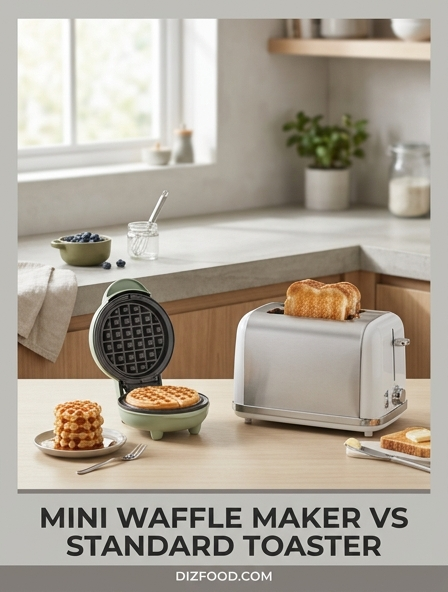
Mini Waffle Maker vs Standard Toaster Overview
The modern kitchen is often a battleground for counter space, forcing homeowners to choose between specialized gadgets and reliable classics. At the heart of the breakfast debate are the mini waffle maker and the standard toaster. While both appliances are designed to apply heat to starch-based foods, they cater to fundamentally different culinary philosophies. The standard toaster is the quintessential morning workhorse, a vertical heating chamber designed for speed, uniformity, and the simple task of browning sliced bread. It has been a staple of the domestic environment for decades, prized for its "set it and forget it" functionality and its ability to handle various bread thicknesses.
On the other hand, the mini waffle maker represents a more contemporary, playful approach to meal preparation. These compact, clamshell-style devices have surged in popularity due to their affordability and the social media-driven "will it waffle" trend. Unlike the toaster, which relies on radiant heat from wires, the waffle maker uses direct contact through two heated, patterned plates. This physical interaction creates a unique structural result that a toaster simply cannot replicate. As we examine these two devices, we must look beyond their primary functions to understand how they influence morning routines, kitchen organization, and the overall texture of the most important meal of the day. Choosing between them often reveals whether a cook values the efficiency of a crispy slice of rye or the aesthetic satisfaction of a honeycombed batter cake.
Kitchen Versatility and Cooking Capabilities
Versatility is the primary metric by which many modern consumers judge their small appliances. The standard toaster is remarkably efficient at its singular task, but it is inherently limited by its vertical slots. While high-end models offer settings for bagels or frozen items, the toaster remains a "dry" heat appliance. You cannot safely put anything that melts, drips, or requires a container inside a standard toaster without risking a fire or a permanent mess. Its capability begins and ends with solid, pre-sliced items that can stand upright against the heating elements.
The mini waffle maker, despite its specific name, offers a surprising breadth of utility that extends far beyond breakfast batter. Because it functions as a small, dual-surface press, it can cook a variety of substances that would be impossible to process in a toaster. The direct-contact heating plates allow for the preparation of both wet and dry ingredients, provided they can be compressed between the plates. This opens the door to a world of experimental cooking that the toaster cannot touch. Some common uses for the mini waffle maker include:
- Cooking "chaffles" (cheese and egg waffles) for low-carb diets.
- Pressing hash browns into crispy, partitioned patties.
- Reheating leftover pizza to restore crust crispiness.
- Baking individual-sized cookies or brownie bites.
- Grilling small sandwiches or sliders in a panini-style fashion.
- Searing deli meats or ham slices for a quick protein addition.
In this regard, the waffle maker acts as a miniature grill or oven, whereas the toaster remains a specialized heat chamber. For the creative cook, the waffle maker provides a canvas for experimentation that a toaster's rigid slots simply do not allow.
Breakfast Speed and Morning Efficiency
When the alarm clock fails and the commute is looming, speed becomes the most critical factor in the kitchen. The standard toaster is the undisputed champion of morning efficiency. Its operation is streamlined for the semi-conscious user: insert bread, push the lever, and wait roughly two minutes. There is no preheating required for the majority of modern toasters; the nichrome wires glow almost instantly. Furthermore, a standard two-slot toaster allows for the simultaneous preparation of two items, which is essential for families or couples trying to eat together. The automatic "pop-up" mechanism serves as a built-in timer, allowing the user to walk away and perform other tasks, like brushing teeth or packing a bag, without fear of overcooking.
The mini waffle maker, conversely, demands more active participation and a longer time commitment. First, the device must preheat, which usually takes three to five minutes depending on the wattage. Once the indicator light signals readiness, the user must carefully pour batter or place ingredients, close the lid, and monitor the steam levels. Because most mini waffle makers lack an automatic shut-off or a timed release, the user must stay nearby to prevent burning. Additionally, the "mini" nature of the device means it only produces one small waffle at a time. If you are preparing breakfast for more than one person, the cumulative time spent waiting for individual cycles to complete can become a significant bottleneck in a busy morning routine. For the individual who prioritizes a five-minute exit, the toaster is the more logical companion.
Compact Design for Small Spaces
Space is a premium in urban apartments and dorm rooms, making the physical footprint of an appliance a deal-breaking feature. Both the mini waffle maker and the standard toaster are designed with portability in mind, but they approach the problem of bulk differently. The standard toaster is typically rectangular and takes up a fixed amount of counter real estate. While slim models exist, the internal mechanisms and the need for heat shielding usually result in a device that is roughly 6 to 10 inches wide. It is often tall enough that it cannot be easily tucked into shallow drawers, leading most users to leave it permanently on the counter.
The mini waffle maker is the epitome of "micro-living" design. Most models are circular and no larger than a standard grapefruit. Their low profile and lightweight construction make them exceptionally easy to store. Many users find that they can stack a mini waffle maker inside a cabinet or even a silverware drawer, freeing up valuable counter space for food preparation. Because they do not have the high-tension springs or complex internal cages found in toasters, they are also less prone to damage when being moved frequently. The following table highlights the typical spatial differences between the two units:
| Feature | Standard 2-Slice Toaster | Mini Waffle Maker |
|---|---|---|
| Average Width | 6.5 - 8 Inches | 4.5 - 5.5 Inches |
| Average Weight | 2.5 - 4.5 lbs | 1.0 - 1.5 lbs |
| Storage Style | Countertop / Large Cabinet | Drawer / Stackable |
| Cord Management | Under-base Wrap | Compact Wrap |
Ultimately, if you are working with a single square foot of counter space, the mini waffle maker is the clear winner for its ability to vanish when not in use.
Texture Profiles and Toasting Results
The culinary output of these devices is defined by how they manipulate moisture. A standard toaster works via convection and radiant heat, drawing moisture out of the surface of the bread to create a dry, brittle "crust" while leaving the center relatively soft. The result is a uniform, flat surface that is ideal for spreading butter, jam, or avocado. Because the bread is held vertically, gravity does not interfere with the rise of the grain, leading to a light, airy crunch that is synonymous with the classic breakfast experience. However, a toaster can sometimes lead to uneven browning if the heating elements are aged or if the bread is not perfectly centered.
The mini waffle maker produces a completely different textural experience through conduction and compression. The "honeycomb" pattern is not just for aesthetics; it increases the surface area of the food, creating dozens of tiny, crispy walls and soft, recessed pockets. When batter is placed in a waffle maker, the steam is trapped briefly before escaping through the sides, which helps the interior stay moist and fluffy while the exterior becomes caramelized and firm. This contrast between the "deep-dish" crunch of the ridges and the tender valleys creates a sensory complexity that a flat piece of toast cannot match. Furthermore, because the food is pressed between two hot plates, the heat distribution is often more consistent than the radiant heat of a toaster, ensuring that there are fewer "hot spots" or burnt edges.
Cleanup and Maintenance Comparison
Maintenance is the hidden cost of any kitchen appliance, and the cleaning requirements for these two devices are worlds apart. The standard toaster is designed for dry debris. Most modern toasters include a removable crumb tray at the base that catches the fallout from toasted bread. To maintain a toaster, one simply needs to slide out the tray, dump the contents, and occasionally shake the unit upside down over a sink. Because there is no direct contact with liquids or fats, the internal components rarely require deep cleaning, and the exterior can be maintained with a simple wipe-down.
The mini waffle maker, however, involves "wet" cooking, which significantly complicates the cleanup process. Even with non-stick coatings, oil residue and batter overflow are common occurrences. Cleaning a mini waffle maker requires a specific sequence of steps to ensure longevity and hygiene:
- Allow the unit to cool completely to avoid steam burns.
- Use a soft-bristled brush or a dry paper towel to remove loose crumbs from the patterns.
- Use a damp cloth with mild soap to wipe away grease or burnt-on batter from the plates.
- Gently clean the overflow channels where batter may have escaped and hardened.
- Dry the plates thoroughly before closing the lid to prevent the growth of mold or off-smells.
Because the plates on most mini waffle makers are not removable, you cannot simply submerge the device or put it in the dishwasher. If sugar or honey from a recipe carmelizes onto the plates, it can require significant effort to remove without scratching the non-stick surface. For users who despise cleaning, the toaster is the much lower-maintenance option.
Creative Recipe Potential Beyond Bread
While the toaster is largely a "bread-only" device, the mini waffle maker has gained a cult following for its ability to transform nearly any food item into a waffle-shaped treat. This creative potential is a significant selling point for those who enjoy culinary experimentation or need to make snacks for children. The grid pattern creates structural integrity, allowing soft foods to be handled by hand once they are cooked through and crisped. The "Will It Waffle?" movement has proven that the limitations of the device are only set by the imagination of the cook.
Some of the most successful non-breakfast applications for a mini waffle maker include:
- Cinnamon Rolls: Placing a single pre-made dough puck into the center results in a flattened, crispy roll in under three minutes.
- Falafel: Waffling chickpea mixture creates more crispy surface area than traditional frying without the need for deep oil.
- Macaroni and Cheese: Pressing cold, leftover pasta creates a crispy "nugget" texture that revitalizes the dish.
- Quesadillas: A small flour tortilla folded in half fits perfectly, creating "pockets" for the cheese and salsa.
- Hashbrowns: Using shredded potatoes results in a perfectly portioned, crispy patty that doesn't fall apart.
The standard toaster offers very little in the way of creativity. Aside from "toaster pastries" or specifically designed frozen products, attempting to "create" with a toaster usually results in a clogged machine or a fire hazard. For the adventurous eater, the waffle maker is a tool of discovery, while the toaster remains a tool of tradition.
Durability and Long Term Value
When considering durability, the standard toaster usually has the upper hand due to its simpler mechanical design. A toaster consists of a series of heating wires, a spring-loaded carriage, and a timer circuit. Because there are few moving parts and no physical pressure applied to the internal components, a well-made toaster can easily last a decade or more. The most common point of failure is the latching mechanism or a single heating wire burning out, but generally, toasters are robust "legacy" appliances. They are built to withstand the heat of daily use without the exterior housing warping or the hinges failing.
Mini waffle makers, by contrast, are often sold at a much lower price point (frequently under twenty dollars), which can sometimes reflect in their build quality. The hinge is the most vulnerable part of a mini waffle maker; because users often apply pressure to the lid to ensure a good press, the plastic or light metal joints can crack over time. Furthermore, the non-stick coating on the plates has a finite lifespan. Once the coating begins to flake or lose its efficacy, the device becomes nearly impossible to use, as batter will stick to the intricate patterns and burn. While the heating elements themselves are usually reliable, the physical wear and tear of opening, closing, and scrubbing the plates means a mini waffle maker may need replacement every two to four years with heavy use. However, given their low cost, many consumers view them as "disposable" or "entry-level" kitchen tools rather than long-term investments.
User Friendly Features and Operation
Ease of use is a hallmark of both devices, but they appeal to different user behaviors. The standard toaster is designed for tactile simplicity. Most models feature a browning dial that allows for granular control over the toast level, ranging from "barely warm" to "dark charcoal." Higher-end toasters include "cancel" buttons, "defrost" modes for frozen bread, and a "bagel" setting that only heats one side of the element to prevent burning the outer crust. The operation is binary: either it is on and locked, or it is off and the food is presented to you. This makes it an ideal appliance for children or elderly users who may have limited patience for complex interfaces.
The mini waffle maker is even simpler in its interface, often having no buttons or dials at all. Most units operate solely by being plugged in. An indicator light on the top usually turns on to show the unit is heating and turns off (or changes color) when the plates have reached the target temperature. This lack of control is both a benefit and a drawback. It makes the device foolproof-there are no settings to mess up-but it also means the user has no way to adjust the temperature for different types of batter. If you want a darker waffle, you simply have to leave it in longer and check it manually. While the toaster provides a "set and forget" experience, the waffle maker requires the user to develop a "feel" for the timing, often relying on the disappearance of steam as a visual cue that the food is done. This requires a slightly higher level of intuition than the mechanical precision of a toaster's timer.
Final Verdict on Breakfast Essentials
Choosing between a mini waffle maker and a standard toaster depends entirely on your lifestyle, household size, and culinary curiosity. The standard toaster remains the essential choice for the traditionalist. It is the king of the "quick fix," providing a reliable, fast, and low-maintenance way to prepare the most common breakfast item in the world. If you value your time in the morning, have multiple people to feed, or simply want an appliance that will sit on your counter for the next ten years without needing a deep scrub, the toaster is an unbeatable investment. It is the foundation of the functional kitchen.
However, the mini waffle maker is the superior choice for the creative individual, the solo dweller, or the budget-conscious cook. Its ability to serve as a multi-purpose press makes it much more than just a breakfast tool; it is a versatile cooking station that can handle proteins, vegetables, and desserts. While it requires more cleanup and a bit of patience, the reward is a variety of textures and recipes that a toaster can never provide. For those with limited space, its tiny footprint and high "fun factor" make it a delightful addition to the home. In an ideal world, a kitchen would have both-the toaster for the weekday rush and the mini waffle maker for the slow, experimental Sunday morning. But if you must choose one, pick the toaster for reliability or the waffle maker for possibility.


Comments