
Assessing Structural Integrity and Frame Strength
When selecting a side-counter rack for a busy kitchen, the primary consideration must be the structural integrity of the frame. A rack is only as reliable as its weakest joint, which is why consumers should prioritize heavy-duty materials such as thick-gauge stainless steel or reinforced wrought iron. The frame strength dictates whether the unit can withstand the constant vibrations of nearby appliances and the weight of dense kitchenware without bowing or warping over time. High-quality racks often feature welded joints rather than simple snap-on components, providing a rigid architecture that maintains its squareness under pressure. Furthermore, the thickness of the support pillars determines the maximum height a rack can safely reach; thinner frames tend to exhibit lateral sway, which compromises the safety of everything stored on the shelves. Assessing the gauge of the metal and the quality of the fastening hardware ensures that the rack remains a permanent fixture in the culinary workspace rather than a temporary solution prone to structural failure.
Weight Distribution and Topple Prevention
Effective kitchen organization requires a deep understanding of gravity and balance, especially when dealing with vertical storage solutions. Topple prevention is achieved by strictly adhering to a bottom-heavy loading strategy, which lowers the center of gravity and stabilizes the entire unit. When a rack is top-heavy, even a minor bump can lead to a catastrophic spill of expensive glassware or heavy ceramic jars. To ensure a safe environment, users should follow these fundamental loading principles:
- Place heavy appliances and bulk grain containers on the lowest tier.
- Store lightweight items like spices, dried herbs, and tea tins on the upper shelves.
- Distribute weight evenly from left to right to prevent lateral torque on the frame.
- Avoid overhanging items that could snag on clothing or towels, causing the rack to pull forward.
By maintaining a disciplined approach to how items are tiered, the risk of a tipping incident is significantly reduced, protecting both the kitchen equipment and the safety of the household members.
Non-Slip Footing for Surface Stability
Kitchen countertops are frequently exposed to liquids, oils, and steam, creating a slick environment where unanchored items can easily slide. Non-slip footing is therefore a non-negotiable feature for any side-counter rack. Most premium racks utilize medical-grade silicone caps or suction cups that create a vacuum seal with the counter surface. This grip is essential not only for preventing the rack from shifting during use but also for protecting the countertop material itself. High-end surfaces like marble, quartz, and polished granite are susceptible to scratches if a metal rack moves even slightly. Furthermore, rubberized feet provide a dampening effect, absorbing the micro-vibrations from blenders or food processors that might otherwise cause the rack to "walk" across the counter. Without these friction-enhancing components, the structural integrity and placement of the rack are constantly at risk, particularly in high-traffic kitchens where speed and movement are constant factors during meal preparation.
Ergonomic Reach and Height Accessibility
The efficiency of a kitchen is often measured by the ergonomics of its layout. A side-counter rack must be positioned and scaled to accommodate the natural reach of the user to prevent strain and maximize speed. Ideally, the most frequently used ingredients should be stored within the "strike zone"-the area between the user's waist and eye level. This minimizes the need for excessive bending or overextending, which can lead to repetitive strain injuries over time. To optimize accessibility, consider the following height-based organization steps:
- Measure the distance from the counter to the bottom of the upper cabinets to ensure the rack fits comfortably.
- Assign the middle shelf to daily essentials like salt, pepper, and cooking oils.
- Utilize the highest shelf for seasonal items or back-stock that is only needed occasionally.
- Adjust shelf heights, if the rack allows, to fit specific bottle sizes, reducing wasted vertical space.
Proper ergonomic planning ensures that the rack supports the cook's workflow rather than becoming a physical obstacle that requires awkward movements to navigate.
Maximizing Countertop Real Estate Efficiency
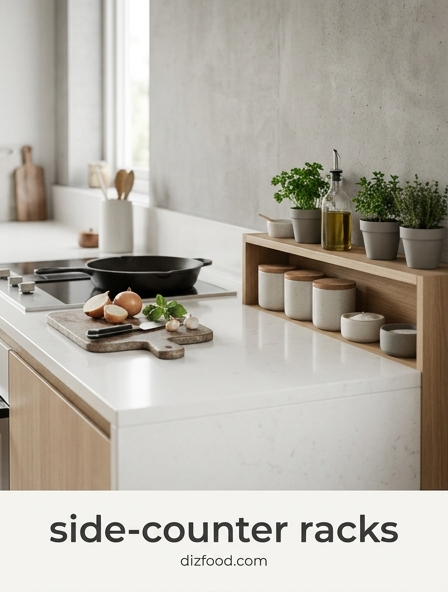
In many modern kitchens, the square footage of usable counter space is limited. A side-counter rack serves as a vertical expansion of this real estate, allowing for a higher density of storage without increasing the footprint. By transitioning from horizontal storage to vertical tiers, a cook can clear large sections of the workspace for actual food preparation. The following table illustrates the efficiency gains of a typical three-tier rack compared to flat counter storage:
| Storage Type | Footprint (Sq In) | Items Stored | Usable Prep Space |
|---|---|---|---|
| Flat Counter | 144 | ~6-8 Jars | Low |
| 3-Tier Rack | 144 | ~18-24 Jars | High |
This comparison highlights how verticality essentially triples the utility of the same counter area. This efficiency is vital for small apartment kitchens or professional "mise en place" stations where every inch of surface area is critical for culinary execution.
Material Selection for Long-Term Durability
The kitchen is a harsh environment characterized by high heat, fluctuating humidity, and exposure to acidic substances. Choosing the right material for a side-counter rack is the difference between a lifetime investment and a disposable product. Stainless steel (specifically grade 304) is widely considered the gold standard due to its inherent resistance to corrosion and ease of sanitization. For those seeking a more organic aesthetic, bamboo is a popular choice; however, it requires regular oiling to prevent cracking and mold growth in humid conditions. Plastic racks are lightweight and inexpensive but lack the load-bearing capacity and heat resistance required near stovetops. Powder-coated carbon steel offers a middle ground, providing a variety of colors and decent durability, provided the coating is not chipped or scratched to reveal the vulnerable metal beneath. Ultimately, the material must align with the specific micro-climate of the kitchen corner it will inhabit, ensuring that it does not degrade, rust, or harbor bacteria over years of intensive daily use.
Multi-Tier Layout for Optimal Organization
A multi-tier layout is more than just a space-saving feature; it is a tool for logical categorization. By grouping items according to their function or frequency of use, the cook can develop muscle memory that speeds up the cooking process. A well-organized rack typically follows a "zoning" logic that separates dry goods from liquids and spices from tools. This systematic approach prevents the chaotic searching that often occurs in disorganized cupboards. Consider the following layout strategy:
- Top Tier: Lightweight herbs, decorative canisters, and dry garnishes.
- Middle Tier: Liquid condiments, vinegars, and oils that require frequent access during sautéing.
- Bottom Tier: Heavy canisters of flour, sugar, or bulky kitchen gadgets that need the most stability.
- Side Hooks: Peeler, measuring spoons, or oven mitts to utilize the external frame.
This tiered system ensures that every item has a dedicated "home," making inventory checks at a glance simple and preventing the accumulation of duplicate ingredients that often hide in the back of deep shelves.
Load-Bearing Limits for Heavy Cookware
Every storage structure has a definitive load-bearing limit, and exceeding this threshold can lead to structural collapse or permanent shelf deflection. Side-counter racks designed for lightweight spices are fundamentally different from those intended to hold cast iron skillets or ceramic dutch ovens. When planning a rack's contents, it is imperative to check the manufacturer's maximum weight rating per shelf. Deflection-the slight bending of a shelf under weight-is the first sign of overstress. If a shelf begins to bow, the items stored on it may become unstable and slide toward the center. For heavy cookware, look for racks with reinforced cross-bars or "truss-style" wire shelving, which distributes weight more effectively across the frame. Furthermore, the fasteners and wall-anchors (if applicable) must be rated for the cumulative weight of the rack and its contents. Ignoring these limits not only risks the destruction of the rack but also threatens the integrity of the items being stored, which are often more expensive than the rack itself.
Rust Resistance and Structural Longevity
Longevity in a kitchen setting is synonymous with rust resistance. Because side-counter racks are often placed near sinks or stovetops where steam is prevalent, they are constantly subjected to oxidation triggers. Chrome-plated racks are common but can be deceptive; if the plating is thin, moisture can seep through to the steel beneath, causing pitting and rust. For maximum longevity, "electro-polished" stainless steel is the superior choice, as it creates a passive protective layer that is nearly impervious to water and salt. Additionally, the design of the rack should facilitate airflow; solid shelves tend to trap moisture under bottles, leading to ring stains and localized corrosion. Wire-mesh or slotted shelf designs allow for rapid evaporation and easier cleaning, preventing the buildup of grime that can harbor moisture. Regular maintenance, such as wiping down the frame with a microfiber cloth and avoiding abrasive cleaners, will further extend the life of the rack, ensuring it remains both hygienic and aesthetically pleasing for a decade or more.
Enhancing Workflow through Strategic Placement
The strategic placement of a side-counter rack can drastically reduce the number of steps a cook takes during a single meal preparation. In the culinary world, this is part of maintaining an efficient "mise en place." A rack located between the sink and the stove serves as a bridge, holding the tools needed for both cleaning/prepping and active cooking. If the rack is placed too far from the primary work triangle, its utility drops significantly, as the cook will likely leave items on the counter rather than returning them to a distant shelf. Ideally, the rack should be situated on the non-dominant hand side of the stove, allowing the cook to reach for spices or oils while the dominant hand manages the cookware. This placement minimizes cross-body reaching and keeps the immediate cooking surface clear of clutter. By analyzing the flow of movement from the refrigerator to the prep station and finally to the heat source, one can identify the "golden zone" for rack placement that maximizes both speed and safety.

Comments