
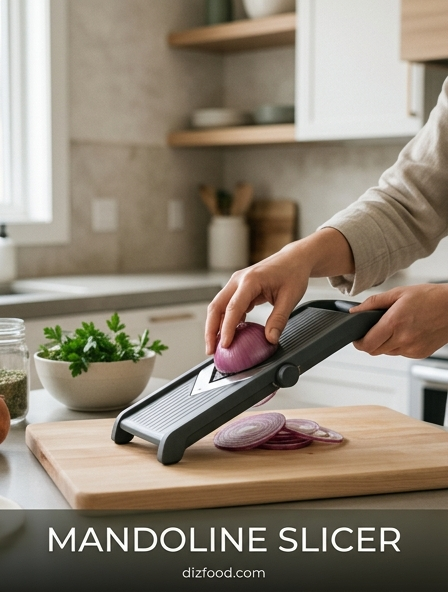
Mastering Mandoline Slicer Basics
The mandoline slicer is a quintessential tool for any kitchen, designed to provide precision that a handheld knife can rarely replicate. At its core, the device consists of a flat surface with a fixed, razor-sharp blade. By sliding vegetables or fruits across this surface, the user can produce slices of uniform thickness in a fraction of the time. Mastering this tool begins with understanding its anatomy, including the main frame, the adjustable platform, and the essential safety guard. Most modern mandolines feature a dial or a series of inserts that allow the cook to manipulate the distance between the platform and the blade, dictating the thickness of each cut.
- Adjustable thickness settings for versatility.
- Fixed blade positioning for unmatched speed.
- Ergonomic handles and non-slip feet for stability.
- Interchangeable plates for different textures and shapes.
To begin, always ensure the mandoline is placed on a dry, level surface. The "runway" must be clear of obstructions, and the blade should be checked for any debris. Understanding these basic components ensures that the user can transition from simple slicing to more complex culinary preparations with confidence and ease.
Essential Safety Protocols for Precise Slicing
Safety is the most critical aspect of operating a mandoline slicer, as the blades are incredibly sharp and designed to cut through dense produce with minimal resistance. One of the most common mistakes in a kitchen is failing to use the provided hand guard. This pusher acts as a barrier between your fingers and the blade, ensuring that even as the vegetable grows shorter, your skin remains protected. In addition to the guard, many professional chefs recommend wearing a cut-resistant glove made of Kevlar or stainless steel mesh for an extra layer of security.
- Always use the food holder/safety guard, especially for small items.
- Never wash the blade by hand without a brush; use a long-handled tool instead.
- Keep your eyes on the task at hand-distractions are the primary cause of injury.
- Store the slicer with the blade retracted or with a protective cover in place.
By following these protocols, you can focus on the technical aspects of slicing without the fear of injury. Consistent safety habits lead to more confident movements, which ultimately results in higher quality food preparation and a smoother workflow.
Selecting Blades for Consistent Thickness
Choosing the right blade is fundamental to achieving the desired culinary outcome. Mandoline slicers typically come with a variety of blade shapes, each suited for specific textures and food types. A straight blade is the standard for firm vegetables like potatoes or apples, providing a clean entry point. Diagonal blades or V-shaped blades are often preferred for softer items like tomatoes or citrus fruits, as they pierce the skin more effectively without crushing the delicate interior. The selection process should be guided by the density of the ingredient and the intended presentation.
| Blade Type | Recommended Ingredient | Primary Benefit |
|---|---|---|
| Straight Blade | Potatoes, Cucumbers | Uniform, flat slices |
| V-Shaped Blade | Tomatoes, Bell Peppers | Reduced resistance on soft skin |
| Julienne Blade | Carrots, Zucchini | Consistent matchstick strips |
Before beginning your prep, test the thickness on a single slice. Most mandolines allow for micro-adjustments, ensuring that whether you need a hearty slab or a delicate wafer, the blade is positioned perfectly for the task.
Achieving Perfect Uniformity in Every Cut
Uniformity is the hallmark of professional cooking, and the mandoline is the primary vehicle for achieving it. When every slice of a potato or beet is the exact same width, they cook at the same rate, preventing the frustration of having some pieces burnt while others remain raw. To achieve this, consistency in technique is just as important as the tool itself. You must apply even downward pressure throughout the entire stroke. If you push harder at the beginning than at the end, the slices will be tapered rather than flat.
Maintain a steady, rhythmic pace. Speed often comes naturally as you become more comfortable, but rushing can lead to uneven cuts or skipping. Ensure the vegetable is flush against the guide rail to prevent slanted edges. This level of precision is particularly important for dishes like gratins, tarts, and homemade chips, where the visual appeal and texture rely entirely on the mathematical consistency of the ingredients. By focusing on your posture and the angle of the food, you transform simple vegetables into perfectly calibrated components for any recipe.
Professional Techniques for Paper Thin Slices
Creating translucent, paper-thin slices is a skill that separates home cooks from professional chefs. This technique is essential for making carpaccio, delicate radish garnishes, or crispy potato chips. To achieve this, set your mandoline to its lowest possible thickness setting, often less than one millimeter. It is vital to use firm, cold produce; softer vegetables may tear or bruise when cut this thin. Using a sharp blade is non-negotiable, as any dullness will cause the blade to snag rather than glide through the item.
- Chill vegetables in ice water before slicing to increase firmness.
- Use a quick, fluid motion to prevent the vegetable from sticking to the blade.
- Apply light, consistent pressure to avoid "squishing" the produce.
- Immediately submerge thin slices in water to maintain crispness and prevent oxidation.
When executed correctly, these slices should be so thin that light can pass through them. This adds an elegant, refined texture to salads and appetizers, elevating the sensory experience of the dish through precision engineering.
Elevating Presentation with Julienne Cuts
The julienne cut, or matchstick cut, is one of the most tedious tasks to perform with a knife, but a mandoline makes it effortless. By engaging the vertical julienne teeth on the slicer, you can create long, uniform strips of vegetables like carrots, celery root, or cucumbers. This cut is perfect for slaws, stir-fries, and garnishes where a consistent crunch is desired. The key to a successful julienne is the orientation of the vegetable; placing it lengthwise on the platform will yield longer, more elegant strands.
For best results, choose produce that is relatively straight. If you are working with a curved carrot, you may need to trim it slightly to ensure it sits flat against the runway. The julienne blades work by scoring the vegetable as it passes over the main slicing blade, effectively doing two jobs in one motion. This technique not only improves the aesthetics of your plate but also increases the surface area of the food, allowing for better sauce adhesion and faster, more even cooking in high-heat environments like a wok.
Enhancing Cooking Efficiency with Uniformity
Efficiency in the kitchen is often measured by how quickly and accurately prep work is completed. The mandoline slicer dramatically reduces "mise en place" time, allowing the cook to move to the stove faster. Beyond speed, the uniformity provided by the mandoline directly impacts the chemistry of cooking. When pieces are identical in size, heat distribution is predictable. This is especially useful in baking and roasting, where uneven sizes lead to inconsistent textures.
| Feature | Knife Prep | Mandoline Prep |
|---|---|---|
| Speed | Slow to Moderate | High Speed |
| Uniformity | Variable | Absolute Consistency |
| Effort | High Manual Focus | Mechanical Precision |
By integrating a mandoline into your routine, you minimize the physical strain of repetitive chopping. This allows you to manage larger quantities of food without fatigue. Whether you are prepping for a large dinner party or doing a weekly meal prep, the ability to rapidly produce perfectly sized ingredients is an invaluable asset for any efficient kitchen operation.
Maintaining Blade Sharpness for Superior Performance
A mandoline is only as good as its blade. Over time, even the highest quality stainless steel or ceramic blades will lose their edge. A dull blade requires more force, which increases the risk of the food slipping and causing an accident. Maintenance begins with proper cleaning. You should always hand wash your mandoline components. The high heat and abrasive detergents used in dishwashers can dull the blade and warp the plastic frame. Use a soft brush to remove food particles from the blade edge while keeping your fingers at a safe distance.
To prolong the life of the blade, store the device in a way that prevents the edge from knocking against other metal utensils. Some high-end mandolines feature replaceable blades, while others may require professional sharpening. If you notice that the blade is tearing the food or if you have to apply significant pressure to get through a simple cucumber, it is time to sharpen or replace the cutting surface. Regular maintenance ensures that every slice remains effortless and precise for years to come.
Creative Textures with Specialized Blades
Beyond the standard flat slice, many mandolines offer specialized blades that can create unique textures and shapes, such as crinkle cuts and waffle cuts (gaufrette). These textures are not just for visual flair; they also change the mouthfeel of the food and how it interacts with dressings or dips. To create a waffle cut, the user must utilize a fluted blade and rotate the vegetable 90 degrees between every stroke. This creates a cross-hatch pattern that is both structurally interesting and ideal for deep frying.
- Crinkle cuts: Perfect for pickles and hearty potato fries.
- Gaufrette: Adds a gourmet touch to homemade chips and garnishes.
- Grating plates: Useful for hard cheeses and citrus zest.
Experimenting with these blades allows you to explore the architectural side of food prep. These patterns increase the surface area significantly, which can enhance the crunchiness of fried items or allow more vinaigrette to cling to a salad ingredient. Utilizing these specialized features turns basic vegetables into decorative elements that enhance the overall dining experience.
Integrating the Mandoline into Your Prep Routine
To truly benefit from a mandoline slicer, it should be an integrated part of your daily kitchen workflow rather than a tool hidden in the back of a cupboard. Accessibility is key; keep the slicer in an easy-to-reach location. It is most effective when used for batch processing. If you know you will need sliced onions for a salad, thin potatoes for a side dish, and julienned carrots for a stir-fry, organize your prep so you can do all the mandoline work at once. This minimizes the amount of setup and cleaning required.
Always keep a clean workspace and have your storage containers ready to receive the sliced produce. Because the mandoline works so quickly, the "outfeed" area can fill up in seconds. Developing a habit of cleaning the device immediately after use prevents starch and sugars from drying on the blade, making the final cleanup much easier. By treating the mandoline as a primary prep tool rather than a specialty gadget, you will find your kitchen efficiency reaching professional levels, allowing you more time to focus on the creative aspects of cooking.


Comments