
The Anatomy of a Versatile Bench Scraper
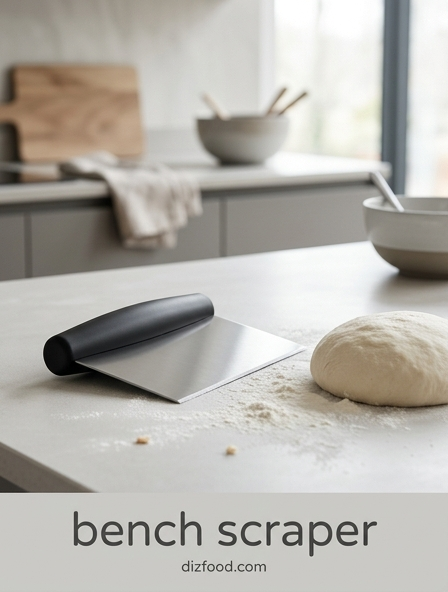
A bench scraper, often referred to as a pastry scraper or dough cutter, is a deceptively simple tool that serves as an extension of the baker's hand. At its core, the tool consists of a broad, rectangular blade-typically manufactured from high-carbon stainless steel-attached to a sturdy handle. The handle may be crafted from various materials, each offering a different tactile experience and level of durability. Stainless steel handles offer a seamless, hygienic design, while contoured plastic or rubberized grips provide ergonomic comfort during repetitive tasks. Wooden handles remain a classic choice for those who prefer a traditional aesthetic and a warm feel in the palm.
- Blade Edge: Usually slightly beveled to facilitate clean cuts through dense dough without damaging work surfaces.
- Rigidity: A high-quality scraper features a stiff blade that does not flex under pressure, ensuring precision during heavy-duty scraping.
- Span: Most standard scrapers measure approximately six inches in width, a size optimized for both delicate pastry work and bulk dough handling.
Understanding these physical components is essential for selecting a tool that aligns with your specific culinary needs. Whether you are clearing a floured surface or portioning sourdough, the balance between the weight of the blade and the grip of the handle determines the tool's overall effectiveness in a fast-paced kitchen environment.
Mastering Precise Dough Scaling and Portioning
Consistency is the hallmark of professional baking, and the bench scraper is the primary instrument for achieving uniform results. When working with large batches of bread or pastry dough, relying on visual estimation often leads to uneven baking times and inconsistent final products. By using the sharp edge of the scraper, bakers can divide bulk dough into precise portions with a quick, vertical motion that preserves the internal gas structure of the dough. This method is far superior to pulling or tearing the dough, which can damage the gluten network and result in a poor rise.
- Weigh the entire mass of dough to determine the total weight.
- Divide the total weight by the number of desired units to find the target weight per portion.
- Use the scraper to cut a section of dough, then place it on a digital scale for verification.
- Add or remove small slivers of dough using the scraper until the exact weight is reached.
The ability to make clean, decisive cuts ensures that each roll, loaf, or pastry remains intact. This precision not only improves the aesthetic appeal of the baked goods but also ensures that every item in the oven reaches the optimal internal temperature at the same time.
Achieving Perfectly Level Cake Layers Every Time
While often associated with bread, the bench scraper is an indispensable tool for the precision-oriented cake decorator. One of the most challenging aspects of cake assembly is ensuring that each layer is perfectly flat before stacking. Even a slight dome on a sponge can lead to structural instability or a tilted final product. By holding the scraper vertically against the side of the cake as a guide, you can identify high spots on the top surface. The long, straight edge of the stainless steel blade acts as a leveling plane, allowing you to trim away excess cake with surgical accuracy.
To achieve a professional finish, place the cake on a rotating turntable. Hold the scraper firmly at a ninety-degree angle and slowly rotate the cake, allowing the blade to shave off any unevenness. This process creates a flat foundation that is essential for even filling distribution. Furthermore, the scraper can be used to check the vertical alignment of the stacked layers, ensuring that the cake does not lean. This level of geometric precision is what separates amateur home baking from high-end patisserie, providing a stable canvas for the subsequent applications of crumb coats and decorative frosting.
Smooth Professional Buttercream Finishes
The secret to the "glass-like" finish seen on professional cakes is often a high-quality bench scraper. While offset spatulas are excellent for spreading frosting, they rarely produce the perfectly smooth, vertical sides required for modern cake designs. The height of the scraper allows it to cover the entire side of most standard cakes in a single pass. By maintaining a consistent angle and pressure against the cake while spinning the turntable, the baker can strip away excess buttercream, filling in gaps and smoothing out ridges simultaneously.
- Angle: Hold the scraper at a 45-degree angle relative to the cake surface for the smoothest results.
- Temperature: Dipping the metal blade in hot water and drying it before the final pass can help melt the fats in the buttercream slightly, creating an ultra-glossy sheen.
- Pressure: Apply light, even pressure to avoid scraping down to the cake layers or creating "shudder" marks in the frosting.
This technique is not limited to buttercream; it is equally effective for ganache and cream cheese frosting. The result is a sharp, crisp top edge and a perfectly cylindrical shape that provides the ideal backdrop for drips, piping, or minimalist decorations.
Efficient Ingredient Transfer from Board to Pan
In the realm of mise en place, the bench scraper functions as a wide-capacity shovel, drastically increasing the speed of ingredient preparation. After dicing vegetables, mincing herbs, or chopping nuts, the traditional method of using the knife blade to transport ingredients is both inefficient and dangerous. Using the flat side of a bench scraper allows you to scoop up a large volume of prepared food in a single motion, keeping the kitchen workflow moving smoothly while protecting the sharp edge of your chef's knife from premature dulling on the cutting board.
| Ingredient Type | Transfer Benefit | Efficiency Gain |
|---|---|---|
| Diced Aromatics | Prevents spilling small pieces | High |
| Minced Herbs | Collects fine particles easily | Medium |
| Crushed Nuts | Safely gathers sharp fragments | High |
| Sticky Dough | Lifts without tearing | Very High |
The broad surface area of the scraper ensures that no ingredients are left behind, reducing waste and maintaining a clean station. Because the scraper is designed for heavy contact with flat surfaces, it can be pressed firmly against the board to "sweep" every last bit of garlic or onion into the pan, ensuring that your flavor profiles remain consistent and your prep time is minimized.
Streamlined Workspace Cleanup and Dough Removal
Cleaning a flour-covered workstation can be a frustrating task if approached only with a wet cloth, which often turns the residue into a sticky paste. The bench scraper is the most effective tool for mechanical cleanup. Its rigid metal edge allows the baker to scrape dried dough, excess flour, and sticky fruit fillings directly off the countertop with minimal effort. This process is particularly vital for wooden butcher block surfaces, where moisture should be kept to a minimum to prevent warping or bacterial growth.
- Clear the workspace of all bowls and large debris.
- Hold the scraper at a shallow 30-degree angle against the surface.
- Use long, steady strokes to push all dry flour and dough scraps into a single pile.
- Transfer the debris directly into the waste bin using the blade as a scoop.
- Follow up with a damp cloth only after the bulk of the dry material has been removed.
This systematic approach not only saves time but also preserves the integrity of your cleaning tools, as sponges and towels will not become clogged with dough. A clean workspace is essential for food safety and mental clarity, allowing the baker to transition quickly between different stages of a recipe without cross-contamination or clutter.
Essential Features of High Quality Scrapers
Not all bench scrapers are created equal, and choosing the right one requires an eye for specific manufacturing details. A high-quality scraper must balance weight, durability, and ergonomics. The blade should be made of food-grade stainless steel, which provides the necessary hardness to maintain a straight edge over years of use while remaining resistant to the corrosive effects of salt and acidic ingredients. The thickness of the metal is also a critical factor; a blade that is too thin will flex and skip across the board, while one that is too thick will feel cumbersome and lack the precision needed for fine pastry work.
- Full Tang Construction: Ensure the blade extends well into the handle to prevent snapping under pressure.
- Nonslip Grip: Look for textured surfaces that remain secure even when your hands are covered in flour or oil.
- Dishwasher Safety: For high-volume kitchens, a scraper with a heat-resistant plastic handle is often preferable for easy sanitation.
- Beveled Edge: A subtle taper at the bottom of the blade improves the tool's ability to slide under delicate doughs.
Investing in a premium tool pays dividends in the form of reduced hand fatigue and more consistent results. A well-made scraper becomes a lifelong companion in the kitchen, surviving countless bakes without losing its structural integrity or its ability to provide a perfectly clean scrape.
Using Integrated Measurement Scales for Accuracy
Many modern bench scrapers feature laser-etched measurement scales along the bottom or side edges of the blade. These markings, typically provided in both inches and centimeters, transform the scraper from a simple cutting tool into a precision measuring device. In pastry work, where the dimensions of a rolled-out dough are often specified to the inch, having a ruler integrated into your primary hand tool eliminates the need to search for a separate measuring tape with messy, flour-covered hands.
These scales are particularly useful when preparing laminated doughs, such as puff pastry or croissants, where the thickness and length of the dough layers are critical to the final flake. You can easily check the width of a rectangle or ensure that you are cutting cinnamon roll portions at exactly 1.5-inch intervals. Furthermore, the vertical scale on the side of the blade can be used to measure the height of a rising dough or the thickness of a cake layer. By incorporating these measurements into your workflow, you remove the guesswork from your baking, leading to professional-grade uniformity that is impossible to achieve through "eye-balling" alone. The integration of the scale reflects the dual nature of the scraper as both a rugged workhorse and a refined instrument of accuracy.
Maintenance Tips for Stainless Steel Tools
Proper maintenance ensures that your bench scraper remains a reliable asset for years. Although stainless steel is highly resistant to rust, it is not entirely immune, especially when exposed to harsh detergents or left soaking in water. To maintain the blade's edge and finish, it is best to wash the tool by hand shortly after use. If the scraper has been used for sticky dough, a quick soak in warm, soapy water will loosen the residue, but the tool should be dried immediately with a soft cloth to prevent water spots and potential oxidation.
- Avoid Abrasives: Use a soft sponge rather than steel wool to prevent scratching the polished surface of the blade.
- Dry Thoroughly: Pay special attention to the area where the blade meets the handle, as moisture trapped there can lead to degradation.
- Occasional Honing: While not a knife, a dull scraper can be lightly honed with a fine-grit stone if the edge becomes nicked or rounded.
- Handle Care: If your scraper has a wooden handle, apply food-grade mineral oil periodically to prevent the wood from drying out or cracking.
By following these simple steps, you preserve the tool's hygienic properties and its tactile appeal. A well-maintained scraper not only looks professional in your kitchen but also performs better, sliding effortlessly across your bench and providing the clean, sharp cuts that are essential for high-quality baking.
Integrating Bench Scrapers Into Daily Baking Routines
The true value of a bench scraper is realized when it becomes a permanent fixture on your workstation rather than a specialty item tucked away in a drawer. Integrating this tool into your daily routine starts with the very first step of preparation. Use it to level off cups of flour, move piles of dry ingredients, and eventually, to manage the dough itself. As you become more comfortable with its weight and edge, you will find yourself reaching for it instinctively to flip dough, check for sticking, and even clean your hands of "dough gloves" by gently scraping the palms.
In a home kitchen, the scraper reduces the need for multiple specialized gadgets, serving as a knife, a ruler, a spatula, and a cleaning tool all in one. Its versatility makes it especially useful for those with limited space. By keeping the scraper within arm's reach during every baking project, you streamline your movements, reduce the time spent on cleanup, and improve the overall precision of your work. Over time, the bench scraper ceases to be just a tool and becomes a foundational element of your culinary technique, enabling a level of efficiency and cleanliness that defines a master baker's environment.




Comments