
Understanding Protein Fiber Structure
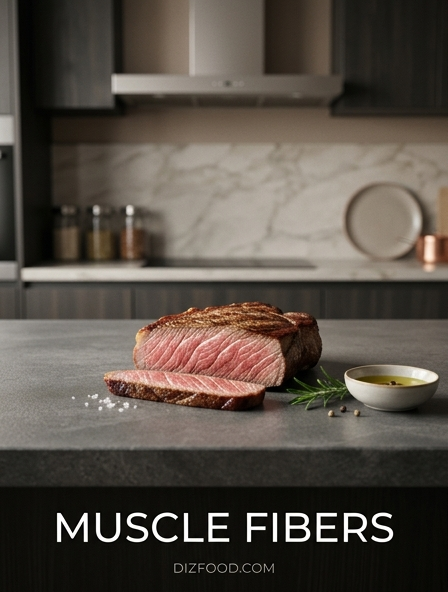
In the culinary world, muscle tissue is primarily composed of long, cylindrical cells known as muscle fibers. These fibers are bundled into fascicles, which are wrapped in layers of connective tissue called perimysium. At the microscopic level, each fiber contains myofibrils consisting of repeating units called sarcomeres. These units are built from two primary proteins: actin and myosin. When we speak of "grain" in a kitchen context, we are referring to the longitudinal alignment of these protein bundles.
- Myofilaments: The smallest contractile threads of actin and myosin.
- Sarcomere: The functional unit that determines the degree of contraction or relaxation.
- Endomysium: The delicate connective tissue sheath surrounding individual fibers.
The density and orientation of these fibers dictate the final texture of the meat after cooking. Understanding that meat is not a solid block but a complex network of protein tubes allows chefs to manipulate heat and moisture more effectively. The spacing between these tubes is the primary variable in how a piece of meat will respond to seasonings and cooking techniques.
The Science of Muscle Relaxation
Muscle relaxation in a culinary context refers to the state where the actin and myosin filaments are not tightly bound together. In a living animal, relaxation is an active process requiring ATP to break the cross-bridges between proteins. Post-slaughter, as ATP reserves deplete, the muscle enters a state of permanent contraction until enzymatic processes begin to break down the structural proteins. This enzymatic degradation, often facilitated by aging the meat, allows the fibers to slide apart slightly, creating a more tender mouthfeel.
The relaxation of these fibers is essential for tenderness because it lowers the force required for teeth to shear through the tissue. When muscles are relaxed, the internal tension is minimized, preventing the meat from seizing up and expelling its juices during the initial stages of cooking. This biological "loosening" is the prerequisite for all subsequent flavoring steps, as it transforms a dense, impenetrable protein mass into a more receptive, porous structure capable of holding onto introduced liquids.
How Tight Fibers Block Marinades
When muscle fibers are in a contracted or "tight" state, they act as a physical barrier to large flavor molecules. The lack of space between individual myofibrils creates a dense hydrophobic environment that prevents aqueous marinades from penetrating beyond the very surface of the meat. In this state, the electrical charges of the protein filaments are closely packed, repelling polar molecules and trapping air pockets that further inhibit liquid contact.
| Fiber State | Marinade Penetration | Resulting Flavor Profile |
|---|---|---|
| Contracted | Surface level only (1-2mm) | Uneven seasoning; bland interior |
| Relaxed | Deep interstitial flow | Consistent, integrated flavor |
This barrier is why simply soaking a tough, contracted cut of meat in a flavorful liquid often yields disappointing results. Without addressing the physical tension of the fibers, the marinade molecules-such as sugars, herbs, and large-chain oils-remain stuck on the exterior, leading to a charred, flavored crust but an unseasoned, dry interior. Breaking this tension is the first step in successful flavor infusion.
Expanding Intercellular Space for Flavor
To infuse flavor deeply into the meat, one must physically increase the gaps between the muscle fibers. This expansion of the intercellular space is typically achieved through the introduction of salt or mechanical manipulation. When salt enters the tissue, it shifts the electrical charge of the protein filaments, causing them to repel each other. This repulsion creates microscopic voids that act as reservoirs for moisture and aromatic compounds.
- Ion Exchange: Sodium and chloride ions penetrate the fiber bundles.
- Filament Repulsion: Like charges push the actin and myosin apart.
- Swelling: The entire muscle structure expands, increasing its volume and capacity.
As these spaces open up, the meat becomes a "sponge" for flavor. This is why a pre-salted or dry-brined steak appears more translucent and feels softer than one that has not been treated. By increasing the volume of the space between cells, you provide a pathway for oils, acids, and dissolved aromatics to travel deep into the center of the cut, ensuring every bite is seasoned.
Diffusion Mechanics in Relaxed Tissue
Diffusion is the movement of molecules from an area of high concentration, like a marinade, to an area of low concentration, like the center of a roast. In relaxed muscle tissue, the "mean free path" for these molecules is significantly increased. Because the protein filaments are no longer tightly zipped together, the solute molecules encounter less physical resistance and fewer electrostatic obstacles as they migrate inward. This process is governed by the porosity of the meat, which is directly linked to its relaxation state.
The mechanics of diffusion are slow by nature, but they are exponentially more efficient when the protein matrix is open. In a relaxed state, the meat's internal pressure is lower, allowing the osmotic gradient to pull liquid inward more effectively. If the fibers were tight, the internal pressure would resist the entry of new molecules, effectively "squeezing" them out. Thus, relaxation is the catalyst that allows the laws of physics to work in the chef's favor, turning a slow process into a reliable method for deep seasoning and moisture retention.
The Impact of Rigor Mortis
Rigor mortis is the ultimate state of fiber tension, occurring when the muscle's energy stores are exhausted and the actin and myosin filaments become permanently locked together. In the kitchen, using meat that has not properly aged past the rigor stage results in "cold shortening," where the fibers contract violently when exposed to heat. This state is the enemy of flavor and texture, as the tight bonds expel water and block any attempts at marination.
- Hardness: The tissue becomes rigid and difficult to cut or manipulate.
- Juice Loss: The contraction squeezes out the sarcoplasmic proteins.
- Inflexibility: The muscle cannot expand to accommodate brines or rubs.
Understanding rigor mortis helps chefs appreciate the necessity of aging and temperature control. As the rigor resolves, proteolytic enzymes begin their work, snipping the protein bridges. This natural relaxation period is what transforms a tough, unworkable piece of muscle into a prime cut of meat that is receptive to culinary intervention and yields a tender, succulent result after cooking.
Chemical Tenderizers and Fiber Tension
Chemical tenderizers, such as those found in pineapple (bromelain), papaya (papain), or acidic marinades (vinegar and citrus), work by breaking down the structural integrity of muscle fibers. These substances target the connective tissues and the cross-links within the sarcomeres. By enzymatically "digesting" these bonds, the tenderizer forces the muscle fibers to relax, effectively lowering the tension throughout the tissue. This not only makes the meat easier to chew but also creates larger channels for flavor transport.
However, the use of chemical tenderizers requires precision. If left too long, the relaxation process goes too far, turning the organized fiber structure into a mushy, proteinaceous paste. The goal is to weaken the tension just enough to facilitate marinade entry without destroying the desirable "bite" of the meat. When used correctly, these chemicals act as a molecular key, unlocking the tight protein matrix and allowing aromatic oils and salts to flood the newly created gaps between the fibers, resulting in a superior flavor profile.
Temperature Effects on Protein Porosity
Temperature plays a dual role in the porosity of muscle fibers. As meat warms, the proteins begin to denature and unfold, which can initially increase porosity by loosening the structural "knots" of the fiber bundles. However, if the temperature rises too high or too quickly, the proteins undergo aggressive coagulation, where they shrink and tighten, expelling the very moisture the chef worked to introduce. The relationship between heat and fiber space is a delicate balance.
| Temperature Range | Effect on Fibers | Porosity Impact |
|---|---|---|
| 30°C - 50°C | Proteins begin to unfold | Increased (Flavor entry) |
| 55°C - 65°C | Myosin contracts; collagen shrinks | Decreased (Moisture loss) |
| 70°C+ | Connective tissue gelatinizes | Variable (Fiber separation) |
By controlling the rate of temperature change, chefs can manage the "pore size" of the muscle tissue. Slow heating allows for a period of maximum porosity where seasonings can still move through the tissue before the final tightening of the protein matrix occurs during the sear or roast completion.
Capillary Action in Loosened Muscles
In a relaxed muscle, the spaces between fiber bundles act as microscopic capillary tubes. Capillary action is the ability of a liquid to flow in narrow spaces without the assistance of, or even in opposition to, external forces like gravity. When the muscle fibers are loosened and the surface tension of the marinade is appropriate, the liquid is naturally "drawn" into the meat through these tiny channels. This is a much faster and more efficient transport mechanism than simple diffusion alone.
For capillary action to be effective, the fibers must be sufficiently separated to create these narrow pathways. If the muscle is too tight, the channels are closed; if the muscle is over-tenderized into a slurry, the channels are destroyed. A perfectly relaxed steak possesses a network of these micro-conduits, allowing a brine to wick through the tissue. This phenomenon explains why a rested, relaxed piece of meat absorbs surface juices so quickly compared to a tense, freshly slaughtered or over-contracted cut.
Maximizing Brine Absorption Through Relaxation
The ultimate goal of manipulating muscle fibers is to maximize the absorption of a brine, which is a solution of salt and water. A relaxed fiber structure is essential for this because the brine works by causing the myofibrils to swell. As salt ions penetrate the relaxed tissue, they increase the osmotic pressure inside the fibers, drawing in more water. If the fibers were under high tension, they would resist this expansion, limiting the amount of moisture the meat could hold.
- Initial Relaxation: Ensure meat is past rigor or has been enzymatically treated.
- Osmotic Draw: Submerge in brine to initiate ion migration.
- Equilibrium Swelling: Allow time for the fibers to expand to their maximum volume.
By ensuring the muscle is in a relaxed state before and during the brining process, you increase the total weight and moisture content of the meat by up to 10-15%. This extra moisture acts as a buffer against the drying effects of heat, ensuring that even after the fibers inevitably tighten during cooking, the final product remains succulent and deeply seasoned throughout its entire structure.





Comments