
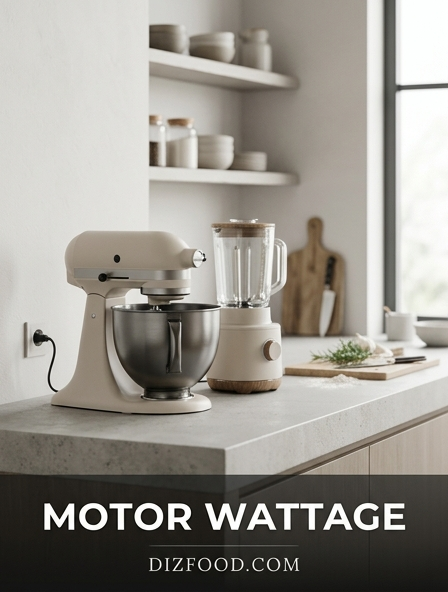
Defining Blender Motor Wattage Basics
In the realm of kitchen appliances, motor wattage serves as the primary metric for measuring the electrical power consumption of a blender. This numerical value indicates how much energy the motor pulls from the outlet to drive the blade assembly. Understanding this baseline is crucial for consumers attempting to differentiate between light-duty personal blenders and heavy-duty professional machines. Generally, kitchen blenders fall into three distinct power tiers based on their intended utility and mechanical design.
| Blender Category | Wattage Range | Common Applications |
|---|---|---|
| Personal/Portable | 200W - 400W | Soft fruits, protein shakes |
| Standard Countertop | 500W - 900W | Daily smoothies, light ice |
| High-Performance | 1000W - 1500W+ | Nut butters, grains, heavy ice |
While wattage indicates potential power, it is the efficiency of the motor and the blade geometry that ultimately dictate performance. High wattage does not always equate to better results if the design is poor, but it provides the necessary overhead for demanding tasks.
Wattage Impact on Texture Quality
The relationship between motor wattage and the final texture of a blended product is direct and measurable. Higher wattage motors generate the necessary torque to maintain high blade speeds even when facing significant resistance from dense ingredients. This results in a finer particulate size, which the human palate perceives as creaminess rather than graininess. When a motor lacks sufficient power, the blades slow down upon contact with solids, leading to uneven processing and a gritty mouthfeel.
Achieving a professional-grade texture involves several physical factors influenced by the motor:
- Shear Force: The ability to tear through cellular structures of tough ingredients.
- Sustained RPM: Maintaining rotations per minute despite the thickness of the mixture.
- Vortex Stability: Creating a consistent pull that brings all ingredients back to the blades.
For culinary enthusiasts, the difference between a 600-watt motor and a 1200-watt motor is most evident in recipes requiring extreme smoothness, such as bisques, hollandaise, or superfine fruit purees. Lower power units often leave behind micro-fragments that detract from the luxury of the dish.
Breaking Down Frozen Fruit Fibers
Frozen fruits present a unique challenge to kitchen motors because they combine extreme hardness with high fiber content. When a strawberry or mango is frozen, its water content crystallizes, turning the fruit into a solid mass that requires significant impact force to fracture. A low-wattage motor often struggles to initiate the "break" of these frozen chunks, leading to the motor stalling or the blades spinning fruitlessly in an air pocket.
High-wattage blenders overcome this by utilizing raw torque to shatter ice crystals and move through fibrous skins simultaneously. This process requires the motor to work harder in the first thirty seconds of the blend than at any other time. If the wattage is insufficient, the motor may overheat as it attempts to draw more current to overcome the physical resistance. Using a powerful motor ensures that frozen berries are pulverized into a uniform slush rather than remaining as icy pebbles. This capability is essential for creating thick smoothie bowls and authentic sorbets that require minimal liquid to maintain their frozen integrity.
High Wattage for Velvety Greens
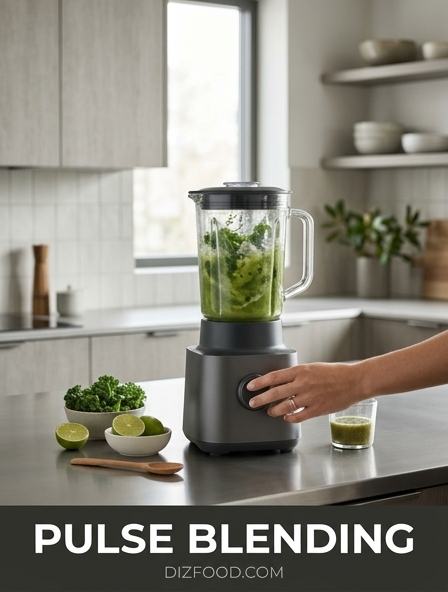
One of the most difficult tasks for any blender is the total liquefaction of leafy greens like kale, spinach, or Swiss chard. These vegetables contain tough cellulose and fibrous ribs that can withstand the blades of weaker motors, resulting in a "chewy" drink. High-wattage motors are necessary to achieve the "velvety" finish characteristic of high-end green smoothies by completely rupturing the plant cell walls.
The benefits of high power for processing greens include:
- Cellular Breakdown: Releasing more nutrients and chlorophyll for a brighter color.
- Rib Liquefaction: Eliminating the stringy bits found in kale stems.
- Suspension: Creating a mixture where the solids are so small they stay suspended in the liquid.
Without at least 1000 watts of power, many blenders will simply chop the greens into tiny flecks. While edible, these flecks settle at the bottom of the glass and create an unappealing texture. A powerful motor ensures that the greens are fully integrated into the base liquid, providing a consistent flavor profile throughout the entire beverage.
Crushing Ice Without Motor Strain
Crushing ice is perhaps the most frequent cause of motor failure in underpowered kitchen appliances. Ice cubes are essentially rocks that provide high impact resistance. To crush ice into a snow-like consistency, the motor must be able to drive the blades through the mass at high speeds without slowing down upon impact. Low-wattage motors often experience "motor drag," where the electrical components heat up rapidly as they struggle to keep the blades turning against the ice.
A high-wattage motor, typically 1200 watts or higher, possesses enough reserve power to treat ice as a soft material. This prevents the internal copper windings from overheating and protects the drive socket from stripping. When a motor operates well within its power limits, it generates less internal friction. This is why professional blenders can turn a tray of ice into "snow" in seconds, whereas a budget blender may take minutes and produce a burning smell. Sustained ice crushing is only possible when the wattage is high enough to ensure the blades never reach a full stop during the cycle.
Relationship Between Power and Speed
It is a common misconception that wattage and speed are the same thing; however, they are functionally different yet inextricably linked. Speed refers to the Rotations Per Minute (RPM) of the blades, while wattage represents the power available to maintain that speed. A blender might have a high top speed when the jar is empty, but the true test of power is how much of that speed is retained when the jar is filled with thick peanut butter or heavy dough.
In physics terms, wattage allows for higher torque. Consider the following comparison of motor behavior under load:
- Low Wattage: High RPM at start, but speed drops by 50-70% when ingredients are added.
- High Wattage: High RPM at start, with only a 10-20% drop under heavy load.
This stability is what creates the necessary friction to even heat soups in some high-performance blenders. The ability to maintain speed under pressure is what allows for the rapid aeration of mixtures and the creation of fine emulsions that stay stable over time.
Avoiding Lumps with Higher Watts
The presence of lumps in a puree or batter is usually the result of a weak vortex. The vortex is the funnel-shaped suction created by the spinning blades that pulls ingredients down from the top of the jar. A high-wattage motor creates a much more aggressive and consistent vortex, ensuring that every piece of food eventually passes through the blade path multiple times. In lower-powered machines, the vortex is often shallow or collapses easily when thick ingredients are introduced, leaving "dead zones" where food sits untouched.
Consistency is key in tasks like mixing pancake batter, preparing mayonnaise, or blending protein powders. Higher wattage ensures that even the smallest dry clumps are forced into the liquid and sheared apart. This eliminates the need for manual stirring or stopping the machine to scrape the sides of the jar. By providing a continuous, powerful cycle of movement, high-wattage blenders guarantee a homogenous mixture that is free of unblended pockets, which is essential for both flavor balance and professional presentation in culinary applications.
Motor Efficiency and Longevity Factors
A higher wattage motor often lasts longer than a low-wattage counterpart, even if used for the same tasks. This paradox is explained by motor efficiency. When a 1500-watt motor blends a fruit smoothie, it may only be using 40% of its total capacity. Conversely, a 400-watt motor might be pushed to 90% or 100% of its capacity to achieve the same result. Operating at the edge of a motor's limit generates excessive heat, which degrades internal components like brushes, bearings, and insulation.
Key factors contributing to the longevity of high-wattage motors include:
- Cooling Systems: Larger motors typically feature advanced fans and airflow paths.
- Heavy-Duty Windings: Thicker copper wiring can handle higher currents without melting.
- Thermal Protection: Sophisticated sensors that shut down the motor before damage occurs.
Investing in higher wattage is often an investment in durability. For those who use their blender daily, the robust construction of a high-wattage motor prevents the "burnout" that commonly plagues cheaper models after a year of heavy use.
The Science of Smooth Emulsification
Emulsification is the process of forcing two immiscible liquids, such as oil and vinegar, into a stable mixture. This requires high shear stress to break the oil into microscopic droplets that can be suspended in the water-based liquid. Motor wattage is the driving force behind this shear stress. The faster the blades can spin while under the resistance of the liquid, the smaller the oil droplets become. Smaller droplets result in a more stable emulsion that will not "break" or separate as quickly.
This scientific principle is applied in the kitchen for various recipes:
- Vinaigrettes: Creating a creamy dressing that doesn't require shaking before use.
- Mayonnaise: Forcing egg yolks and oil into a thick, spreadable solid.
- Nut Milks: Suspending nut fats in water for a dairy-like consistency.
A low-wattage blender may mix the ingredients, but it lacks the power to create a true, long-lasting emulsion. High-power motors provide the mechanical energy needed to overcome the surface tension of the liquids, resulting in superior mouthfeel and shelf stability for homemade sauces and condiments.
Selecting Wattage for Daily Use
Choosing the right wattage depends largely on the intended frequency of use and the specific types of ingredients handled. For a user who only blends soft protein shakes or occasional fruit smoothies, a motor in the 500 to 700-watt range is typically sufficient and cost-effective. However, for those incorporating "power blending" into their lifestyle-such as making homemade nut butters, grinding grains into flour, or processing frozen desserts-anything less than 1000 watts will likely lead to frustration and equipment failure.
| User Profile | Recommended Wattage | Priority Ingredient |
|---|---|---|
| Occasional User | 300W - 600W | Soft fruits, powders |
| Daily Smoothie Drinker | 800W - 1100W | Frozen berries, kale |
| Culinary Enthusiast | 1200W+ | Nuts, ice, thick soups |
It is always advisable to select a blender with slightly more power than you think you need. This provides a "buffer" that ensures the motor is never overstressed, leading to a quieter operation and a significantly longer lifespan for the appliance.


Comments